Garhwal Post Bureau
Lucknow, 29 Nov: The Faculty of Management Studies, University of Lucknow, organised a pre-conference panel discussion on “Indian Knowledge Tradition: Pathways to the Future” as part of its two-day international symposium.
On the occasion, Prof HC Purohit, Dean, School of Management, Doon University, Dehradun, and Coordinator, Centre for Hindu Studies, said that the Indian knowledge tradition is vast, profound and timeless. Despite attempts during the colonial period to diminish it, the tradition continues to flourish. He noted that the National Education Policy (NEP) 2020 will enable future generations to explore its diverse dimensions and apply them in academic and research pursuits. Prof Purohit emphasised that the Indian knowledge tradition advocates global welfare, peace and brotherhood—values urgently required in the contemporary world. True prosperity, he stated, emerges only when society embraces peace, harmony and mutual respect, all of which are foundational principles of Dharma.

In his address, Prof Avinash Pathardikar, former Dean, Management, and Director, Centre for Vedic Studies, Veer Bahadur Singh Purvanchal University, Jaunpur highlighted that the core of the Indian knowledge system lies in the Vedas, Puranas, Upanishads, the Bhagavad Gita, the Ramayana and the Mahabharata. These texts, composed by ancient sages after deep intellectual reflection, remain relevant even today through the lens of modern scientific inquiry.
He observed that integrating Dharmic principles into corporate administrative and managerial practices could significantly advance global sustainability goals. Such an approach would help curb excessive consumerism and support long-term planetary well-being. Prof Pathardikar underscored the need for structured training on the various dimensions and attributes of Dharma.

Chairing the session, Prof Himanshu Shekhar Singh, former Head, Faculty of Management and Entrepreneurship Studies, and Coordinator Ram Shodh Peeth and IKS of Dr Ram Manohar Lohia Avadh University, Ayodhya, said that incorporating the Indian knowledge tradition into the curriculum through NEP–2020 is a transformative step. It will allow students to understand its scientific and evidence-based elements and apply them for human welfare, social development, sustainable growth and global peace. He added that the panel discussion presents several thought-provoking questions for scholars and researchers, encouraging deeper academic reflection in the coming days.

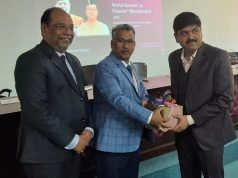
The Head and Dean, Faculty of Management Studies, extended a warm welcome to the distinguished speakers, setting a dignified tone for the event. Faculty members Dr Himanshu Mohan, Dr Nishant Kumar and Dr Ajay Prakash felicitated the guests for their valuable contribution.
The session was coordinated by Dr Ram Singh. He also proposed the vote of thanks.
The event saw enthusiastic participation from faculty members, research scholars and students, who gained insightful perspectives on the profound richness and contemporary relevance of the Indian Knowledge System.