 By GANESH SAILI

Go past Ralston Manor into the concrete jungle where the Tivoli Gardens lay, owned by Lionel Douglas Hearsey. In 1882, in a portion of the grounds of Maryville’s Phooswali Kothi, he built, or so my old guide books tell me, “at once a favorite resort of the Masuri public.” He borrowed the name from the resort near Rome with its splendid views and gardens. Perhaps Arnigadh, which is what the locals still call it, was probably one of the most unfortunate garden sites in all of India. Old records have it that this land was a part of Chamasari village, where it was decided that a botanical garden be created. In those early days, land was acquired by constantly badgering or cajoling the local villagers or title holders to transfer such land to the colonisers. Such transactions forced F. J. Shore, the Political Agent of Dehradun, to forbid any more of these dubious deals wherein someone would manage to get the head zamindar of the village drunk and induce him into signing sale deeds. Many sad tales abound that chronicle the residents’ efforts to cling on to their holdings until they were evicted, often forcefully, sometimes at the height of a snowstorm.
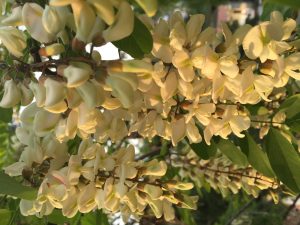
Perhaps the site was acursed, for it proved unsuitable as a botanical garden, and the scheme was abandoned only to be shifted to the other end of Mussoorie as Company Bagh. But out here, over time, various experimenters tried their luck and failed. The soil was excellent; there was sufficient water, but nothing flourished. Opened to the public in the summer of 1882, it initially had a large footfall. Off the bridle path, along a shady road, lay a dancing pavilion (which the old maps refer to as “nautchghar”) with a dining saloon and a kitchen attached. Fruit trees lined the road to Mossy Falls and Hearsey Falls. Painstakingly, very gradually, a bit at a time, a barren waste was converted into a bountiful garden, brimming with flowers, elaborate pavilions, lovers’ bowers, swings for the ladies and children; sweetly scented creepers, honeysuckle, and wisteria; bushes of jasmine and frangipani, and climbing roses, and other exotica that made it look like a place out of the Arabian Nights. Moonlight garden parties, where folks huddled around a bonfire and listened to the bagpipes as the moon came up over the Hill of Fairies.