 By NITIN GAIROLA
Part-1
The Kenya Airways direct flight was from Mumbai to Nairobi (the capital) and it was a rainy morning in Mumbai that August. We took off on time and soon were flying over the Arabian Sea and there was a great anticipation to enter a new continent as thus far we had only been to Asia and Europe. We enjoyed a good selection of beverages and meals on-board and what excited us the most was when we got our first glimpse of the African continent, as we could clearly see the outline of the ‘Horn of Africa’ when we entered their airspace from the Ethiopian side. From there the plane turned south for Kenya and I got the clearest view of the snow-capped Mount Kenya, which is the second highest peak in Africa after Mount Kilimanjaro on the Kenya – Tanzania border.
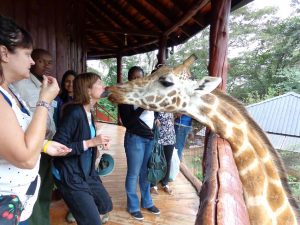
Upon landing and after the easy Visa formalities (visa has recently been waived off), we exited the airport and thought this would be like an extra day-and-a-half in the city before we head out to the Masai Mara adventure that we had booked. However, Nairobi itself turned out to be a good bit of fun with a lot of animal encounters available for all age groups. We had visited the Lang’ata Giraffe Center (now called the Nairobi Giraffe Center) where tourists can feed these mighty tall gentle giants, and it is hard to describe how amazing that is when their giant heads come towards you.
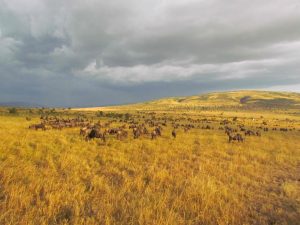
The capital also has the Nairobi National Park well within city limits where you can actually do a proper jeep safari or a self-drive to view all the wildlife you can imagine including the big 5 (Lion, Leopard, Elephant, Rhino & Cape Buffalo), but you will have the city skyline in the background and the feel will be nowhere as wild as it would be in Masai Mara National Reserve. I can’t overemphasize what a difference numbers make in wildlife viewing – To see a couple of wildebeest and to see thousands of them on the sweeping Savannah plains.
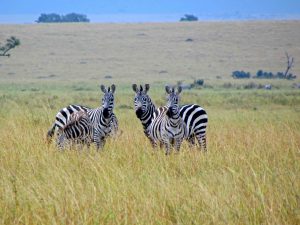
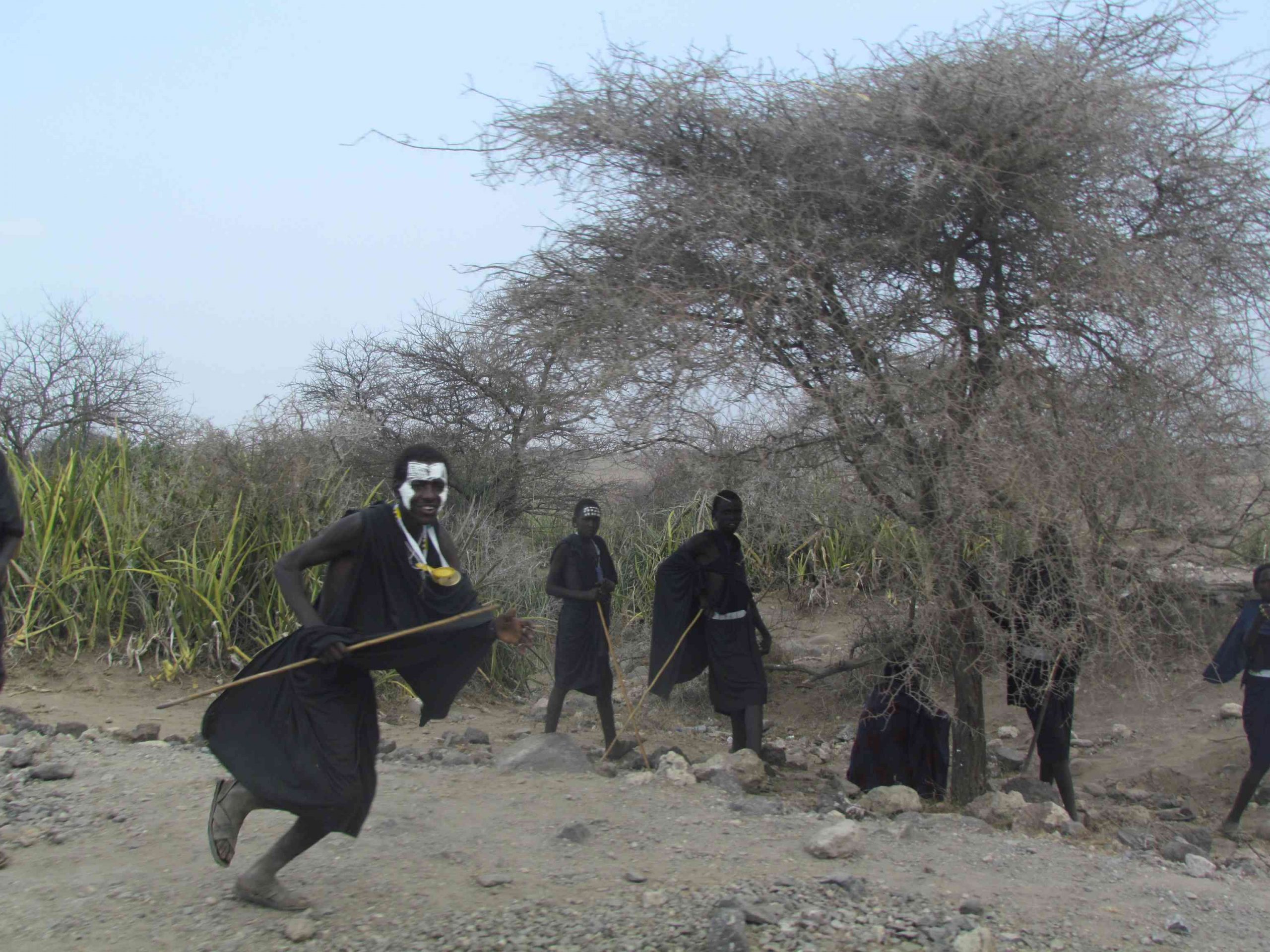
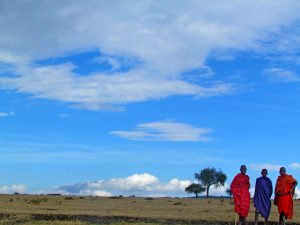
Then the day came for our Masai Mara trip to begin and our tour company’s Land Rover had come to our hotel in the morning and we were on our way moving from the south-center to the south-west of Kenya. The reserve was around 7 odd hours away but had the most scenic route via the Great African Rift Valley and through the lands of many tribes , one of which were the famed ‘Masai’ people themselves. The Rift Valley which we were crossing is a part of Northern Africa and a bit of Asia that is slowly being split apart by tectonic plate movement (over millions of years) and it goes from Kenya all the way north to the Middle East. If seen in this geological sense, the context changes quite a bit.
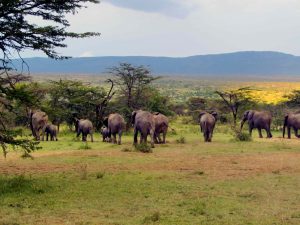
But naturally the highlight of this Kenya trip was the Masai Mara reserve and we were geared up for it. We had chosen to go in August for a reason since from July to September the wildebeest migrate for food from Serengeti National Park in the south (Tanzania) to the Masai Mara in the north (Kenya) as these two reserves are boundaryless and free for the animals to roam. So what we witnessed was a spectacle like no other; with the prey (wildebeest) being followed by the numerous predators and so there was no need to search for wildlife on any safari.
Animals were just about everywhere and because the Savannahs are basically grass plains, the views were unobstructed unlike what you have in dense jungles. We saw wildebeest both near and in the distance in such great numbers that they were literally changing the colour of the otherwise golden brown grass plains, which now seemed to have black dots all over them. In just the first two safaris we saw so much action including a lion killing a wildebeest, besides some other stomach-churning moments like vultures taking the guts and eyeballs out of a recent cheetah kill.
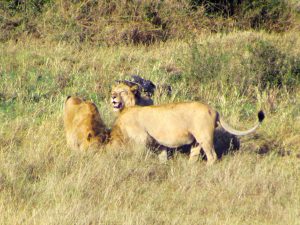
One of our favourite moments was that of spotting a leopard on a tree, looking down menacingly on us. That photograph in fact got selected in a national paper’s travel section besides on Lonely Planet.
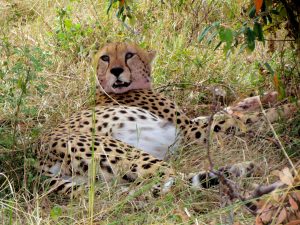
Of course the trip was just warming up right now and there was a lot more of ‘The Mara’ to come as we had booked multiple safaris for our three back-to-back days, besides also blocking tours to Lake Nakuru and all the wildlife it contained. I will take you on the remaining Kenya journey in the upcoming article.
(Nitin Gairola is from Dehradun and has travelled the natural world more than almost any Indian ever. He has set world travel records certified by India Book of Records, has written for Lonely Planet, and holds National Geographic conservation certifications. He is also a senior corporate executive in an MNC and in his early days, used to be a published poet as well. More than anything else, he loves his Himalayan home.