Around the World with the Most Travelled Indian
 By Nitin Gairola
The natural world is very complex should you want to delve deep into it. Even at the surface level it is not half as clearly defined as the political world which has almost exact borders of almost exact nations. That’s why my project is called ‘Borderless Biomes’ and one of its central themes, which is actually quite obvious & naive, is that wildlife doesn’t recognise borders as it moves (albeit not always freely) across the various ecosystems or biomes that make up the natural world. And while the living world is very complex, the concept of biomes in itself is rather simple and straightforward. It is just the type of vegetation on the ground on which a certain type of life depends. The vegetation itself depends on the area’s climate (temperature & precipitation) and soil. So, the biomes basically feature trees, shrubs, grasses, arid adaptations (eg. – cacti) and cold adaptations (i.e. Lichen). And wherever a certain type of vegetation dominates, it either becomes a forest, a grassland, a desert or a tundra biome. And we can almost imagine the animal life linked to a forest or a desert and that is what completes the character of an ecosystem.

Biomes are being classified since 1947, so this is a nearly 80-year old concept to sub-divide the Earth logically into ecological parts. The various classifications made in the past are attributed to famous scientists who proposed these classifications or scientific models such as the Holdridge classification of biomes in 1947 followed by Allee, Kendleigh, Whittaker, Walter, Bailey, Dorman & Sellers and, finally, Olson & Dinerstein in 1998. In the past 3 decades, the churn of the new versions or ‘upgrades’ has finally cooled off. It seems that the scientific community has agreed that science doesn’t always have to be that complicated for the non-scientists to comprehend. Perhaps that’s why The National Geographic really dumbed it down to just 5 high level biome types of which the first 4 are terrestrial i.e. forests, grasslands, deserts, tundra and the 5th is the marine biomes. For them ‘polar ice’ is nothing but a type of (very cold) desert but sometimes people do add ‘ice’ cover as a separate 6th biome type given that it lies at a distinct latitude and has its own unique wildlife. You don’t see polar bears and penguins roaming about in regular deserts, do you?

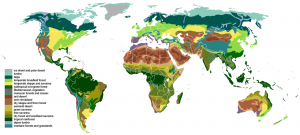
Now a forest is just a ‘type’ of biome at the highest level. But it does have a lot of sub-types such as tropical evergreen forests, tropical seasonal forests, temperate deciduous forests, temperate mixed forests, boreal evergreen forests and boreal seasonal forests. As you can see that one distinction is evergreen vs seasonal (i.e. do the leaves go dry during any season or are always ‘green’) and the other is tropical vs temperate vs boreal (depends on the heat & humidity and the forest’s latitudinal placement). And finally, below these types and sub-types of forest biomes are the actual forests on Earth such as the Amazon (tropical evergreen or broadleaf rainforest), The Russian Taiga (boreal evergreen), Congo, Borneo, Papua New Guinea, Burmese rainforest, Valdivian, Primorye temperate forest (also called the Primorsky Kai), Canadian Boreal, Scandinavian Boreal, Sundarbans and so many more.
In relation to forests & jungles, do know that ‘national parks’ are a recent manmade concept and we can have many national parks not just within a given forest but also within a desert or any other biome for that matter. Basically, a national park is a certain part of land that is earmarked as protected by the government for preservation of nature & wildlife (and at times it is not even for protecting a wild place but one that is linked to human history). While the ‘national park’ is one of the best ideas of mankind, the problem is that since this idea took hold, we lost half our forests. Clearly you can’t blame it on the idea of national parks, but you can blame it on our massive population explosion during this time and the national parks concept came about to save wildlife from this explosion. Had it not been there, God only knows what may have happened to the wild.
Back to biomes – In the same way we have the forest biome sub-types, we also have the desert biome sub-types such as arid deserts, semi-arid deserts, shrublands and the ice (which is a type of desert based on low precipitation levels). Within these sub-biomes are the actual deserts such as the Sahara, Arabian, Great Australian, Syrian, Namib, Kalahari, Kyzyl-Kum, Kara-Kum, The Gobi, Taklamakan, Mojave, Sonoran, Colorado Plateau, The Great Basin, Atacama, Thar, Dasht-e-Lut, Dasht-e-Kavir, Ladakh, Ferlo, Danakil, Ogaden and the list goes on and on…

Our forests and deserts collectively cover over 50% of the world’s land. Hence, it’s no surprise that these forests & deserts have some of the wildest and most pristine places left on Earth.

Grasslands also have their sub-types such as the tropical savannah, temperate prairie & steppe and the montane grasslands. And then there are the many actual unique grasslands around the world and some of the prominent ones are the Pampas, Llanos, Great Plains of North America, The Canadian Prairie, The Great Hungarian Plains, African Savannah, The Velds, The Australian Downs & The Australian Savannah, Manchurian Grasslands, Hulun Buir Grasslands of Mongolian, The Kazakh Steppe, Nagqu Grasslands in Tibet and so on…
Finally, there is the Tundra biome and it has 3 sub-types – Arctic, Antarctic and Alpine tundra (i.e. tundra vegetation on high altitudes that mimics the climatic conditions of the sub-polar latitudes). The Arctic and Antarctic tundra on the other hand is all around the perimeter of the polar landmasses where most of the wildlife of those parts lives. So, when most tourist ships go to peninsular Antarctica, they encounter a lot of wildlife. This is since most of the polar wildlife lives near the tundra shores rather than the deep ice within the icy 7th continent.
My ‘Borderless Biomes’ project is about visiting and documenting every major forest, desert, grassland, tundra and ice biome on Earth. Not the type of biome or the sub-type, but every actual and significant (based on size) natural world ecosystem around the world – An ecosystem that has a clearly identified & listed name and location on our world maps. And after almost 2 decades what’s left is only the Namib Desert, the Primorye temperate forest in Far Eastern Russian Siberia, Papua New Guinea’s rainforests, the Llanos Grasslands of Colombia & Venezuela and the Manchurian Grasslands of far north-eastern China. All tundra and ice biomes of the world have been visited. And since a huge part of this project was to document and understand what I was passing through, I did many accredited courses in conservation, wildlife protection, habitat loss, scientific project planning, etc. In my mind, this area of travelling to the natural world is not just about everyday world travel and tourism and the related infrastructure & resources required to visit countries. I feel it should have a deeper layer of understanding and appreciation of wildlife and their wild habitats. This helps you see the world with a pair of eyes that many may never have and that is a precious gift.
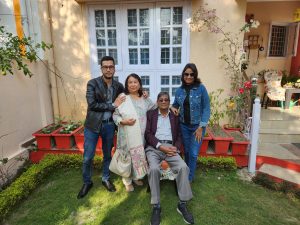
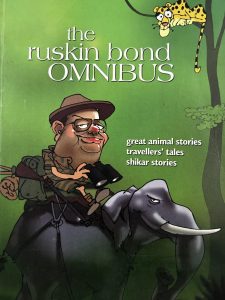
That’s why I thought I should take the lovely readers of Garhwal Post through some of our nature & wildlife travel experiences where we personally have come out slightly more ‘evolved’ than what we went in as. For me, all this is deeply personal as I also see the same wonderment of the wild in my nieces. And it’s not only the young ones in my family but even my own parents, my aunt & uncle, and few cousins, friends and their families who have taken a keen interest in the wild side of the world. In fact, today happens to be my parent’s 50th wedding anniversary and that’s why I felt I should write about ‘Borderless Biomes’ today itself, given how important it is for me and how they have always emotionally backed this multi-year ‘mad’ undertaking of mine. This week and month had other significant dates for me too, as our own legend, Mr Ruskin Bond, turning 92 on 19th May and I, like millions, grew up on his ‘Ombibus’ collection of Animal, Traveller and Shikar stories. And of course, Sir David Attenborough turned 100th on the 8th of May as well. Can there be any better reason for me to start a series on nature & wildlife now? The wild long lens from which I saw the planet has really been one of my greatest sources of joy and there is nothing better than sharing this joy.
(Nitin Gairola is from Dehradun and is often considered the most travelled Indian. Inspired by Sir David Attenborough, he is on a quest to become the first person to travel to & document the entire natural world of every major forest, desert, grassland, tundra & ice biomes on Earth, besides every major country. This multi-year project is called ‘Borderless Biomes’ and besides this, Nitin has set world travel records certified by India Book of Records, has written for Lonely Planet, holds National Geographic conservation certifications and has a weekly feature in Uttarakhand’s Garhwal Post newspaper. He is also a senior corporate executive in an MNC and in his early days, used to be a published poet as well. Join him @ www.instagram.com/ MostTravelledIndian/)