All Around the World with the Most Travelled Indian
 By Nitin Gairola
In was our second morning in Kenya and we got up bright and early for our ride to the ‘Mara’ game reserve, as it’s popularly known by wildlife enthusiasts. We met Chris in the morning, who was managing our tour, and we gifted him an Indian scarf for his wife. Chris was absolutely delighted by the gesture and in fact on the last day when we were leaving Kenya, he surprised us by gifting us a lovely red checked Maasai cloth and another green one which had African elephants printed on it. I still treasure these gifts from our first African safari experience. Such is the power of such simple memories and the kindness of some people who always stay in your mind.
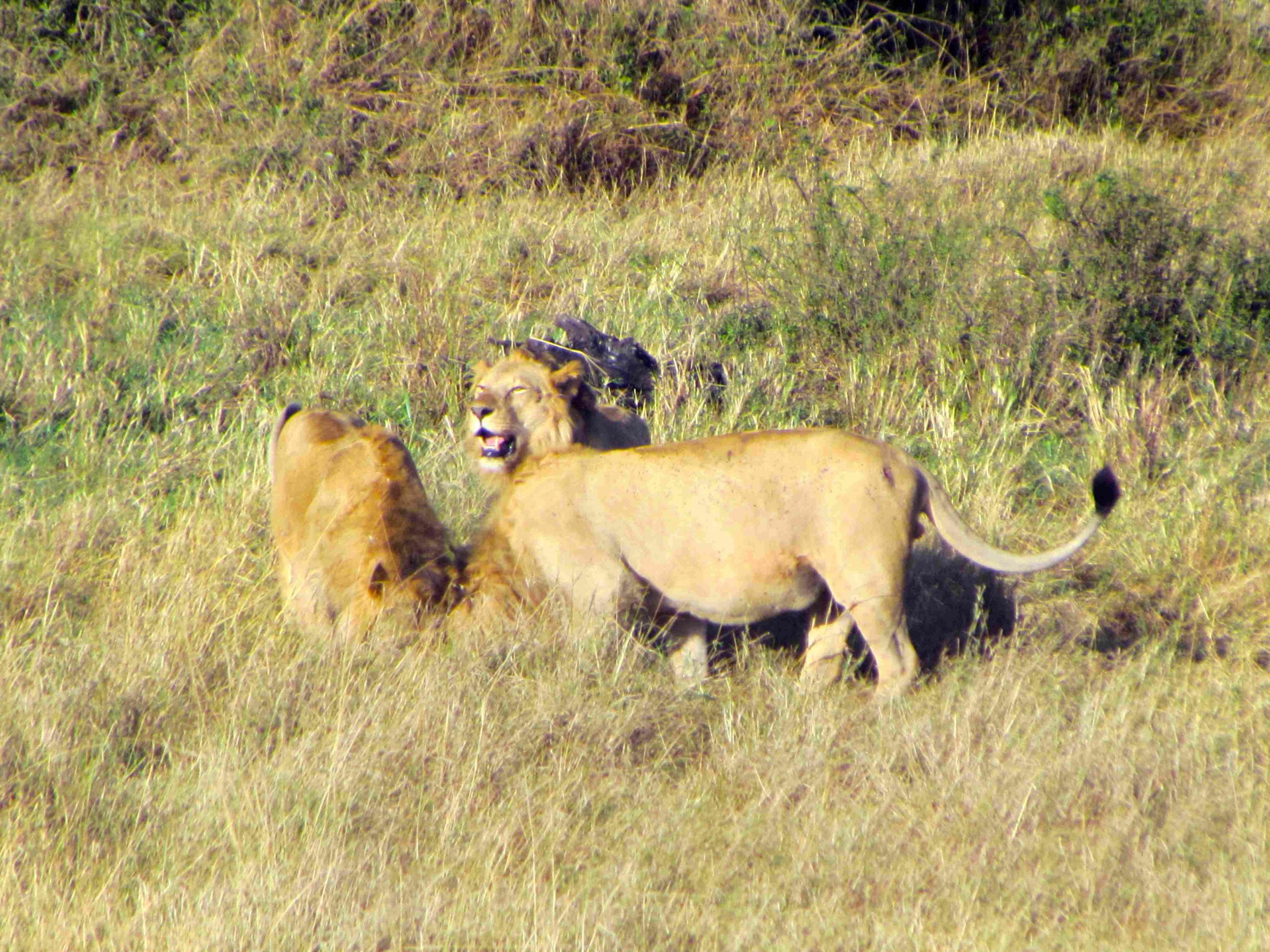
The highlight of this Kenya trip was definitely going to be the Masai Mara reserve and we were geared up for it. We had chosen to go in August for a reason since from July to September the wildebeest migrate in the millions for food (grass). They do so from the Savannah grasslands of the Serengeti National Park in the south (i.e. in Tanzania) to the Masai Mara Savannah grasslands in the north (i.e. in Kenya), as these two reserves are boundaryless and free for the animals to roam. And this circle of life from the Serengeti to Masai Mara and then back to the Serengeti continues in an endless loop around the year. But during the year, you need to know when to be where, based on the location of the grazers, since they themselves are food for the predators.
And then there is one more angle on wildlife viewing here, which is during the calving season where the new-borns of grazers come to the Earth. This is when the predators are on the prowl and there is a lot of gruesome wild action. This action is in both the Masai Mara and Serengeti reserves between January to March and a smaller wave is in November and December as well. That then gives us 6-8 fantastic months of classic safari time in East Africa. Some people go in the shoulder season of June too to get better deals and lesser crowds, but honestly crowds will not be a concern in these parts. After the Nairobi airport they will all disperse and rarely bump into you. An elephant is more likely to do so.
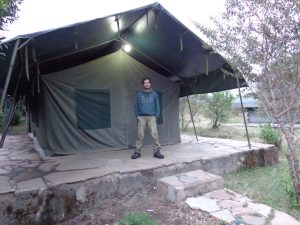
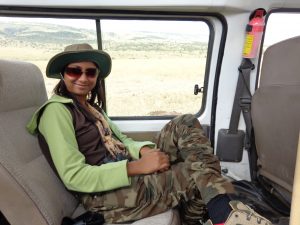
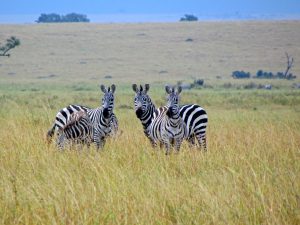
So back to our story. We knew we wanted the August spectacle (which is the sheer profusion of wildlife) and it is exactly what we got. So much so that there was no need to search for wildlife on any safari. Animals were just about everywhere and because the Savannahs are basically grass plains, the views were unobstructed unlike what you have in dense jungles and rainforests. We saw wildebeest both near and in the distance in such great numbers that they were literally changing the colour of the otherwise golden-brown grass plains, which now seemed to have black dots all over them.
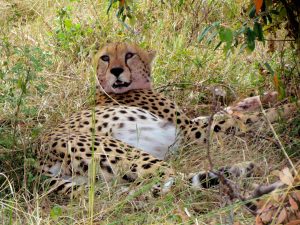
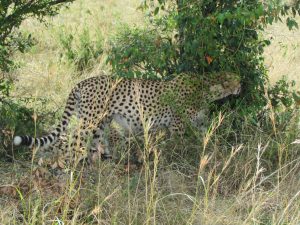
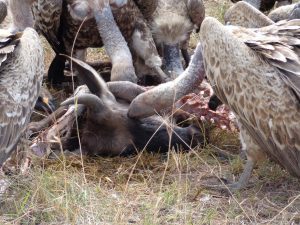
Besides the grazers in the millions over endless grasslands, in just the second safari the next morning, we also got to see a lion killing a wildebeest, besides some other stomach-churning moments like vultures picking the guts and even the eyeballs out of a wildebeest that was just moments before killed by a couple of cheetahs. After eating their fill, the cheetahs had to leave their cover because the vultures were all around them. It was also prudent for the cheetahs to move as their location would be getting announced to all the larger predators as well – Lions, Leopards and Hyenas.
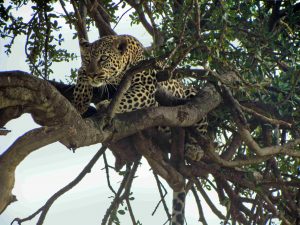
And speaking of leopards, one of our favourite moments in the Mara was that of spotting a leopard on a tree, looking down menacingly on us – jaws open, razor sheer canines out. That photograph in fact got selected and published in Economic Times travel edition called ‘ET – Panache’, besides on Lonely Planet travel guides. And it was captured within one hour of our first safari on the very day we had arrived.
Of course, the trip was just warming up right now and there was a lot more of ‘The Mara’ to come as we had booked multiple safaris for our three back-to-back days, besides also blocking tours to Lake Nakuru and all the wildlife it contained, including exotic large bird life.
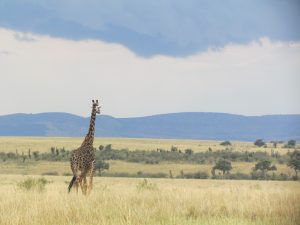
The Mara was pure safari magic, like I had never seen or felt before. It had encounters with animals big and small, the predators and their prey, the giant plant eaters, the birds and all. And each safari brought something new as the best part of wildlife viewing is that there are no repetitions. Every moment is as fresh as a dew drop and every safari is just as exciting as the last, with the odd not-so-exciting ones here and there – but definitely none on this trip. The sheer profusion of wild things at the Mara ensured not a single dull moment.
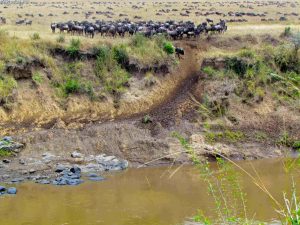
And the game reserve’s highlight from July to September is the wildebeest’s crossing of the muddy Mara River during the migration, when hungry crocodiles lie in wait. And almost invariably a carnage ensues when the wildebeest swim against the river’s current en masse, just blindly following the brave (or foolish) one taking the plunge first. These grass grazers go by safety in numbers and so the majority end up on the other side of the river safe and sound but there are a few unfortunate ones that fall prey by getting caught in the unforgiving jaws of the prehistoric beast that is the crocodile. One can say they too end up on the other side but not of the river. We did see a lot of wildebeest on the river banks, we also saw a lot of crocodiles and one wildebeest almost jumped into the river but then decided against it. Looking at him, the others chickened out as well and so we missed the actual mega massacre that wildlife and photography enthusiasts love to capture.
Well, you win some and you don’t win some (I will not call it ‘lose’ since who are you in competition with?). At that time, I was a bit disappointed but I moved on fast since there were so many more wonders of the wild to witness and appreciate and I would not have been able to cherish them had I kept thinking of that one moment I could not see or capture. Basically, the idea is not to whine about wildlife not presenting a song & dance spectacle especially for you. This is the biggest wisdom you can gain in wildlife and in life – To not worry about what you missed out on, since then you will also miss out on what is waiting for you ahead.
Nitin Gairola, often considered the ‘Most Travelled Indian’, is a Natural World Traveller from Dehradun. Inspired by Sir David Attenborough, he is on a quest to become the first person to travel to the entire natural world of every major forest, desert, grassland, tundra & ice biome on Earth, besides every major country. This multi-year project is called ‘Borderless Biomes’ and besides this, Nitin has set world travel records certified by India Book of Records, has written for Lonely Planet, holds National Geographic conservation certifications and loves bio-geography. He is also a senior corporate executive in an MNC and in his early days, used to be a published poet as well. Join him @ www.instagram.com/MostTravelledIndian/