Garhwal Post Bureau
Dehradun, 7 Jun: Climate change is increasingly shaping the everyday lives of children. From extreme heat and water scarcity to flooding and poor sanitation, these challenges are affecting children’s health and hygiene, disrupting schooling and impacting their ability to learn and grow.
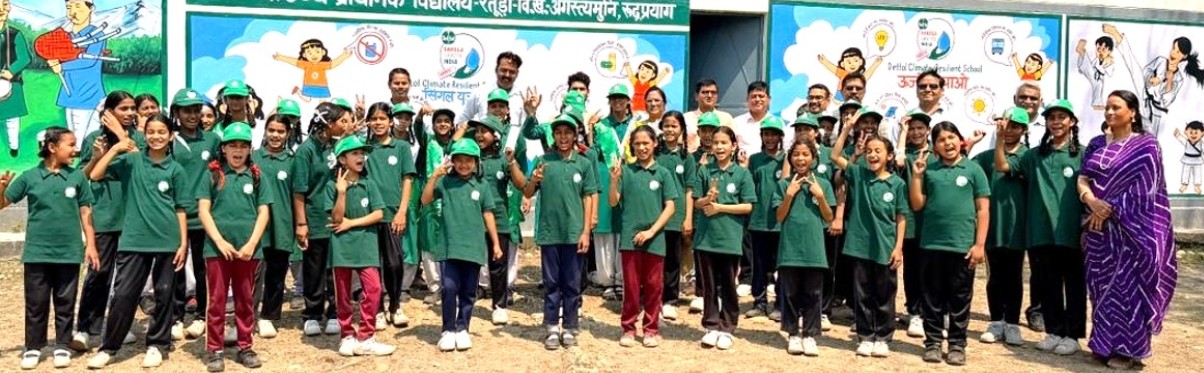
Reckitt has established climate-resilient schools across the Char Dham region, Gangotri and Yamunotri in Uttarkashi, Kedarnath in Rudraprayag, and Badrinath. Built on three key pillars – campus, collaboration and curriculum, the programme integrates climate resilience into school infrastructure, partnerships and educational content to help children adopt sustainable practices and build resilience to climate-related challenges.
To understand the impact of this initiative, an evaluation was conducted by AIIMS Rishikesh across the four climate-resilient schools and nine non-intervention schools in the region.
Key findings from the study reveal a strong and measurable impact including:
• Better hygiene practices: More students demonstrated improved hygiene behaviour, with stronger adherence to handwashing practices.
• High soap usage: 94.1% of students were observed washing hands with soap and water at school.
• Improved awareness: Students showed better understanding of correct handwashing steps and hygiene practices.
• Healthier lives: 14.3% of students reported above-average health-related quality of life.
• Consistent attendance: Attendance remained high in climate-resilient schools, ensuring continuity in learning.
• Zero infections reported: No bacterial or parasitic infections were detected among students in intervention schools.
The evaluation further noted that hygiene practices in intervention schools had evolved into self-driven habits among students. Children emerged as hygiene ambassadors within their households, encouraging family members to adopt healthier practices and reinforcing the role of schools as catalysts for community-wide behaviour change.
Prof Vartika Saxena, Head of Department, Department of Community Medicine, All India Institute of Medical Sciences (AIIMS) Rishikesh, said, “Our evaluation assessed 13 government schools in Uttarakhand, including four Dettol Climate Resilient intervention schools and nine control schools. The findings indicate that students in the intervention schools showed stronger hand hygiene practices, greater awareness of safe water and waterborne diseases, and benefited from improved access to clean water, sanitation facilities and other climate-resilient measures. We also observed positive health outcomes and improved overall wellbeing among students.”