A question that lingered long after the conversation had ended
 By Praveen Chandhok
There are events one attends, and then there are conversations that quietly continue long after everyone has gone home. A few days ago, Hotel Inderlok hosted one such morning as readers, thinkers and seekers gathered for the launch of The Unbecoming, the latest book by author, lawyer and modern spiritual seeker Kartikeya Vajpai.
The discussion, organised by Satish Sharma, Chief Editor of Garhwal Post, brought Kartikeya into conversation with former IAS officer, acclaimed author and Director of the Valley of Words Festival, Dr Sanjeev Chopra. It was far more than a conventional book launch. It evolved into an engaging dialogue on identity, ego, success and, perhaps, the most misunderstood word in spirituality, renunciation.
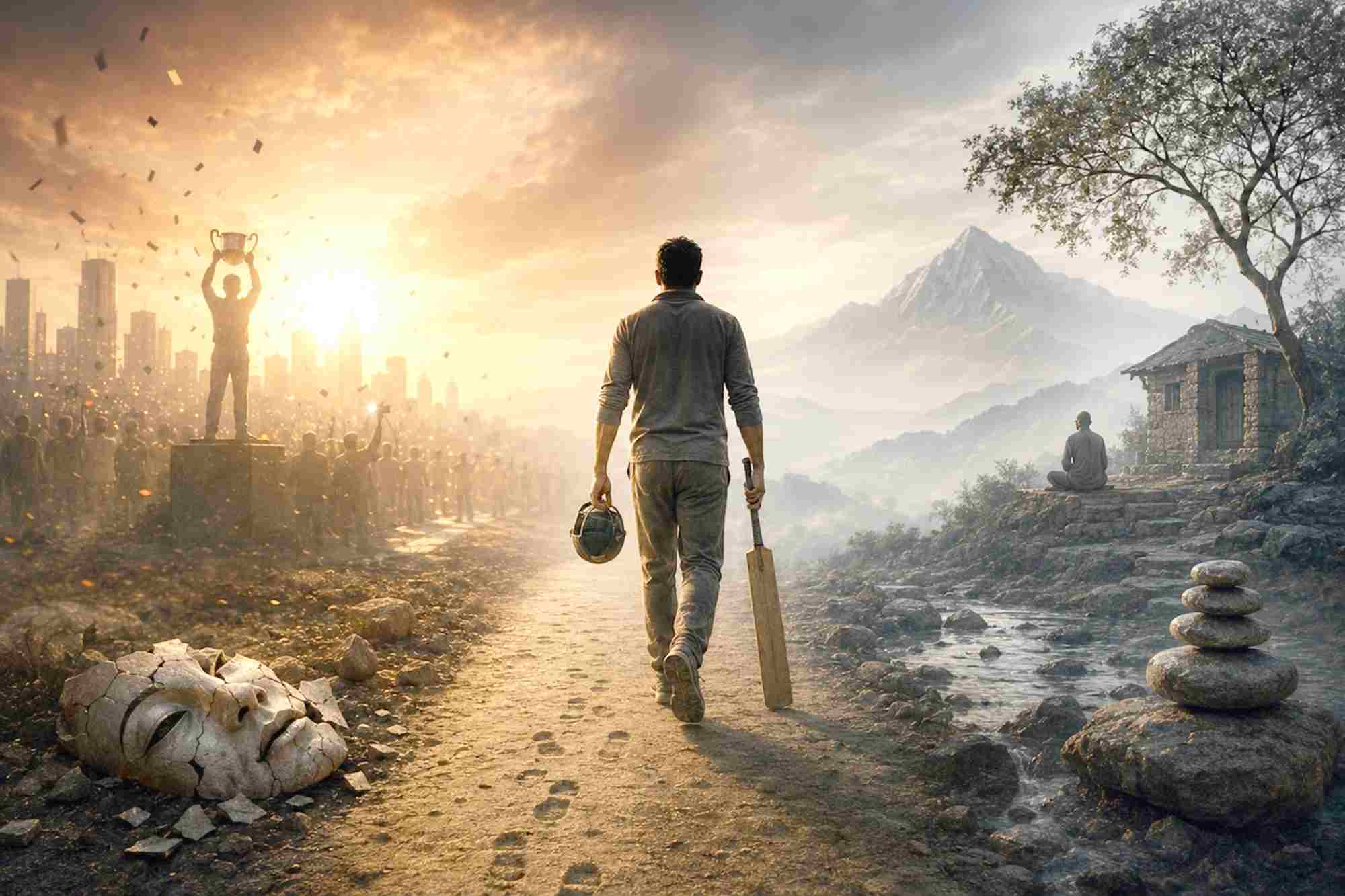
At the heart of The Unbecoming is Siddharth Kapoor, an internationally celebrated cricketer whose carefully constructed identity begins to collapse after repeated failures. In search of redemption, he turns to Ajay Goswami, the legendary coach he had once discarded, only to discover that the coach has renounced worldly life and embraced silence in the hills of McLeod Ganj. The journey, therefore, is not merely about rebuilding a career. It is about dismantling a self.
Throughout the discussion, Kartikeya responded to every question with remarkable clarity and calm. The audience was equally engaged, and what began as a literary conversation gradually transformed into an exploration of life’s larger questions. Yet it was not a statement from the stage that remained with me. It was a question quietly posed from the audience by Sunita Vijay: “What about the common man?”
The question refused to leave me. Can an ordinary person renounce? Or must one first become somebody before one can meaningfully unbecome?
Whenever we speak of renunciation, history invariably presents us with kings, princes, conquerors and individuals of extraordinary stature. Prince Siddhartha became the Buddha. Prince Vardhaman became Mahavira. Lord Rama willingly relinquished a kingdom, while Lord Krishna repeatedly demonstrated a detachment from power and possession. Their renunciation inspires us precisely because the world can clearly see what they left behind.
But what does the ordinary individual renounce -the schoolteacher, the shopkeeper, the clerk, the labourer or the parent quietly raising children while paying bills and carrying responsibilities that history will never record? Their struggles are no less real, and their sacrifices no less demanding. Yet their stories rarely become scriptures. History, it seems, remembers spectacular renunciations; it is far less attentive to silent ones.
The discussion also brought to mind two other figures. Jesus was born not into royalty but into humble circumstances and was crucified for his teachings. Socrates, who questioned accepted wisdom, was condemned to death for allegedly corrupting the youth of Athens. Perhaps society has always been uncomfortable with those who challenge its certainties, whether they possess kingdoms or nothing at all.
This brings me back to the question that has lingered ever since. We spend our entire lives trying to become something – a professional, a person of reputation, an achiever, a recognised identity or some socially accepted measure of success. Every examination, promotion, achievement and sacrifice pushes us further towards becoming.
And then spirituality gently whispers: let go. Become nobody.
Was the entire struggle merely preparation for abandoning the very identity we worked so hard to build? Or have we misunderstood what “unbecoming” truly means?
Perhaps renunciation is not the rejection of success, but freedom from becoming imprisoned by it. Perhaps one need not give away a kingdom. Perhaps one only needs to stop mistaking the kingdom for oneself.
If that is true, then The Unbecoming is not merely the story of a celebrated cricketer. It is the story of all of us, because each one of us is occupied with becoming someone. The real question is whether, when the time comes, we shall possess the wisdom to unbecome.
Perhaps the common person was never excluded from this journey after all. Enlightenment may depend not on what one possesses, but on what one is willing to release.
Osho expressed it beautifully: “Renunciation means coming to know that you cannot possess anything. You can use, at the most, but you cannot possess.” Perhaps true renunciation, then, is not to abandon the world, but to live fully within it enjoying its relationships, comforts and achievements without allowing them to define or possess us.
That thought stayed with me long after the conversation had ended. And perhaps that is the mark of a truly worthwhile book: it leaves us not merely with answers, but with questions that continue to unfold within us.
(Praveen Chandhok is a Proud Josephite, Entrepreneur, Socialite and Writer.)