The Books from My Shelves
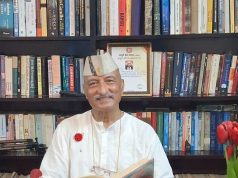
By BK Joshi
In recent years my reading has been quite eclectic. I am, however, quite unapologetic and have really enjoyed reading anything that has caught my fancy. I flit from subject to subject with gay abandon, and am quite happy doing so. So without any further ado I will mention what I have been reading of late.
The first on my list is William Dalrymple’s The Golden Road: How Ancient India Transformed the World. It is a work of great scholarship, well researched and very well written. A measure of the scholarship underlying the book can be gleaned from the fact that while the main text spans just under three hundred pages, the notes and bibliography are spread over one hundred and fifty pages. Drawing on the history of about one-and-a-half millennia – from about two hundred and fifty BCE to twelve hundred CE the author points out that India dominated the intellectual life of the ancient world in art, religion, technology, astronomy, music, dance, literature mathematics and mythology and spanning, what he calls the Golden Road, from the Red Sea to the Pacific.
A second book is Which of us are Aryans? Rethinking the Concept of our Origins by Romila Thapar, Michael Witzel, Jaya Menon, Kai Frieze and Razib Khan. The book engages with the debate on whether the ‘Aryans’ in India were migrants from the steppes of Central Asia or indigenous people who spread from India to the West. Three contributors, viz., Witzel, Thapar and Menon, analyse the archaeological and linguistic evidence, while Frieze and Khan take a close look at the genetic evidence. The burden of the arguments presented in the book are overwhelmingly in favour of the view that the ‘Aryans’ – a linguistic rather than a racial category – were migrants who entered the sub-continent post the Indus Valley Civilisation or Harappan period. It also rejects the ‘Aryan’ invasion theory for which it finds no evidence.
I recently came across a delightful little book, all of one hundred and thirty pages, by the Mussoorie-based writer, Stephen Alter: The Fragrance of Rain: A Brief History of the Monsoon. It talks evocatively of the charm, romance and commercial contribution of the monsoon, and follows the breaking of the seasonal wonder over Kerala and follows its progress over rain-drenched Goa and the frightening storms over Mussoorie. Alter also talks of the contribution of the monsoon in steering trade across the Arabian Sea and its inspiration to generations of poets.
A book that had been gathering dust on my shelves for some time and which I picked up to read recently is Rumi’s Secret: The Life of the Sufi Poet of Love by Brad Gooch. The book traces the journey of Rumi from Central Asia, where he was born in early thirteenth century and spent his early years, travelling to Kenya, Turkey and present-day Middle East. It is in the latter place that he met his Guru, Shams of Tabriz, whose influence transformed him from a Muslim preacher to a mystic and poet. When Shams suddenly disappears leaving Rumi forlorn and pining for his company he started composing joyous poems of reunion – both human and divine.
In his fascinating book The Theft of India: The European Conquest of India, author Roy Moxham traces the subjugation of India by European colonial powers in the three centuries following Vasco da Gama’s discovery of the sea route to India, the fabled land of riches, spices, gold and gems. Starting with the Portuguese, other European seafaring powers including the English, French, Dutch and Danes joined in carving out their colonies in India. It talks of the greed, intrigues and outright swindling by these states in what he calls the theft of India. Supported by good archival research, the book presents a far from flattering account of the so-called ‘civilised’ Europe.
History of another kind is found in academic-turned-food writer Pushpesh Pant’s well-researched book on the food history of Delhi: From the King’s Table to Street Food. It is a veritable tour de force about the food of Delhi encompassing the cuisine of the various ruling elites of Delhi over the years including the Turkic Sultans, Mughal emperors, British colonialists as well as the food of the ordinary residents of the city. It has chapters devoted to the food of traders, scribes and administrators, food for travelers from sarais, dak bungalows, and street-side eateries, the contribution of Christian and Parsi communities and of the refugees who made Delhi their home after Partition. The icing on the cake, so to speak, is recipes for iconic Delhi dishes like nihari, pasande, ishtoo, chicken steaks and many more.
I make a brief mention of two enjoyable books: Never Never Land by Namita Gokhale; Nainital: Through Memory, Stories & History by Janhavi Prasad. The first is a work of fiction set in a remote cottage in the Kumaon Himalayas in the company of two elderly women and involving a mystery around a young woman living with them. The second is a tribute to the lake town by a long-time resident, who knows and loves the place.
Finally, I end by referring to a fun book of verse by Vikram Seth titled Beastly Tales from Here and There and its Hindi translation Idhar Udhar ke Junglee Kisse by Mohini Gupta. Seth says he wrote the verses on a hot day when he could not concentrate; while Mohini says it started as a feeble attempt at translation when she was just fifteen years old!
(B. K. Joshi, a social scientist, is the honorary founder Director of the Doon Library & Research Centre. He is former Vice Chancellor of Kumaun University, Nainital and Director of Giri Institute of Development Studies, Lucknow..)