Commercial use of residential buildings
By SUNIL SONKER
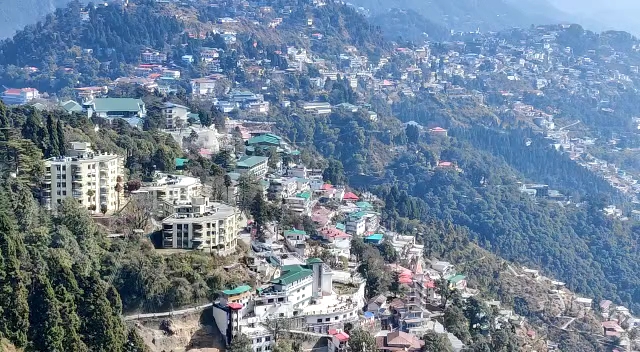
Mussoorie, 13 Oct: The issue of converting residential buildings into hotels, restaurants, and other commercial establishments in Mussoorie has now come under scrutiny. The Mussoorie-Dehradun Development Authority (MDDA) has initiated a city-wide survey on Monday to identify establishments conducting commercial activities in buildings sanctioned for residential use. This move has caused a stir within the city’s hotel and restaurant industry. According to sources, over 200 hotels and restaurants in Mussoorie could fall under the ambit of this investigation. However, this figure is tentative, and the actual situation will only become clear once the survey is complete. This step follows a Supreme Court order expressing concern over the unauthorised commercial use of residential areas across the country. The survey in Mussoorie is not viewed merely as a check of building plans; it also raises questions regarding the city’s unplanned development, the mounting pressure of tourism, and the actual usage of the buildings.
The MDDA survey covers hotels, restaurants, shops, and other commercial establishments. The primary objective of the investigation is to determine the approved usage of the buildings in question versus how they are currently being utilised. If a building’s plan is approved for residential use but a hotel or restaurant is being operated there, it becomes crucial to verify compliance with construction approvals, land-use norms, and relevant regulations. However, an establishment cannot be declared illegal merely because it appears in the survey; the situation must be clarified in each case based on approved plans, permitted usage, and applicable rules.
The MDDA has not yet issued an official statement regarding this survey. Consequently, the authority’s stance on potential actions, the timeline for the investigation, and the procedures to be followed in cases of rule violations remains to be seen.
According to news reports, on March 25, 2026, the Supreme Court expressed concern regarding the conversion of residential colonies into commercial zones and violations of building bylaws and land-use regulations in the case of Loganathan vs. State of Tamil Nadu & Others. The report states that a bench comprising Justice Ahsanuddin Amanullah and Justice R. Mahadevan directed municipal corporations and municipalities in state and Union Territory capitals to identify commercial activities within residential areas. Commissioners of the respective municipal bodies were also asked to file detailed affidavits.
It is against this legal backdrop that the survey in Mussoorie has gained significance. Reports also indicate that the survey was initiated ahead of the Uttarakhand Chief Secretary’s scheduled appearance before the Supreme Court. However, official confirmation from the MDDA regarding the administrative process of the survey and subsequent actions is still required.
The expansion of the tourism sector in Mussoorie has led to an increase in the number of hotels, homestays, restaurants, and other commercial establishments. While tourism is a vital pillar of the local economy and employment, planned urban development has become a pressing necessity amidst challenges such as limited land, narrow roads, a lack of parking facilities, and construction-related constraints. This raises the question: has the expansion of commercial activities in residential buildings been taking place without adequate planning and oversight? If there is a discrepancy between the sanctioned use of buildings and their actual use, accountability must be established, and the level at which construction approvals and land use were monitored must be examined.
Questions regarding the master plan and unregulated construction have long been raised at the local level. However, these issues cannot be resolved merely through surveys or enforcement actions. Keeping the city’s future in mind, it is essential to strike a balance between a clear land-use policy, adherence to building standards, and the requirements for tourism facilities.
Meanwhile, stakeholders in the hotel industry have demanded the implementation of a one-time regularization (or ‘compounding’) scheme to regularize existing establishments. Speaking on condition of anonymity, a hotelier stated that construction and development activities in Mussoorie have expanded in an unregulated manner due to the failure to implement a master plan so far. They urged for a regularization mechanism that takes into account existing properties and called for the early implementation of a master plan for the city. Business owners argue that finding a practical solution for the status of old and existing establishments is crucial for a tourism-dependent city. From a planning perspective, however, it is equally important that any potential regularization scheme does not overlook building safety, land-use norms, environmental constraints, and other applicable legal provisions. The decision to implement such a scheme would depend on the jurisdiction of the concerned government and competent authority, as well as applicable laws. As of now, there is no official information regarding the approval of any such scheme.