Garhwal Post Bureau
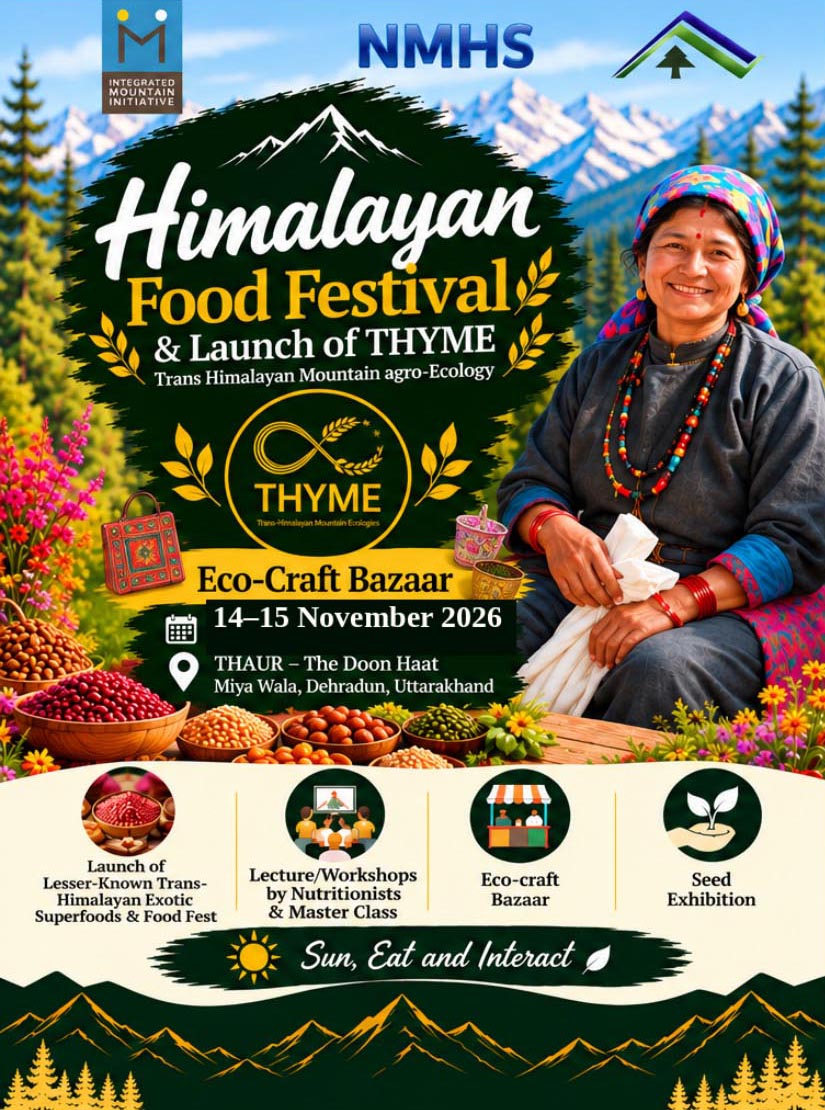
Dehradun, 13 Nov: A two-day Himalayan Food Festival, bringing together traditional mountain cuisine, indigenous crops, agroecology, seed diversity and local crafts, will be held at THAUR–The Doon Haat in Miyawala on 14 and 15 November.
Organised by the Integrated Mountain Initiative (IMI) under the National Mission on Himalayan Studies (NMHS) Agroecology Project, the festival aims to celebrate the rich food heritage of the Himalayan region, promote sustainable farming practices and revive traditional agricultural knowledge.
A special focus will be placed on the food and seed diversity of the high Himalayan regions, including Niti Valley in Uttarakhand, Spiti Valley in Himachal Pradesh and Dzongu Valley in Sikkim. These remote mountain regions preserve unique traditional crops, locally adapted seeds, indigenous food preparations and valuable knowledge of farming in challenging mountain environments.
Traditional foods and agricultural produce from these regions, including naked barley, buckwheat, red rice, indigenous pulses and other locally adapted crops, will be showcased. The festival will provide visitors an opportunity to experience the distinctive food cultures and culinary traditions of high-altitude Himalayan communities.
A major attraction of the festival will be the Himalayan Seed Mela, bringing together farmers, traditional seed custodians, community representatives and agricultural practitioners from different Himalayan regions. Indigenous seeds and traditional crop varieties will be displayed, providing an opportunity to understand their diversity, characteristics, cultural significance and role in climate-resilient agriculture.
The Seed Mela will also facilitate traditional seed exchange among farming communities, particularly from Niti, Spiti and Dzongu valleys. Farmers will have an opportunity to share locally conserved seeds, exchange experiences and knowledge about seed selection, storage, cultivation and conservation. Such exchanges are important for strengthening community seed systems, maintaining genetic diversity and encouraging the revival and continued cultivation of traditional crop varieties.
The festival will also feature an eco-craft bazaar, exhibitions of indigenous crops, expert talks and live demonstrations of traditional mountain cuisine. Farmers, researchers, students, food producers and consumers are expected to participate.
The inaugural day will focus on mountain agroecology, organic farming, nutrition and wellbeing. Prof. J. Kumar, Vice-Chancellor of SBS University, Dehradun, and the Director of Agriculture, Uttarakhand, are among the scheduled speakers. Nutritionist Dr. Pushpika Vajjan will address food and health, while former Uttarakhand Chief Secretary N.S. Napalchyal will attend as Chief Guest.
The THYME (Trans-Himalayan Mountain Agro-Ecology) brand, developed to promote traditional Himalayan food products and strengthen their visibility among consumers, will be formally launched during the afternoon session, alongside a showcase of Himalayan agricultural products.
On November 15, sessions will focus on meditation, nutrition and changing dietary habits. A traditional food masterclass will feature live culinary demonstrations by chefs from Spiti in Himachal Pradesh, Niti in Uttarakhand and Dzongu in Sikkim. These demonstrations will introduce participants to distinctive regional recipes, traditional ingredients and food preparation practices of high Himalayan communities.
The festival will also facilitate interactions among farmers, seed custodians, producers, researchers and consumers, creating opportunities for networking, collaboration and knowledge sharing.
By bringing traditional food systems, indigenous seeds and mountain farming communities into the spotlight, the initiative seeks to encourage wider consumption of Himalayan produce, strengthen local seed conservation efforts and create new livelihood opportunities through sustainable agriculture and local enterprise.
The festival will conclude on November 15 with interactions among participants and acknowledgement of participating communities and partners.