Around the World with the Most Travelled Indian
 By Nitin Gairola
Why does anyone keep any word within inverted commas? You might have noticed that the title for this feature has ‘highest’ within inverted commas and many may have guessed why. But there is some literal truth to it too keeping in mind that Bolivia is high mountain country. Its western part has one of the highest average elevations in the world at 3,800 meters (of course the country has a lesser overall average elevation compared to Bhutan, Nepal, Tajikistan or Kyrgyzstan and a few others since it also has the eastern Amazonian lowlands). Bolivia has the highest city in the world as well called La Paz (at 3,650 meters) and it happens to be their administrative capital. The highest city comes with the highest international airport in the world too – the El Alto at 4,062 meters. That means a plane, that has to go to a height of 10-11 kilometers from sea level, takes off at 4 kilometers instead of 0 kilometers at Mumbai or 0.5 kilometers at Dehradun’s Jolly Grant. Your seat belt sign will get switched off a lot sooner upon take off and the take off time on the runway will be a lot longer as well, keeping in mind the amount of wind that would be required under the wing for lift-off in a ‘thin air’ environment.
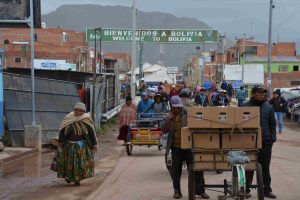
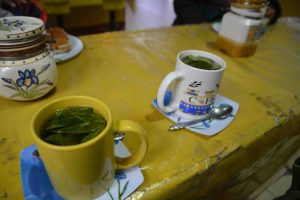
So, there are a lot of highs in Bolivia as you can see and it also includes the ‘second’ highest plateau in the world called the Altiplano and the ‘second’ highest mountain range in the world which is, of course, the mighty Andes. But their biggest ‘high’ is their coca tea or mate-de-coca which is made from some ‘herbal’ leaves. Ask any Bolivian on the street and he swears by it (sometimes also swears before or after drinking it). Drinking it is almost a national pastime or a national obsession and it is fully legal there due to its ‘deep cultural integration’. Everyone is sipping on this ‘medicinal’ tea and it does seem to be very effective in managing headaches that happen in the low oxygen environment at such high altitudes.
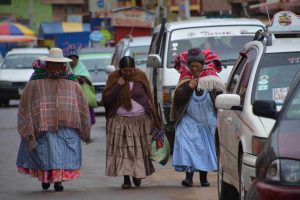
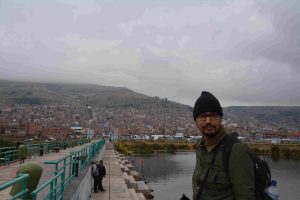
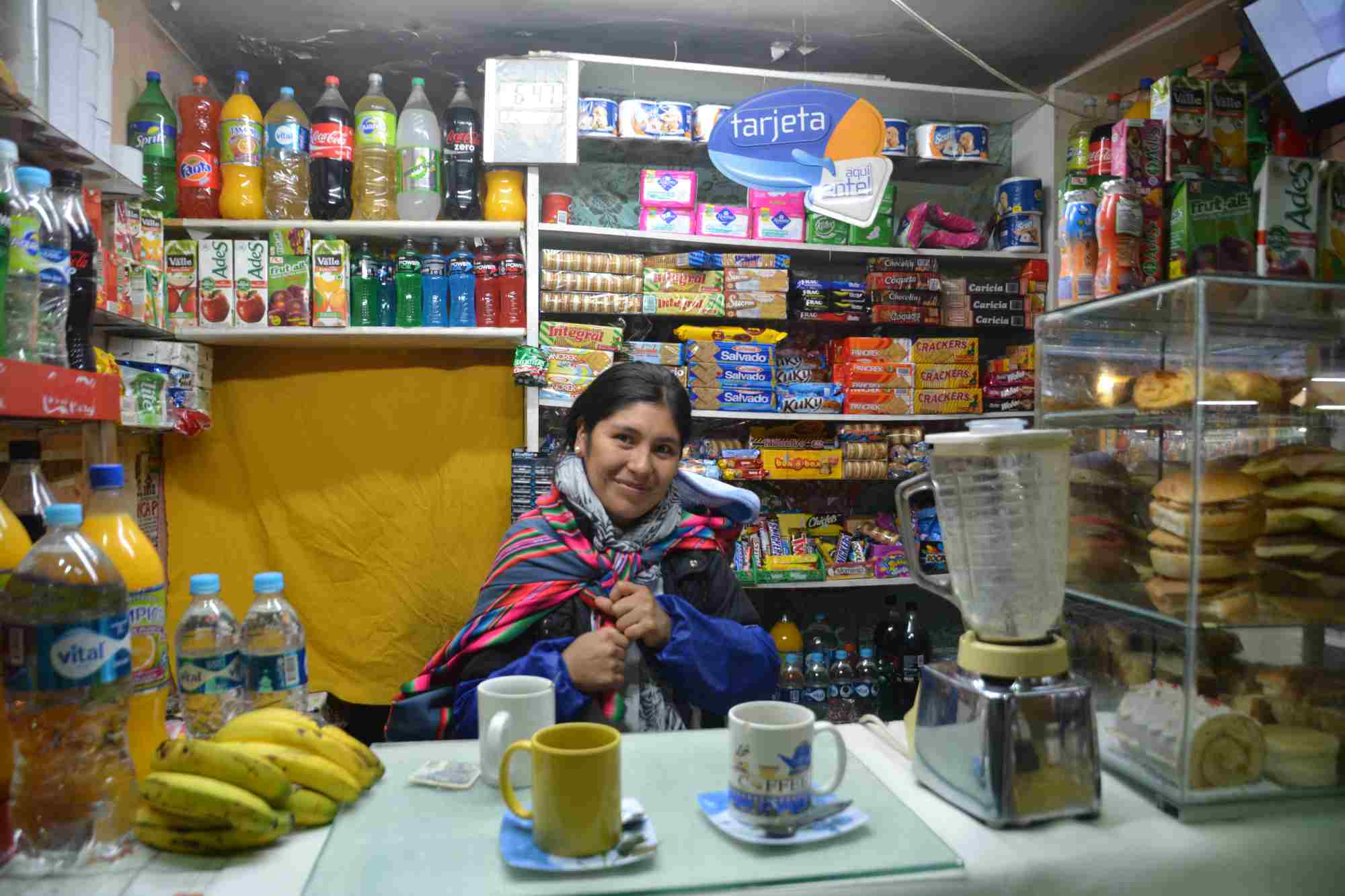
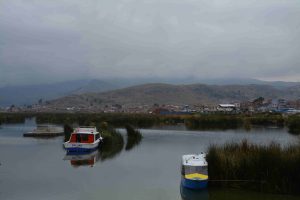
Before entering Bolivia, we had already got our dose of some heavy high altitude in Cusco, Peru and then we reached the city of Puno and Lake Titicaca, the highest navigable lake in the world at 3,810 meters. This lake is known for Incan history, has a thriving indigenous community who live on balsas or floating islands made of reed and is also home to an incredible number of endemic species of birds and fish. And after Titicaca, which forms the border between Peru and Bolivia, we made our way towards the actual seedy land border post and with that entered Bolivia. We saw old ladies in their unique and vibrant Bolivian traditional attire which includes a pollera (large skirt), a bombin (bowler hat) and a manta (shawl). I just wondered for how many more years or decades can they hold onto their traditional dress before the locals start to fancy ‘western’ fashionwear en masse. A lot may have changed by now, I assume.
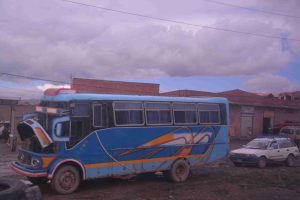
After crossing the border, we got into a Bolivian bus and then it was another long ride to La Paz and we were so glad to finally make it there late in the evening and looked forward to seeing this ‘highest city in the world’. But the first thing we did as we got down from the bus at the station, was to have some coca tea to ‘manage the altitude’ (sort of how an alcoholic justifies the peg too many). But it did help as we were trying to avoid altitude sickness pills. And we were a lot younger then.
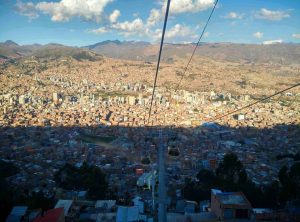
Next morning when the sun came up, we realized we were inside a bowl. You see, La Paz has been built inside a bowl-shaped canyon and it has the (somewhat) posh town center at a lower altitude in the middle and the slums (or modest dwellings if you will) are all around the rim, facing inwards and towards the low center. So, the lower you are, the higher up the social ladder you are considered to be. Living up ‘high’ in La Paz is not so good for your social stature, although being high is just dandy for all.
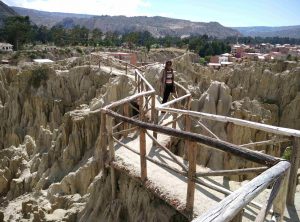
We had just one day in La Paz and our first port of call was a strange land in the outskirts called the ‘Valley of the Moon’ or Valle de la Luna in Spanish. It has these sandstone spires and deep canyons and it is said to create a lunar-like landscape. I honestly found it to be an utter disappointment as we had seen some really alien and remote landscapes during our travels around the world and this was an over-sell at best.
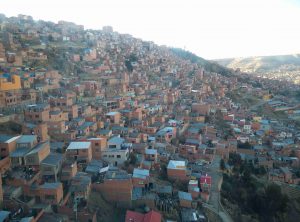
So, we hurried back into town and with limited hours of daylight left, we found that the best way to see this giant canyon city was to use their then brand-new cable car network or the Mi Teleferico as it is called in La Paz. This is their metro in air, built by an Austrian company called Doppelmayr, and what a fun way it was to go from one end to the other of the city for nearly free, and to capture some stunning aerial views of the bowl (although I couldn’t take my big Nikon DSLR due to risk of theft). We went all the way to El Alto Airport stop too via the cable car but were to take our flight out from there a week later. The cable car is also a much safer way to see the city since at that time there used to be frequent cases of taxi drivers taking tourists to remote places and extorting money or valuables or both at gun point. I hope the situation is better now but it is generally wise to keep your wits about you in a foreign place. And with that, the interesting day in La Paz was drawing to a close and we capped it off with some pizza (of all things) at a budget restaurant in their main square called Plaza Mayor de San Francisco.
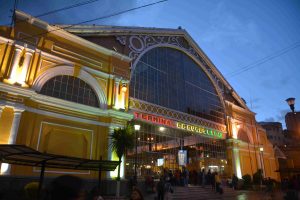
Soon it would be time to take an overnight bus to Uyuni, which is the starting point to some of the strangest and most alien places on Earth. We were excited and had our bellies full and our senses alert, thanks to some bread and mate-de-coca. And then we looked back at the panoramic night view of the lit La Paz slums from the bus station. It felt like a dream to be this far away from home and during this South America adventure, we honestly didn’t bump into a single person from India, in any country there. We were definitely not loaded with wealth so that wasn’t the reason why we were one of the few Indians who had visited South America at that time. Many could visit I am sure, but many didn’t have the idea or the will to visit such remote and uncomfortable but rewarding locations. It is changing now for the better and Indians are flying off on adventures around the world and we were just so glad to be there during that time, since ‘the times they are a-changin’ (as dear Bob Dylan once sang). Next up is the alien landscape beyond Uyuni, which was also beyond imagination.
Nitin Gairola is from Dehradun and has travelled the natural world extensively and is often referred to as the ‘Most Travelled Indian’. He is on a quest to become the first person to travel to every major desert, forest, grassland, tundra & ice biome on Earth, besides every country. Nitin has set world travel records certified by India Book of Records, has written for Lonely Planet and holds National Geographic conservation certifications. He is also a senior corporate executive in an MNC and in his early days, used to be a published poet as well. www.facebook.com/MostTravelledIndian/ www.instagram.com/MostTravelledIndian/