The Badrinath Temple
 By Alok Joshi
Being the eldest grandson of Vasudev Namboodiri, the longest serving Rawal of Badrinath (22 years) does not entitle me to be an authority on the lineage of Rawals or the sacred Badrinath temple. But the sweet ignorance of some of my friends (like millions of pilgrims who visit Badrinath every year for darshan) about the temple and the Rawal, prompted me to share some lesser known but interesting facts about the Rawals of Badrinath. Recently, during a personal function in the US, a lot of foreigners also evinced keen interest and are eager to visit the holy shrine. At the outset, my honest disclaimer is that my information is based purely on my readings, research and childhood memories of some stories told to me by my late grandfather.
Historical perspective
Badrinath or Badrinarayana (as some people call it) is the Hindu temple dedicated to Lord Vishnu. The name Badrinath originates from “badri”, which refers to wild berries. According to legend, Vishnu performed severe penance here. To protect him from the harsh mountain weather, his wife, Goddess Lakshmi, took the form of a Badri tree (Jujube/Indian Ber) to provide him shade. This is why the site is called Badrinath (“Lord of the Badri tree”).
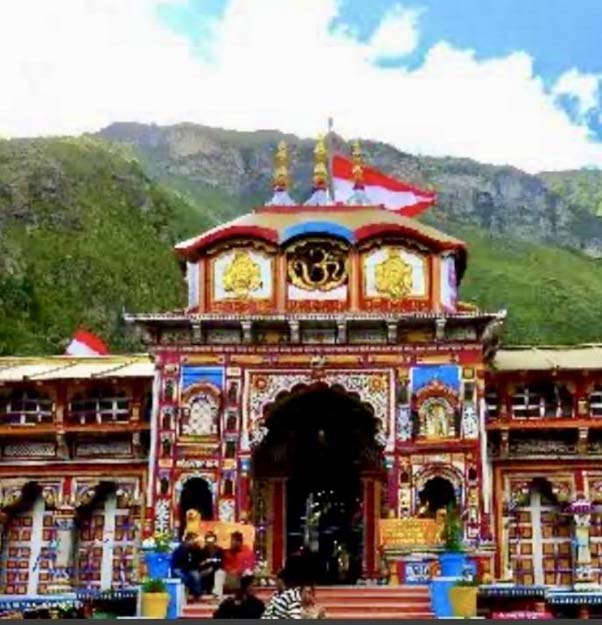
The temple is located in the town of Badrinath in Chamoli district of Uttarakhand, India. It is one of the four pilgrimage sites that forms a part of the popularly known Char Dham Yatra. The idol of Lord Badrinath is 3.3 feet and black in colour. The original black stone idol of Lord Badrinarayan was discovered by Adi Shankara in the Alaknanda River and initially enshrined in a cave near the Tapt Kund before being moved to the current temple site. The temple is situated on the banks of River Alaknanda in the Garhwal hills. The height of Badrinath town is approximately 3133 metres above sea level (10,279 feet). The temple is closed for 6 months during winters.
The spiritual significance
Badrinath is the only temple in India that is part of three major pilgrimage circuits. It connects with the Char Dham Yatra (Dwarka, Puri, Rameshwaram, Badrinath), the Chhota Char Dham (Yamunotri, Gangotri, Kedarnath, Badrinath), and the Sapta Badri circuit dedicated to Vishnu in Uttarakhand. No other temple in the country plays this kind of a spiritual role. It literally connects all four corners of India, from the beaches of Rameshwaram to the snowy Himalayas.
Just below the Badrinath Temple steps, there is a Tapt Kund, a natural hot water spring that flows non-stop even in the middle of winter. The water stays around 45°C, while the air around can be freezing cold. Before darshan, many devotees take a traditional holy dip there to feel physically refreshed and spiritually ready. Locals believe the spring carries divine energy from Lord Vishnu, while scientists say it’s due to underground geothermal activity. The hot water is rich in sulphur and considered to have healing properties.
As winter approaches, a special closing ceremony called Badri-Kedar Utsav is held. The main idol of Lord Badrinarayan is then ceremonially shifted to the Narsingh Temple in Joshimath, where the worship continues throughout the winter months.
The Rawal of Badrinath
The Rawal of Badrinath is the chief priest (head pujari) of the temple. He is traditionally selected only from the Namboodiri Brahmin community of Kerala, South India. This practice was established by Adi Shankaracharya in the 8th century. After finding the idol of Lord Badrinarayan in the Alaknanda River and enshrining it, he appointed priests from his home state (Kerala) to ensure a uniform and disciplined tantric mode of worship. Even after supposedly 1200 years, this tradition (started by Adi Shankaracharya) continues unchanged. The Rawals are responsible for performing rituals at the temple. The Rawal is the only person permitted to touch the idol of Lord Badrinath.
Vasudev Namboodiri
My grandfather was also a Namboodiri Brahmin from Vaikom village in Kerala. When he was 19, he left his home and family for Badrinath and served as Naib Rawal (Assistant Rawal) before being appointed as Rawal. To be appointed as a Rawal, traditionally, one must be a bachelor and well-versed in reciting mantras, knowledgeable about Vaishnavite traditions and effectively perform all the daily rituals. His role holds high esteem.
Longest Tenure and Resignation
Research tells me that my grandfather is widely remembered as one of the most influential and longest-serving head priests (Rawals) of the 20th century. His tenure ended not because of age, but due to a significant policy shift. When the government decided to take over the administration of the temple through the Shri Badrinath Temple Act of 1939 (which eventually led to the formation of the Temple Management Committee), he resigned in protest. He believed that the intervention of a government committee would undermine the religious authority and spiritual autonomy of the Rawal.
Breaking Tradition: Settling in the North
While most Rawals return to their ancestral homes in Kerala after their service, he chose to remain in the Himalayas. Since he was no longer the active Rawal (a position that requires lifelong celibacy), he entered the householder stage of life (Grihastha). He married a woman from the Bhatt family of Joshimath, local Brahmins who traditionally assist in temple affairs.
He built a prominent residence in Joshimath known as Rawal Niwas, which remains a landmark in the town even today. This huge house had several rooms, fields that grew fruits and vegetables, and a cow shed (gaushala). He was a highly respected person in Joshimath and everyone in town knew this palatial building with a very big wooden entrance gate, colourful tiles and glass.
Personally, something that has stayed with me all these years is the fact that the impressions of both my feet as a child were embedded in the cemented courtyard outside the living room. My feet became bigger but they continued to remind me of my childhood with every passing year. We spent our memorable childhood vacation in that house every year. Coming from cities, it was great fun to climb trees to pluck fruit or even take the cows out in the neighbouring fields for grazing.
The Rawal Niwas was sold in desperation for a paltry amount of Rs 80,000 after my grandmother’s sudden death. A Christian Missionary School is running in that place today.
Legal and Religious Legacy
During his time, he was involved in landmark legal cases regarding the rights of local Pandas (pilgrim guides) versus the authority of the Rawal.
One famous case, Narhari Shastri vs Vasudeva Namboodiri, reached the Supreme Court/High Court levels, defining the rights of devotees to enter the temple for worship while upholding the Rawal’s authority over the internal sanctum and rituals.
He was highly respected by the Royal Family of Nepal and the King of Tehri Garhwal, who traditionally holds the spiritual title of the “Living Badrinath”.
A Bridge between Cultures
Vasudev Namboodiri is often cited as a perfect example of the cultural synthesis Adi Shankaracharya intended. Born into a Namboodiri family in Kerala, he spent the majority of his 90+ years of life in the Garhwal hills, becoming a beloved local figure in Joshimath while strictly maintaining the Vedic traditions of the South.
His descendants still live in the Uttarakhand region, marking a rare instance where the lineage of a Badrinath Rawal became a permanent part of the local Garhwali community. In fact, four of his living daughters are settled in Dehradun. All his six daughters were married to Garhwali families.
Appointment Process of Rawal
I understand that the nomination process of Rawal includes the Uttarakhand government requesting the Kerala government to nominate a suitable candidate. The nominee is then approved by the erstwhile Maharaja of Tehri Garhwal, maintaining the historical linkage. The King of Garhwal (now represented ceremonially by the Tehri Royal family) is considered the temple’s chief patron, and the Rawal performs pujas under this symbolic royal authority. Currently, the appointment is handled by the Shri Badrinath- Kedarnath Temple Committee (BKTC), which manages the affairs of both the Badrinath and Kedarnath temples. The present Rawal, Amarnath Namboodiri was appointed as the new Rawal in July 2024. He was serving as the Assistant Rawal since 2020 and he took over the role after the resignation of the previous Rawal, Ishwari Prasad Namboodiri.
The Rawal is formally installed through a “Tilak Ceremony” and is accorded the status of “His Holiness”. My grandfather used to travel from Badrinath to Joshimath on an elephant with a big cavalcade of devotees and temple officials.
In early ‘70s, much against his wishes, he was requested to perform the duties of the Rawal since the present Rawal suddenly fell sick with some skin disease. After much convincing, he agreed to go to Badrinath to perform the pooja. During his second tenure, I had a chance to see things for myself much more closely. We had access to his residence, even his bedroom. We used to sneak into his room whenever he was busy in the temple and rest on his bed. I can never forget the taste of morning breakfast Upma served in a group sitting down on the floor.
Some childhood memories
I still remember watching him perform Pooja from close quarters, being his privileged grandson. He was something special. I saw him going for hot water baths in the tapt-kund every time he went to do Pooja in the temple or return from there. He used to walk barefoot in extreme cold (even when it had snowed) and climb the stairs leading to the door of the temple to perform the rituals. Two immaculately dressed guards escorted him to ensure nobody touched him on his way up and down the stairs. Now I realise that to be the Rawal is not a bed of roses. It demands extreme discipline and strong will-power. They don’t give discourses on religion from their cosy living rooms but embody it through their conduct and dedication.
One of the things that he shared with me was about a secret mantra. Apparently, if he ever shared the mantra, his death was sure. He continued to live a healthy and royal lifestyle with his daughters, by rotation (he had six daughters, no son). It goes to the credit of all his six son-in-laws for keeping up with his royal habits and even some innocent idiosyncrasies. I had the privilege to be his roommate for the longest time. I was in total awe of him as a child. He would wake up at 4 a.m. to do his prayers and meditation. He had a disciplined life and was very particular about his meal timings. He remained healthy till the end, sat upright and never used any eye glasses. I never saw him sad or depressed. He had a roaring laugh.
Now that I have returned to my roots after all the globe-trotting, I am waiting to visit Badrinath again to unearth more history and relive childhood memories.
(Alok Joshi is a Dehradun-based Management Advisor, Corporate Trainer, Image Consultant, Motivational Speaker, author of three books, and a freelance writer. He has worked in top management positions in many organisations across many countries.)