By Arun Pratap Singh
Garhwal Post Bureau
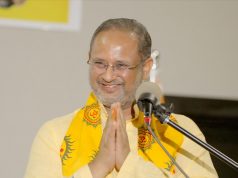
Ashok Kumar, IPS (UT:1989), is one of Uttarakhand’s most respected police officers, known for his integrity, administrative clarity and deep commitment to citizen-centric policing. A former Director General of Police, Uttarakhand, he has led significant reforms in community policing, anti-crime strategy, traffic management and digital safety. He is also widely recognised for his contribution to public-facing literature on policing, internal security and cybercrime. A prolific author, he has written several acclaimed books that bridge policing, national security and public awareness. A keen sportsman, particularly an excellent badminton player, he has also dealt with sports administration for years. His daughter Kuhu Garg, now an IPS trainee, has also been an international badminton player who has represented India in numerous tournaments. Presently, Kumar serves as Vice Chancellor, Sports University of Haryana, reflecting his long-standing interest in the promotion of sports and youth development. In this exclusive interaction with Garhwal Post, he speaks about the Dehradun Crime Literature Festival, of which he is the Chairman.

You have often spoken about ‘citizen-centric policing’ and public partnership in crime reduction. How does a crime literature festival support this philosophy and enhance public engagement with law-enforcement issues?
Citizen-centric policing essentially means involving people in policing, because policing is ultimately done for the people. They are stakeholders and must be consulted, engaged and made part of the conversation. The Crime Literature Festival does exactly that. It creates an open platform to discuss matters of policing, crime and society in a transparent manner. It is, in many ways, an extension of citizen-centric policing and public partnership in crime reduction. We also structure our festival around three broad categories of speakers: police officers sharing real-life cases, authors of crime fiction, and filmmakers, actors, writers and directors, who explore crime creatively. The festival further covers a wide range of themes such as cybercrime, terrorism, traffic, online radicalisation, land frauds, forensics, drug abuse and women’s safety.
Earlier editions featured decorated authors, police officers, forensic experts and journalists. What curatorial approach guides the selection of speakers this year, and how do you ensure diversity across fiction, non-fiction, law and investigative journalism?
We have always tried to include all the categories you mention, and we intend to do the same this year. This year, we are also taking up discussions on terrorism in general and the recent Red Fort terror attack in particular. Another important theme is the radicalisation of educated youth and the steps society can take to counter it. Our emphasis is on ensuring that the public becomes better informed so that society itself becomes a partner in fighting radicalisation and cybercrime.
Given your experience with anti-cybercrime initiatives and community policing, will this edition include focused discussions on digital safety, online radicalisation, cyber-fraud trends or youth vulnerability?
Yes, certainly. Cybercrime continues to evolve rapidly, and we are committed to keeping it a major part of the festival. As in previous years, we have sessions dedicated to cyber frauds, digital safety, online behaviour and the vulnerabilities of youth. Public awareness on cyber hygiene and safe online practices remains one of our key priorities.
Earlier editions examined the linkages between crime, society and psychology. What new focus areas have been introduced this year and how will they contribute to a more informed public dialogue on justice and safety?
This year we have introduced a session on intelligence agencies and their operations, as well as a session on money laundering and black money. We will continue to address core issues such as psychology and cyber frauds, as in the previous editions. A special session on land frauds is a new addition. We also plan to discuss terrorism comprehensively, including the recent Red Fort incident, along with the growing radicalisation of educated young people. The idea is to ensure that the public is sufficiently aware and equipped to recognise and counter modern crime challenges.
Your books, namely, ‘Human in Khakhi’, ‘Challenges to Internal Security of India’, and ‘Cyber Encounters’, have been well received, along with your writings for civil services aspirants. Are you working on any new book, particularly on policing?
Human in Khakhi was a major success. Through it, I wanted to show that although we wear the khaki uniform, we remain human beings at heart, and there is no reason for the public to fear us. The book highlights how police officers can effectively serve society within the existing system.
Challenges to Internal Security of India examines the various threats facing the country, terrorism, Naxalism, cyber threats, border management and communalism and also explains what measures the government is taking to respond to these challenges.
Cyber Encounters was written to make people aware of cyber frauds and how they can protect themselves. Continuous awareness of evolving cybercrime is essential. As of now, I do not have a new book on policing in the pipeline, but ideas are always developing and one never knows what may take shape in the future.
How do you see the Dehradun Crime Literature Festival evolving over the next few years? Can it become a national or even international centre for crime studies, criminology exchange and creative writing on law-enforcement themes?
Certainly. In the next few years, we want it to become a national platform for discussions on crime, terrorism, criminology and related issues. At present, we do not plan to make it an international event, but our clear aim is to take it national. We intend to hold one of our future editions in Delhi. We want it to become a public movement, an open space where crime, policing and the future of law enforcement can be discussed transparently. It can also be a space where fiction writers get ideas, and where the public, police and filmmakers or OTT creators interact meaningfully. Ultimately, it should become a vibrant platform that supports both public awareness and creative exploration around crime and justice.