Garhwal Post Bureau
DEHRADUN, 13 Dec: The second day of the Crime Literature Festival of India unfolded as an intense and wide-ranging exploration of crime, justice, power and social responsibility at Hyatt Centric, Dehradun, drawing strong engagement from audiences across age groups and professions.
The day opened with “Press 9 & Dial 100: Inside India’s Crime Lines”, where Kulpreet Yadav said his writing draws from real-life experiences and noted that non-fiction demands compelling narration since its outcomes are known. Shailendra Jha shared that he builds stories around a core idea and strong characters, adding that Press 9 was written to raise awareness of crime, particularly cybercrime, and that his first publication was fulfilling because it brought his stories to a wider audience.
This was followed by “License to Violate? Everyday Lawlessness on Indian Roads”, where IG Neelesh Bharne outlined the three Es of traffic management—enforcement, engineering and education—stressing that policing alone cannot ensure discipline, especially in a tourism- and student-driven city like Dehradun. SP Lokjeet Singh said accidents can be reduced only through a mix of infrastructure, enforcement and public awareness, adding that every accident is treated as a crime and investigated. Rahul Kotiyal highlighted unplanned development, weak policy intervention and the need to promote public transport, while criticising sensational media coverage and the lack of accountability-driven reporting. Additional SP Jaya Baloni emphasised that lasting road discipline comes from awareness and personal responsibility, not short-term fear of enforcement. The session was moderated by Supriya Chandhok.
The literary pulse of crime took centre stage in the session “Dastan-e-Desi Pulp”, where authors Yashwant Vyas and Subodh Bhartiya, along with publisher Randhir Kumar Arora, in conversation with Sanjiv Mishra, discussed the legacy and revival of pulp literature. Vyas recalled how pulp once blended crime, romance and thrill, but noted its declining recognition and the growing preference for English translations over Hindi originals. Bhartiya described pulp as accessible entertainment that is now evolving with themes like cybercrime, while Arora stressed the need to look beyond textbooks, pointing out that classic Hindi pulp once sold in lakhs. The session also announced the launch of India’s largest crime writing honour, the ‘Swarn Kataar Award’, from next year in collaboration with the Crime Literature Festival, and featured the launch of Vyas’ book ‘Begampul Se Daryaganj’.
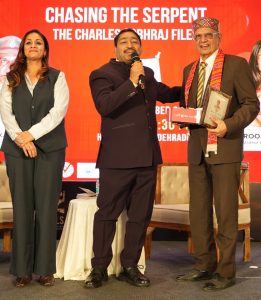
Another session of the day, “Chasing the Serpent: The Charles Sobhraj Files,” featured former ACP and author Madhukar Zende in conversation with Roopa Soni. Zende spoke about Sobhraj’s early drift into crime, beginning with vehicle thefts, and recalled that one of his associates once surrendered a revolver while revealing plans of a major robbery. Calling Sobhraj one of the sharpest criminals in Indian history, he said his escape from Tihar Jail became one of the most sensational crime stories of its time.

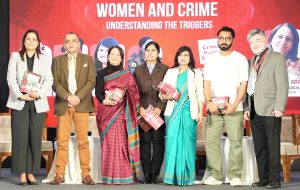
Gendered dimensions of crime were examined in “Women and Crime: Understanding the Triggers,” where Shashwat Bajpai, Commandant Shweta Choubey, author Ruby Gupta and SP Lahaul & Spiti Shivani Mehla, moderated by Shakti Manocha, discussed vulnerability, systemic failures and access to justice. In the session, panellists highlighted the complex social and psychological factors behind women’s involvement in crime. Shashwat Bajpai cited real cases to show how emotional neglect and personal circumstances can lead to criminal choices, while cautioning that OTT platforms often blur awareness with exaggeration. Commandant Shweta Choubey noted that trauma and substance abuse are among the strongest triggers pushing women toward crime. Author Ruby Gupta said women offenders are often products of prolonged emotional, physical and social oppression, acting when their endurance breaks. SP Shivani Mehla added that in remote regions like Lahaul–Spiti, harsh terrain and climate pose serious challenges to law enforcement and access to justice.
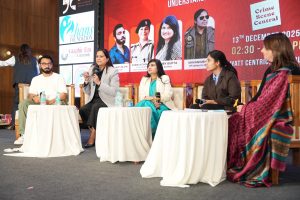
The session “Forgotten Behind Bars: Justice Delayed, Justice Denied” saw Aishwarya Mahajan, Justice RK Gauba and ADG Intelligence & Security Abhinav Kumar in conversation with Pooja Marwah. During the session,Aishwarya Mahajan highlighted that a large percentage of undertrials are innocent, trapped due to a lack of power, and negatively influenced by being housed with convicts, while also stressing the importance of prison reforms for rehabilitation. Abhinav Kumar spoke on systemic bias at the stages of FIR registration, investigation, and prioritisation of cases, often favouring the powerful. Justice RK Gauba shared insights through landmark cases and structural differences in policing.
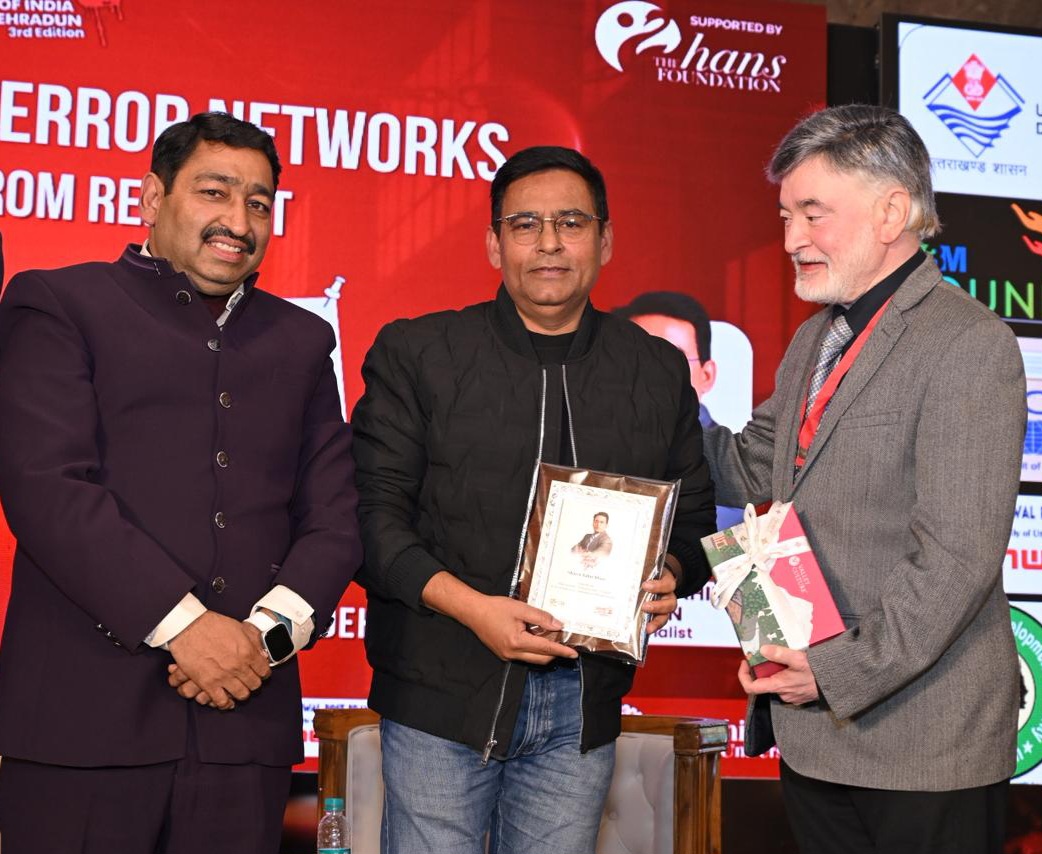
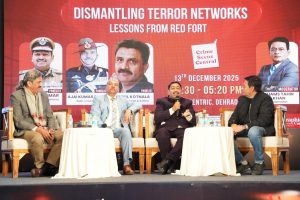
Other sessions delved into national security with “Dismantling Terror Networks: Lessons from Red Fort,” featuring former DGP Uttarakhand Ashok Kumar, Retd Lt Gen AK Singh and Retd Col Sunil Kotnala, moderated by Journalist Shams Tahir Khan, focusing on counter-terror strategies and intelligence coordination. During the session, Ashok Kumar highlighted that inter-state police often withhold information due to competition and security concerns, while modern warfare combines drones, cyberattacks, and ground operations. Lt Gen Ajai Kumar Singh stressed intelligence’s role in preventing attacks and the need for indigenous technology. Col Sunil Kotnala noted that militants exploit mobile-based radicalisation, making urban counter-terror operations complex and risky for civilians.
This was followed by the launch of ‘Mission Saudi: India’s First-Ever Extradition of a Rape Accused’, where former DG of Uttarakhand Aloke Lal and Maanas Lal, in conversation with Author & TV Producer Anirban Bhattacharyya, discussed cross-border justice and investigative persistence.
Real estate fraud was discussed in “Builders, Brokers and Betrayals,” featuring Bansidhar Tiwari and SSP Ajai Singh, moderated by Anoop Nautiyal, highlighting regulatory gaps and citizen awareness.
Cinema and crime intersected in “Uttarakhand Rising: India’s New Cinematic Capital,” with Ketan Mehta, Anuritta K Jha and Bansidhar Tiwari, in conversation with RJ Kaavya, discussing Uttarakhand’s growing role in filmmaking.
Parallel sessions included “Sins, Secrets and Superheroes,” where Ranjan Sen said crime fiction connects when writers think like criminals, Vinay Kanchan highlighted the grey space between law and justice as fertile ground for strong storytelling, and Suhail Mathur noted that crime and moral ambiguity have long existed in mythological narratives.
This was followed by “Danger in the DMs,” where Anirban Bhattacharyya cautioned against vulnerabilities exploited through social media and dating apps, while Jupinderjit Singh underlined that the pursuit of natural justice often outweighs legal processes in India and that writing non-fiction crime is emotionally demanding and far from its glamorous portrayal on television.
In the session “Itarsi Express – A ride through mystery with Vivek Duggal”, Author Vivek Duggal said his stories draw from real events blended with imagination, stressing that effective writing makes readers feel every emotion and stay invested till the end.
Other sessions held during the day were “Delhi Disco: Mischief, Murder and Mayhem on the Dance Floor,” with panellists Author Shikhar Goyal and Supriya Chandhok, “Crime, Power & Public Trust” featuring former Commissioner of Delhi Police Neeraj Kumar, who highlighted key insights on policing, cybercrime, terrorism, and legal reforms. He shared experiences from the Nirbhaya case, the 1993 Mumbai blasts, investigations into Dawood Ibrahim, and spoke candidly about corruption in cricket and the rise of spot fixing. This was followed by “The Liar Among Us”, featuring Storyteller Bishhal Paul in conversation with Priyakshi Rajguru Goswami and a workshop on crime reporting by Jupinderjit Singh, offering audiences multiple lenses to engage with the genre.
Organised by the Doon Cultural and Literary Society (DCLS), the festival continues to position Dehradun as a key platform for dialogue on crime, justice and society, with the final day set to focus on cybercrime, intelligence operations and ethical challenges in modern policing.