 By Prakash Pandey “Pahadi”
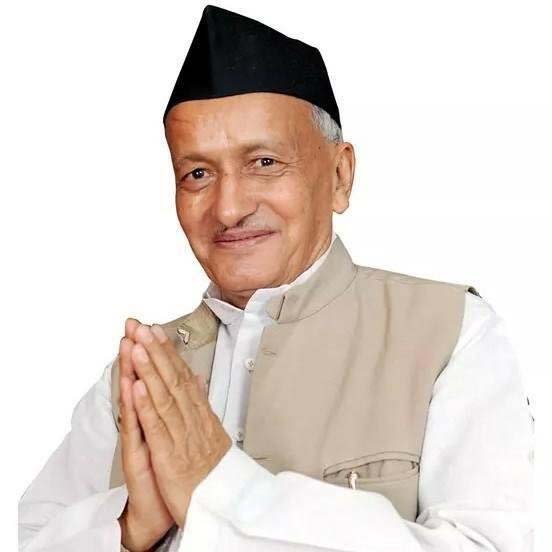
The evening of 25 January was not an ordinary one for Uttarakhand. It was a moment that travelled quietly across the mountains, valleys, and plains of the state, carrying with it a shared sense of pride and recognition. With the announcement of the Padma Bhushan for Bhagat Singh Koshyari, former Chief Minister of Uttarakhand and former Governor of Maharashtra and Goa, the state witnessed not a burst of celebration, but a deep, collective acknowledgement.
From Mana village in Chamoli, located at an altitude of nearly 18,500 feet where Koshyariji had stayed during his visit on 27 September to the Tarai Bhabar region, the response was strikingly uniform. Phones rang continuously, not merely to convey congratulations, but to express a sense of personal connection. It was as if people across Uttarakhand were reaching out to one of their own.
This was not the celebration of an office or a title. It was the affirmation of a long relationship between a public figure and the society he has remained rooted in for decades.
Bhagat Singh Koshyari’s political journey resists easy categorisation. He has served as a Minister, Chief Minister, Member of Parliament in both Houses, and Governor, yet his public relevance has never been derived from office alone. Long before occupying positions of constitutional authority, his political consciousness was shaped in the formative spaces of student and academic life, where he served as a Students’ Union Secretary and later as a University Executive Councillor. These early roles anchored his engagement in institutional responsibility, debate, and the ethics of representation, establishing a foundation that preceded power and outlasted it.
Even today, long after formal authority has receded, he continues to travel extensively into remote villages, difficult terrain, and high-altitude, snow-bound regions of Uttarakhand, maintaining direct social contact with ordinary people. These journeys are not ceremonial tours; they reflect a deeper instinct that public life does not conclude with office, and leadership cannot endure without listening.
Remaining unmarried throughout his life, Koshyariji transformed personal renunciation into moral resolve, dedicating his time, energy, and conscience to collective purpose. Most recently, by pledging to donate his body after death, he offered yet another quiet affirmation of an ethic rarely witnessed in public life where service is not episodic, but total; not performative, but principled.
During the Uttarakhand statehood movement, he provided not only organisational leadership but also intellectual direction. In this context, he authored a 28-page booklet, titled “Uttaranchal Pradesh”, in which the necessity of a separate state was articulated through historical facts and contemporary realities. This ideological framework was later developed in greater detail in his book, “Uttaranchal Pradesh: Struggle and Solution – In the Light of History and Facts”.
In these works, he highlighted Uttarakhand’s economic and social challenges, pointing out that despite continuous exploitation of forests, water, energy, and mineral resources, the local population received little equitable benefit. The absence of employment opportunities, policy insensitivity, and centralised governance turned migration into a persistent condition of hill life. He argued that Uttarakhand’s problems could only be addressed through a holistic understanding of its history, geography, and economy, requiring an administrative framework sensitive to local realities.
In the book “Uttaranchal Pradesh”, Koshyariji articulated the case for a separate state not through emotional appeal, but through a rigorous critique of administrative inequality and economic distortion. He identified road connectivity, transport costs, and loss of time as structural evidence of regional neglect, capturing it succinctly as “double the fare, triple the loss of time”. While most roads in Uttarakhand were kutcha, transport fares per kilometre were significantly higher than in the plains, and difficult terrain multiplied travel time.
To expose this anomaly, he cited a stark comparison: the journey from Pithoragarh to Tanakpur -151 kilometres, cost Rs 50.50, whereas the much longer route from Tanakpur to Delhi-260 kilometres, cost only Rs 15. This was not rhetoric, but an indictment of a system that penalised geography instead of compensating for it.
He extended this analysis to energy governance, questioning why a region endowed with immense hydropower potential remained energy-deprived. Despite an officially assessed small hydropower capacity of 400 MW, barely 33.15 MW had been developed, largely due to administrative centralisation and indifference. At a time when Himachal Pradesh was achieving energy self-sufficiency and selling surplus power to other states, Koshyari asked why Uttarakhand, with comparable natural advantages, was denied similar opportunities—and even the authority to manage its own resources.
His examination of forest governance was equally uncompromising. While only 17 per cent of undivided Uttar Pradesh was classified as forest land, nearly 66 per cent of that forest area lay in Uttarakhand. Yet this ecological abundance translated into restriction rather than development what he memorably described as “abundant forest wealth, yet unending adversity”.
Beyond movements and offices, his contribution is especially evident in his engagement with the Uttarakhand legislature during the state’s formative years. As Chief Minister and later as Leader of the Opposition, he consistently reminded the House that development could not be measured by announcements alone. On welfare policy, he cautioned against universal measures such as ration card distribution without procedural scrutiny, warning that decisions taken “in emotion rather than procedure” often generate deeper administrative problems.
When ministers attempted to evade detailed questioning by invoking seniority or experience, he firmly asserted the Assembly’s right to clarity, maintaining that experience could never replace information, and that the House was entitled to precise answers. His interventions on budgeting reflected the same insistence on substance over form. He questioned how development could be claimed when schools in some regions had remained non-functional for decades, and why power corporations continued to suffer financial leakages and declining allocations even as efficiency was repeatedly invoked.
In Parliament, Koshyari avoided rhetorical aggression. When he asked whether the government had defined an appropriate ratio between doctors, nurses, and population, he was not seeking a statistic; he was questioning whether policy-making genuinely accounted for human capacity. When he raised the issue of medical support for senior citizens, it was not merely about welfare allocation, but about whether ageing and experience still held dignity within India’s development narrative.
Environmental concerns in his speeches followed the same pattern. Neither alarmist nor apologetic about development, his tone remained measured. Long before sustainability became fashionable vocabulary, he framed it as moral responsibility. Equally significant were his interventions on women’s representation. In 2002, when the Women’s Reservation Bill remained stalled at the national level, “Bhagat da” argued in the Uttarakhand Assembly that, if the electoral promise of 30 per cent reservation for women could not be implemented immediately, the state must at least institutionalise a minimum threshold of 20 per cent. This was not a dilution of principle, but an insistence that political commitments translate into enforceable policy especially in a newly formed state still defining its governance ethic.
Perhaps the most understated yet revealing aspect of his public life is what followed the culmination of formal power. Many political careers fade into ceremonial silence once offices are relinquished. His did not. His continued journeys into remote settlements, high-altitude villages, and snow-bound regions reflect a different conception of leadership one that does not rely on institutional command but on sustained social contact. These visits rarely seek publicity, yet they reaffirm a central idea running through his career: that public life is continuous, grounded in listening and observation.
Seen in this light, the Padma Bhushan does not appear as a retrospective decoration. It reads instead as recognition of a political ethic one that values restraint over noise, continuity over convenience, and questions over applause. Bhagat Singh Koshyari’s career reminds us that democracy survives not only through elections and laws, but through individuals who persist in asking difficult questions in calm voices and who remain rooted in the society they speak for, long before those questions become fashionable.
(The Author is an Uttarakhand based independent writer, poet, social activist & Manager in the ONGC, Dehradun.)