 By Dr Vinod Raturi
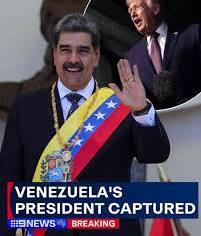
Recent US actions in Venezuela, specifically operation “Absolute Resolve”, could be seen as a return to “gunboat diplomacy”. This term refers to the threat or use of naval power to achieve foreign policy goals, a practice common in the 19th and early 20th centuries. This Venezuelan crisis can be described as a way of gunboat diplomacy because since late 2025 the US has enforced a “quarantine” or naval blockade on Venezuelan oil tankers to pressure its government. Later on 3 January 2026 the US forces conducted a raid that captured Venezuelan president Nicolas Maduro and his wife Cilia Flores and extradited them to New York to face narco-terrorism charges. US President Trump declared that the US would run Venezuela until a transition takes place. It was a sort of “running policy” – using offshore military and economic leverage to compel compliance from the interim government without a full scale ground occupation. The main objective of the action stated by the US administration was regaining access to oil assets and ensuring US oil companies manage the country’s infrastructure. The UN experts and critics have described the action as “gunboat diplomacy on steroids”, viewing it as a violation of international law and a return to imperialistic patterns in power politics. Unlike traditional and mostly bloodless gunboat diplomacy, this operation involved significant lethal force with at least 80 casualties and the use of cyberattacks and special forces, placing it in the category of “coercive diplomacy” or “hybrid warfare”. The US officials defended the mission as a “law enforcement act” aiming to remove a criminal regime (the cartel de los soles) and protect US national interests. The US administration did not offer any blueprint for the governance of Venezuela. Trump’s statement about running Venezuela was assertion without explanation. There are still no plans to rehabilitate ministries or manage public services. Gunboat diplomacy is not about ruling territory but about controlling decision spaces. In this scenario, for the time being Vice President of Venezuela, Delcy Rodriguez functions as a transmission mechanism without any sovereign authority. She has almost no alternative than to govern within the parameters defined by Washington’s threat of force under the aegis of “Donroe Doctrine”. This newly articulated doctrine is an offshoot of the 19th century “Monroe Doctrine”. In 1823, then American President James Monroe viewed the entire western hemisphere as an exclusive strategic zone, in which other external powers were not supposed to have any legitimate stake. Today, the revival of Monroe Doctrine by Donald Trump in the form of Donroe Doctrine does not envisage simply the area of influence but seeks to control the area through coercive means. Trump has redefined the core values of neighbourhood policy. The reassertion of a sphere of influence and managing its resources is one of the characteristics of this revanchist policy that could lead to neo resources imperialism. It presents the western hemisphere not as an area of neighbouring concern but as a privileged security zone in which extra- regional stakeholders are treated as actors non grata than usual participants of international relations.
Maduro’s removal is consistent with the reassertion of the Monroe Doctrine that places the western hemisphere – from Greenland to the Caribbean and Latin America – at the centre of US foreign and security policy. The Venezuela operation negates the postulates of existing global order established in the aftermath of World War 2, based primarily on the idea that the relations among states should be regulated by common rules and institutions. The slogan “Make America Great Again” sounds a revanchist policy that aims to erode the main ordering principles of contemporary global governance such as national sovereignty, economic liberalism and inclusive rule-based multilateralism. The core principle of the UN Charter, Article 2(4), prohibits the use of force against the territorial integrity or political independence of any state. Critics argue that the US intervention is a blatant breach of this principle, setting a dangerous precedent where powerful nations can unilaterally intervene in the domestic affairs of weaker ones. The operation in Venezuela was conducted without authorisation from the UN Security Council, side-lining multilateral institutions and exposing their fragility when powerful states act unilaterally. This challenges the credibility of international legal frameworks and reduces trust in the global governance mechanism, particularly among Global South nations that rely on these frameworks for protection against power asymmetries. The US has framed the action as a surgical law enforcement operation “to apprehend indicted criminals and as self-defense against “narco- terrorism” under Article 51 of the UN charter. Most international legal scholars reject this reinterpretation, arguing that narcotics trafficking does not meet the “kinetic” thresholds of an “armed attack” required for self-defence justification under international law. The US action has deepened global fragmentation with sharp divisions among nations.
Russia and China strongly condemned the intervention while some Latin American and Caribbean nations were divided in their responses, reflecting a weakening regional consensus and a return of great-power rivalry to the western hemisphere. The US attitude signals a potential shift towards a more power-based, rather than rules-based international order. The Venezuela intervention suggests a future where powerful states exercise “discretionary militarism” acting on their own perceived interests and using force when conveniently bypassing international conventions and making a rule- based order a selective framework. The US reassertion of the Monroe Doctrine or Donroe Doctrine in the western hemisphere suggests a future of regional spheres of influence, potentially inviting other major powers to act similarly in their “backyards”. The US has signalled its intention to control Venezuela’s vast oil reserves and oversee its transition which critics argue prioritises resource security and geopolitical leverage over a genuine Venezuelan-led democratic transition further, undermining the principles of self- determination. In fact, US action in Venezuela could be seen as a significant stress test for global governance, highlighting the fragility of existing international laws and norms and pointing towards a potentially more unstable, fragmented and power driven future international order. In the light of circumventing the established norms, there is an urgent need to reform the multilateral systems to explicitly address “hybrid” threats and gray-zone aggressions, including enhanced transparency and monitoring to hold states accountable for violations.
(Dr Vinod Raturi is a Geopolitical Analyst and an Eminent Alumnus of School of International Studies, JNU, New Delhi & Moscow State University, Russia).