Around the World with the Most Travelled Indian
 By Nitin Gairola
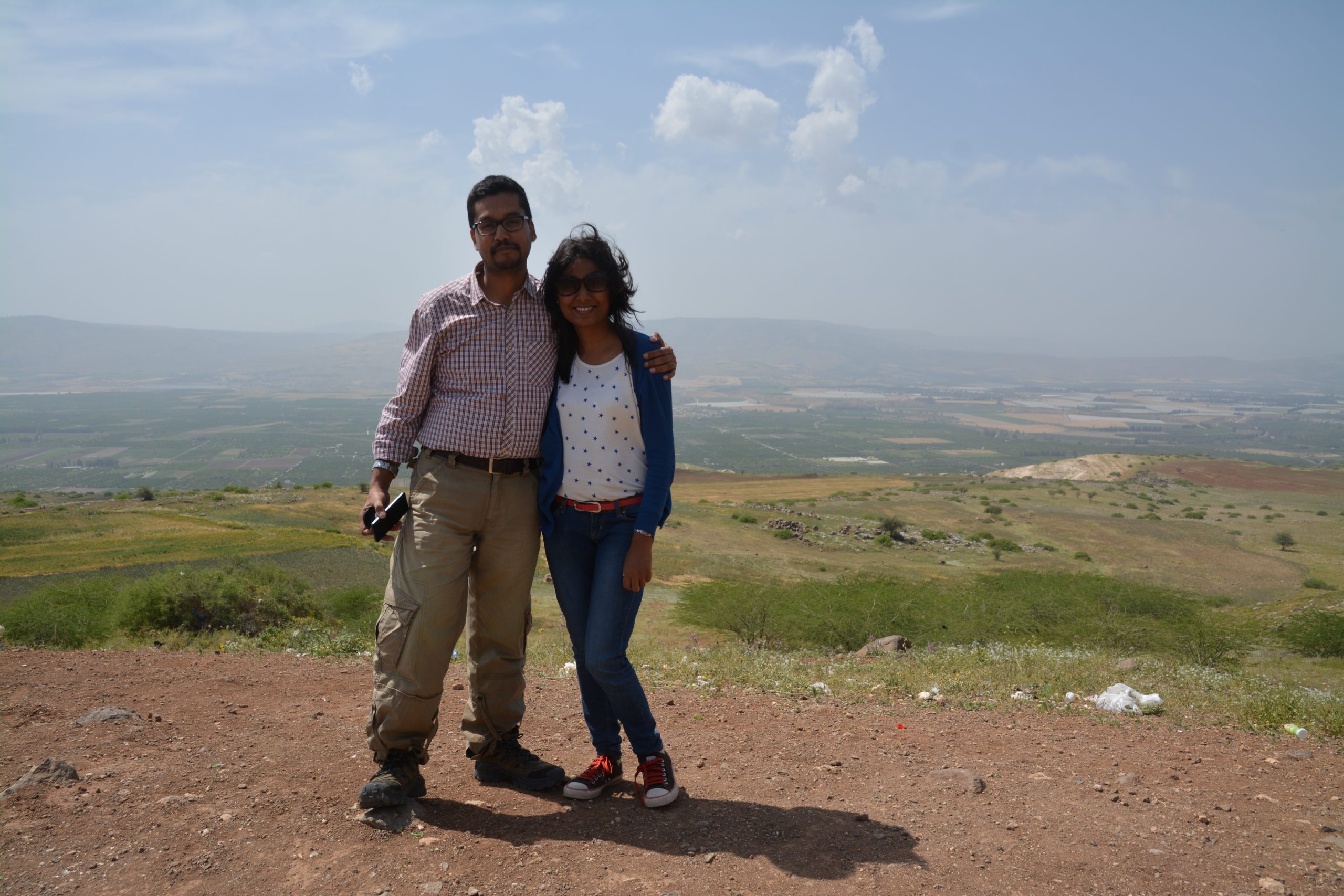
This mini-series is all about ‘extreme travel’ to the so-called ‘dangerous borderlands’. Now I can also call them ‘UN-stable borderlands’ i.e. borderlands made somewhat stable by the U.N. (United Nations) and there are many such around the world. It is no surprise that a lot of them are in West Asia, where the complex borders really are the tools & levers for playing geo-politics with the lives of everyday people.
There we were, in the April of 2016, at the Indian passport control in the Mumbai airport and about to board our Saudi Arabian Airlines (Saudia) flight to Amman. The very concerned passport officer asked why we were going to a place where bombs were being dropped? I just smiled and said that Jordan was fine and at peace. Today (at least till a few weeks back) Jordan is a very stable country to visit, but in 2016 it was coming under the pressure of refugees from Syria & Iraq during the time when ISIS was on the loose in these two ancient nations.
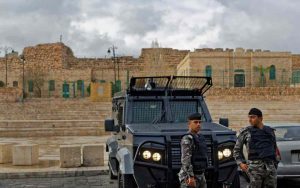
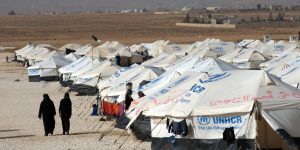
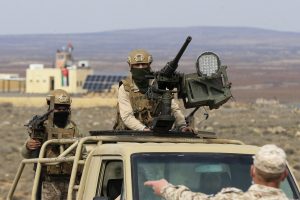
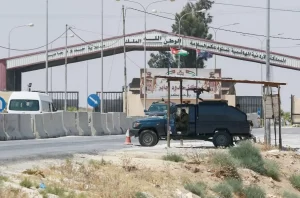
We landed in Amman nonetheless and being a bit wary of the on-ground situation, I had pre-booked our private transport. What we were first greeted by at the airport was what appeared like an entire military company, but the military was primarily for checking vehicles going in and not out. How I wish I could photograph it all. And as I wrote in my previous piece, this ‘I wish’ will come a lot as I could not capture many great frames since I didn’t have the guts to do so with deep red ‘no photography’ boards all around. That’s why I have downloaded some general representative images from the net, along with those from my camera, to give you a more complete perspective of what we actually saw there. Naturally I am calling such images out separately in the name of full disclosure (it will be mentioned ‘image taken from the net’). Also, do know that every image that you have seen so far in my articles each week for the past 2.5 years has been taken by me (none from the net, barring few maps etc). Hence this is the first time I am making an exception in order to tell the complete story, through words & images.
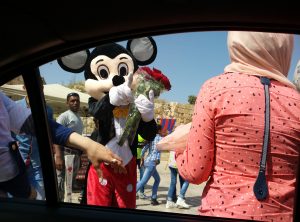
Once we hit the highway, we were stopped quite a few times and the moment the soldiers heard us speak English, they just shouted ‘English, English’ to their colleagues, and let us by. I guess English meant ‘tourist’ and definitely we couldn’t be the bad elements that they were on the lookout for. We don’t really look like bad elements now, do we?
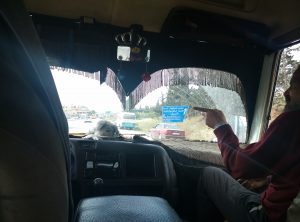
En route to the desert we also saw massive cannons mounted on military vehicles, something which we again could not photograph. And then for the next few days the normal touristy south Jordan tour started which I will not narrate right now since that’s not the idea of this current series on borderlands. So, let me leave aside the usual Wadi Rumm, Petra & Amman for a while and take you a week later when we got to Madaba, a holy Christian town. From there started our journey further north towards the Sheikh Hussein Bridge and to the disputed Syrian-Israel territory of the Golan Heights.
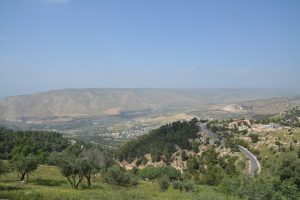
We saw some strangely empty towns and more border checks. Honestly, I have never a place where the security (which was visible on the streets) outnumbered the civilians (very few to be seen) by a factor of 5 or 10. All this intense security reminded me what the good passport officer was warning us about. There was indeed a war going on further north but there were everyday people living everyday lives as well. Towards Syria proper i.e. on the east of Golan Heights and the U.N. buffer zone, we also started to see more and more refugee camps with white & blue (and sometimes orange) U.N. waterproof sheets being placed on poles to work as roofed housing for refugees fleeing the war. The biggest of these camps was the Zaatari Camp. It is in these zones that we suddenly stopped spotting any tourists and got a bit concerned (my barometer of safety is having some tourists around).
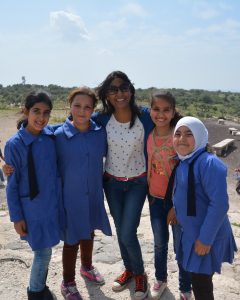
However, we got some reassurance when we were offered white flowers of peace by a group of small school girls all dressed in blue. I think they were super excited to see Richa and me, since foreigners were rare. And while this was a fun interaction with the kids, we also saw some innocence lost when we meet a Syrian boy in another small town, no more than 10-11 years of age, who had lost both his parents in the hostilities. He was now making a living near some ancient ruins which were relatively safer since they were heavily guarded by the government forces. We paid a disproportionate amount for his wares and hopefully made his day just a little bit better. I feel ‘just a little’ can sometimes be ‘good enough’ for someone…
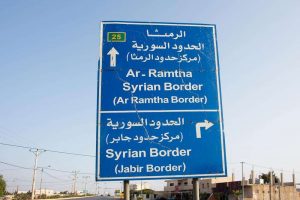
Iraq was not too far away either and I could see the tantalising blue & white boards on the highway with IRAQ writ large, but we could not make it there due to the very real risk of land mines and we didn’t have the required paperwork either (at that time it was a print visa, not the relatively easy e-visa we have now for Iraq). When we heard land mines, we knew we wouldn’t do anything that rash since we are after all only two tourists (even if extreme ones) and certainly not war reporters. There was absolutely no point taking such unnecessary risks pretending to be anything more than tourists. However now Iraq is there on my list and so is a proper deep dive of Iran (with the current situation, I doubt it will happen anytime soon).
But besides the boards, barricades and bazookas at the borders, possibly my most lasting memory is that of a woman with blue eyes sitting on the road and staring back at me with a blank expression. I just couldn’t get my camera to take the image of a woman who appeared in so much pain and nor can I ever get this image online, since it was a personal moment. I guess her blue eyes will just have to stay in my mind for as long as I live or as long as my mind works.
(Nitin Gairola is from Dehradun and is an extreme world traveller who has seen the natural world extensively and is often referred to as the ‘Most Travelled Indian’. He is on a quest to become the first person to travel to every major desert, forest, grassland & tundra on Earth, besides every country. Nitin has set world travel records certified by India Book of Records, has written for Lonely Planet, holds National Geographic conservation certifications and loves Bio-Geography. He is also a senior corporate executive in an MNC and in his early days, used to be a published poet as well. Join him @ www.instagram.com/ MostTravelledIndian/)