Around the World with the Most Travelled Indian
 By Nitin Gairola
We had booked our tickets to Oman just two months ago to celebrate 2025 and welcome 2026. But Muscat was, of course, just the place to land since going to Muscat isn’t exactly what one can call exotic. It really is a seriously boring place and spending even 4-5 hours at the corniche towards the end of the visit seemed difficult for us. But southern Oman – now that’s a different story altogether.
We took the evening bus out of Muscat to Salalah and it was to ply all though the night and reach the ancient port town most known for the green Khareef season (unusual monsoon in the Arabian desert). Naturally, being from India, it’s safe to say that we have had our fair share of the monsoon, so we were there not in August to see the rains, but late December. We wanted to see the dry desert and deserted lands instead.
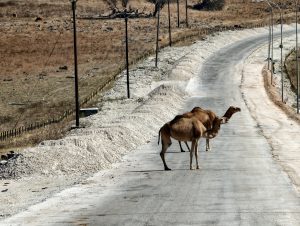
The overnight bus was ‘interesting’ to say the least. It was our first overnight bus after ages, since now we prioritise sleep and don’t try to save a few bucks on hotels as we did when we started it all. This was a case of saving some time to pack in more during a big but short trip and Salalah is over 1,000 kilometres south of Muscat and is a different world with a much slower pace. So when I say the bus ride was interesting, I mean we ate proper Indian food at some highway town around 1 am, we narrowly avoided hitting 3 camels at full speed at 2 am (that was crazy) and finally security guards with guns come inside the bus at 3 am at a place called Haima. Once the passport checking started, 3 without proper papers were dragged out (actually shoved) and that made us wonder who all we were sharing the ride with. As it turned out, they saw our passports and immediately handed them back, realising we were just tourists whereas I am quite sure others were not. By the way, no surprises that there were also a lot of Indians on the bus and all had their papers with them. But I could make out none were travellers, rather migrant workers.
We reached Salalah at 6 am the next morning and to our sheer surprise, it was rather cold at that hour. The man at the hotel front desk allowed us an early morning check in and we freshened up for a mini-adventure about to begin. I always say we hit the ground running and there you go, we had Karel Tomastik of Takamul Travels, Salalah waiting with his massive brand-new SUV, right outside the hotel.
Now Karel isn’t exactly the name you imagine or associate with the Arab world. After the initial conversations we realized that he was an extremely well read, well-spoken Czech settled in Salalah for years. Takamul Travels is his company and they specialize in tours towards east or west of Salalah. We all know that a lot of travel guides just cram a bit of history about the place but that isn’t Karel. He is a proper intellectual, almost an Arab World scholar, and with him we could actually get into a deep dive on the history and culture of these lands and the discussion went far beyond what the tour was offering.
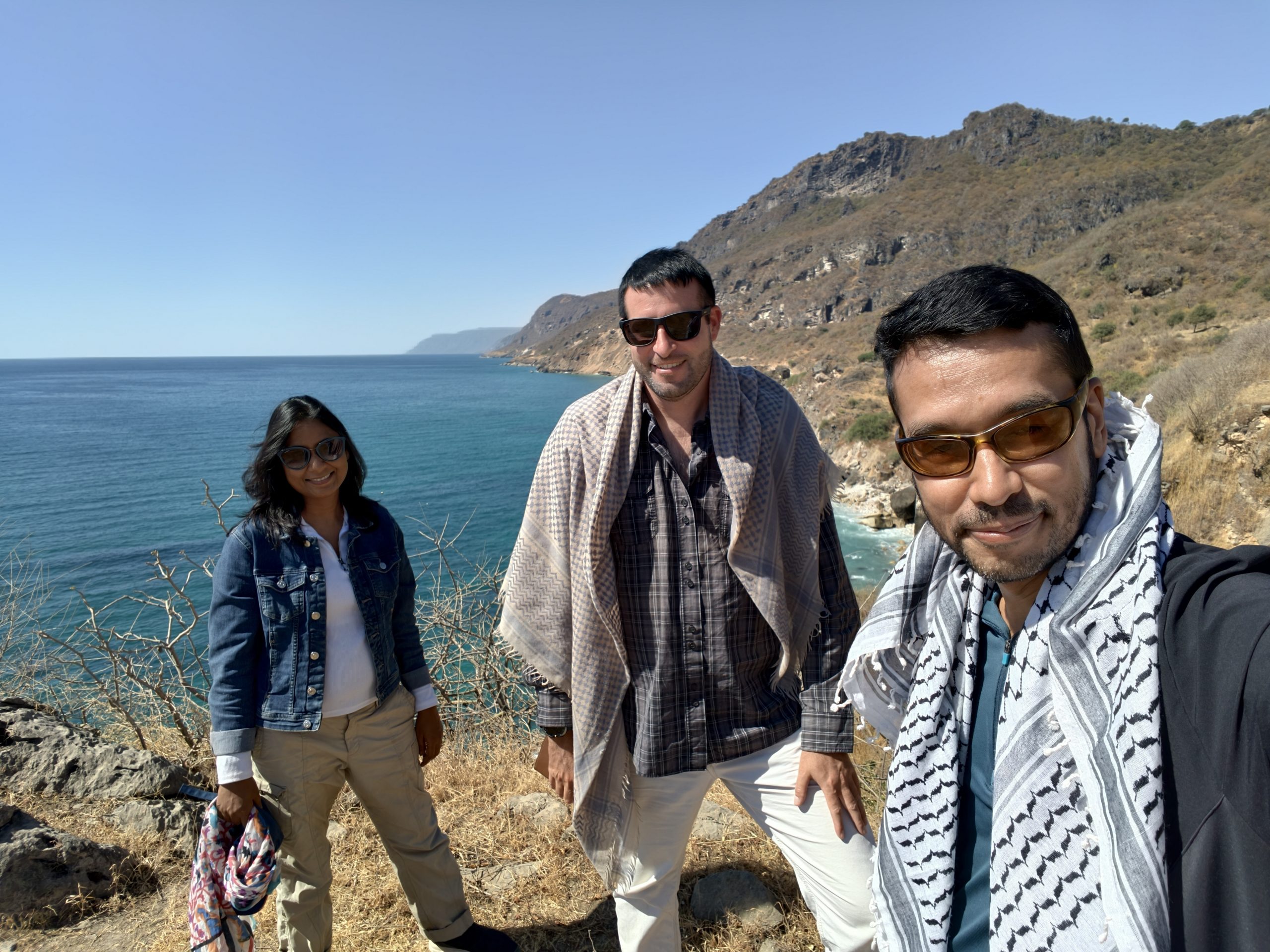
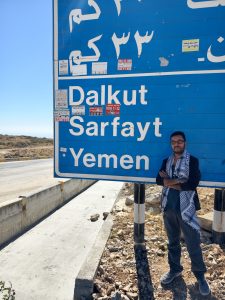
In fact, our itinerary was really bespoke as it was not the normal route for most travellers. Between east and west of Salalah we knew we wanted to head west since that was the direction where we had the frontier towns of Dhalkut, Sarfait and Hawf and the incredible blue waters of the Gulf of Aden.
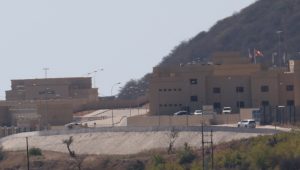
We had to go through multiple check points and how I wish I could take images of the soldiers. I had mentioned this earlier that I had asked Karel if I could take their images and he said ‘sure, sure why not – if you want to extend your holiday’. We had a big laugh not knowing how serious the security situation would become just 2 months later into the new year. Just recently Karel shared an image of the oil refinery at Salalah port being set ablaze in a massive fire by drone strikes from Iran. It really shocked me as Salalah was such a peaceful cut-off town with frankly doesn’t have much to do with the world other than the big port that has connected the countries of the Persian Gulf and the Arabian Sea to the Gulf of Aden since antiquity. But I have to state that it appears cut-off to the world but isn’t fully since US has access to the Port of Salalah and that explains the recent events. This was news to me.
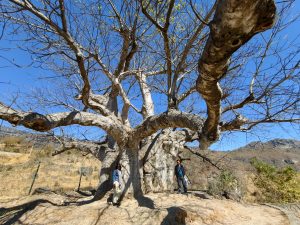
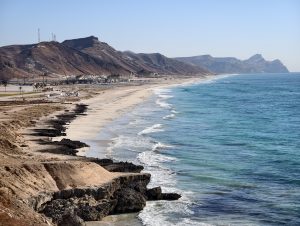
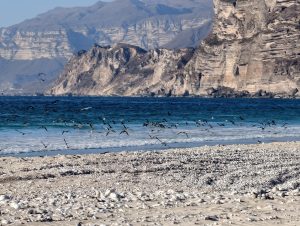
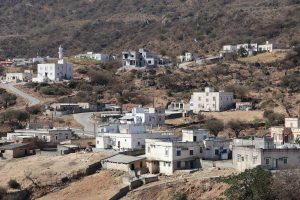
In this tour with Karel we had one of our best days in West Asia as he took us to pristine beaches with blue waters, blow holes from which the water & vapour was gushing upwards, viewpoints perched on steep cliffsides, barren black mountains and he even showed us a Dragon’s Blood Tree (Dracaena Cinnabari) which is a speciality of Socotra island of Yemen. But for us the highlights were Dhalkut and the twin border towns of Sarfait-Hwaf (Oman-Yemen) which seemed to take us to another world altogether. I am sure initially he would be wondering why these two strange cookies wanted to go to the Yemeni border towns instead of lazing in beautiful beaches because that’s what most tourists to Salalah ask for. But I am really glad that Karel understood and really went out of the way for us.
The fact that he was such an interesting person just added to the fun. He knew multiple languages and was absolutely fluent in Arabic, besides English and his own mother tongue and quite a few others from this part of the world. He was really integrated in the Arab culture without losing his European upbringing. For me he was like the modern-day Lawrence of Arabia, but without any inclinations towards heroics and theatrics. He was as sorted as a man can get and couldn’t care a hoot for anything but a peaceful life. No delusions of guts and glory as I sometimes have (but they are waning with age, thankfully).

Coming back to the current situation, when I saw a convey of no less than 30 American Military Humvees near Haima (a few days later when we were going back north), I was just wondering about the undercurrents and how peace could really stay in a place with Yemen as the neighbour. But they did have a tenuous peace until peace was broken two weeks back by the attack on their oil refinery, besides a drone strike near Haima, which also is near US defence interests. In the Salalah port refinery, Karel tells me that the fire is out now and no one has to breathe the toxic air anymore, and that things are back to normal. However, when it comes to tourism in the Middle East, things are back to the Covid days with almost no flights, no tourists and empty hotels. May this peaceful nation be surrounded by nations that find their peace soon. The fire in their oil refinery may be out, but there are many fires raging in other parts of this beautiful, ancient land.
Nitin Gairola is from Dehradun and is an extreme world traveller who has seen the natural world extensively and is often referred to as the ‘Most Travelled Indian’. He is on a quest to become the first person to travel to every major desert, forest, grassland, tundra & ice biome on Earth, besides every country. Nitin has set world travel records certified by India Book of Records, has written for Lonely Planet, holds National Geographic conservation certifications and loves Bio-Geography. He is also a senior corporate executive in an MNC and in his early days, used to be a published poet as well. Join him @ www.instagram.com/MostTravelledIndian/