 By: Ganesh Saili
There was a time, two hundred years ago in the life of this station, when it found itself at a fork in the road. Of course, the trees were younger then, the mists still hung around much longer, and the town was not yet sure what it wished to become. Just like the traveller in Robert Frost’s poem, it saw two roads; one led towards scholarship and serenity, and the other towards a livelier, bustling future. It was a time when everyone, except the locals, seemed to have the two proverbial pennies to rub together.
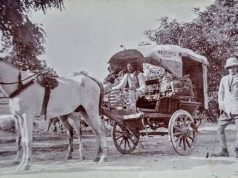
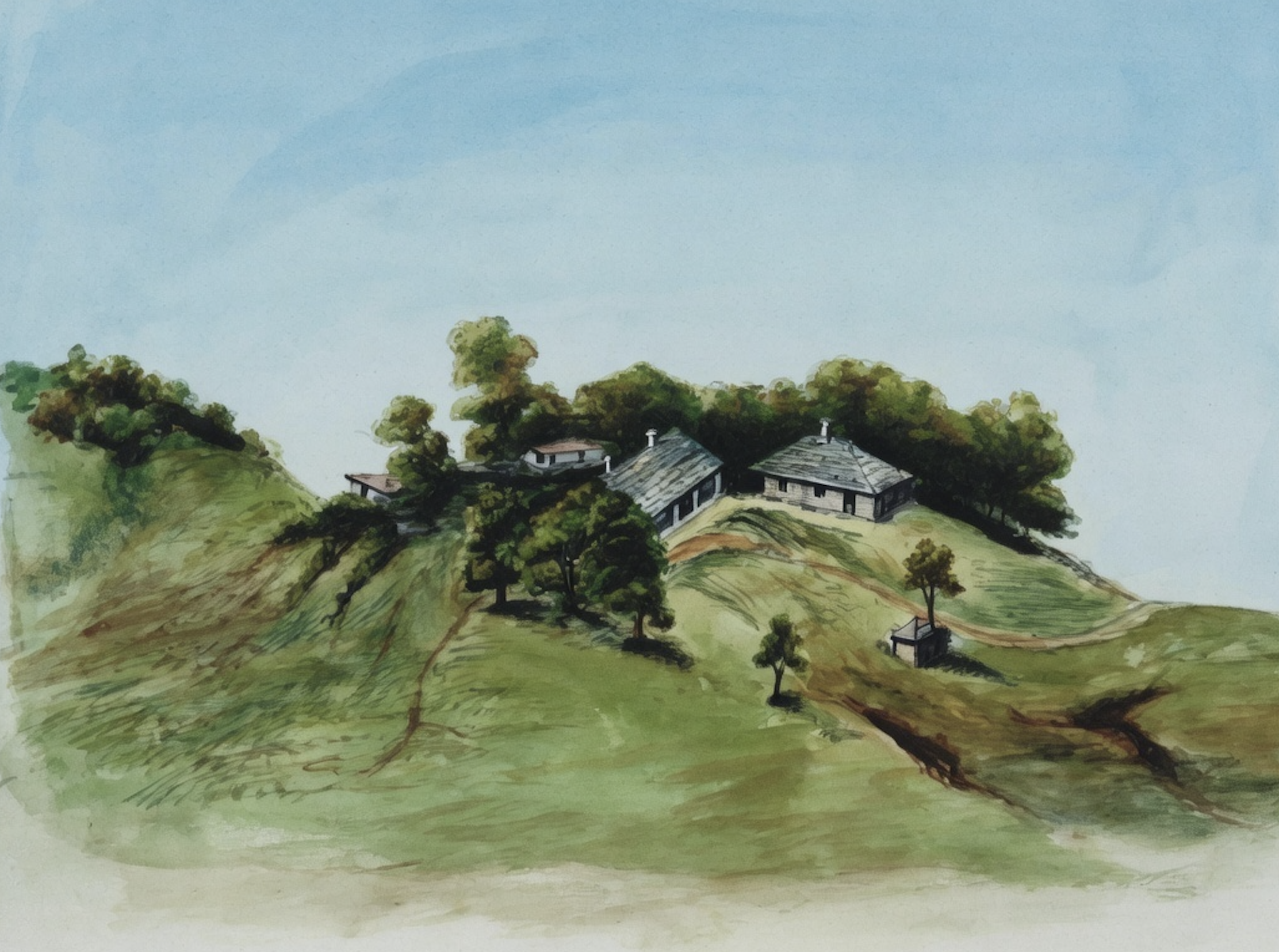
This story begins, as many of our hill stations’ stories do, with a Scotsman. In this instance, it all began with a certain John Mackinnon, who arrived from Meerut, bringing with him his school. With grit and determination, he set up the Mussoorie Seminary on the grounds of the old Bansi Estate, where the mornings were cool and the afternoons softened by trapped clouds. For a while, the school flourished. Boys in starched collars and hopeful expressions studied their lessons or fenced with foils while the hills watched on, indifferent but enduring.
Pic Courtesy: the Internet.
But Mackinnon, like many who came up to the hills, was not destined to stay the same man. One day, without ceremony, he abandoned the classroom for a brewery. The school wound up, turned into a brewery with a simple change of name, and moved further down the slope, probably searching for firmer ground.
Among the many who passed through its doors was Major Monk – a teacher with restless inclinations and a fondness for ventures that were doomed to fail. He left behind a legacy of a bundle of letters collected by his relatives and recently released – thoughtful, curious, and touched with a kind of old-world charm. In them, he wrote of fairs and forests, of journeys to the great Kumbh Mela, and of hunting expeditions with a certain F.E. Wilson, who would one day go on to carve out a small kingdom for himself in the hills, complete with his own coins and be known as the Raja of Hursil.
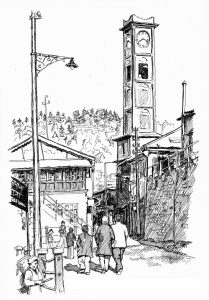
Pic courtesy: Bruce Skillicorn
There is a sense of comfort about his letters. They preserve a way of speaking, and perhaps a way of seeing, that has long since vanished. It has been long since we heard phrases like ‘every mickle makes a muckle’ sit easily beside descriptions of vast oceans and distant lands, reminding us that language, too, takes its own road. After all, isn’t the vast ocean no more than a ‘herring pond?’
Meanwhile, progress had arrived in Mussoorie. Newer schools sprang along the ridges – quiet institutions with wide verandas and ringing bells. They brought with them children from the plains, sent up by parents who hoped the hills would shape them into something finer. For a time, it seemed the town might indeed become a seat of learning, an ‘Eton of the East,’ as some, like me, would have preferred.
But the other road proved more tempting. We forgot the age-old dictum that not all the glitter is gold. Hotels rose where once there had been orchards and open slopes. The Savoy Hotel, the Charleville, among others, became inns that welcomed travellers who came not to study, but to get away or escape – to breathe, to wander, to forget the heat and haste of the plains. I do admit that the town grew livelier, noisier, a little untidy perhaps, but never quite without charm.
We chose, without even realising it, our destiny. Mussoorie became what it is today – a place of mingled purposes, where schools and shops, scholars and tourists, all share the same winding road.
If one listens carefully, especially in the quieter times, one might still hear echoes of that earlier dream – the sound of a school bell carried on the wind, or the hushed murmur of a letter being written by lamplight. But the town has long ago taken the road it chose. And after such a journey, there is no going back.
And perhaps that is just as well. Anyway, that’s how we ended up with this splendid mess that is called Mussoorie.
Ganesh Saili, born and home-grown in the hills, belongs to those select few whose words are illustrated by their own pictures. Author of two dozen books, some translated into twenty languages, his work has found renown worldwide.