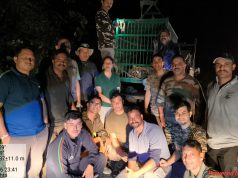
Haridwar Forest Range Tiger poaching case
By Arun Pratap Singh
Garhwal Post Bureau
Dehradun, 29 May: The much in the news shocking case of poaching of two tigers in Haridwar Forest Division has taken a grim turn with post-mortem reports confirming that the animals were not only poisoned but were also assaulted with sticks after they had consumed the meat that had been contaminated by the poachers. Fresh revelations have intensified concerns about wildlife crime and forest security in Uttarakhand.
It may be recalled that the poaching of two tigers had come to light on 18 May when the carcass of a male tiger was found in Shyampur Range’s Sajanpur beat. The animal’s four legs had been severed, though its skin and teeth remained intact. A dead buffalo was also recovered nearby, raising suspicion that poisoned meat had been used to lure the predator. A day later, the body of a tigress was discovered barely 150 metres away, deepening the mystery.
While, the Initial investigation had suggested poisoning alone, the post-mortem report has now confirmed multiple injuries on the head and face of the tigers, consistent with blows from sticks. The forest officials have also recovered sticks and an axe from the site, though the severed paws of the animals remain missing. This has fuelled suspicion that the motive extended beyond killing to possible trafficking of tiger parts.
Divisional Forest Officer (DFO) Swapnil confirmed that one tiger had a fractured nasal bone, indicating blunt force trauma. It is believed that after the animals consumed poisoned buffalo meat and became unconscious, the poachers attacked them brutally with sticks or clubs to ensure death. The forest sources also admitted that the post-mortem report has clearly established poisoning as the primary cause of death, but the subsequent assault was intended to eliminate any chance of survival.
It may be recalled that, so far, 4 persons have been arrested in the poaching case, namely Alam alias Fammi son of Shamsher, Ashiq son of Gama, Juppi son of Allu, and Yusuf son of Kalu. The forest department had been trying to arrest the main accused, Amir Hamza alias Miyan, who had absconded and later sought interim bail, which was rejected. Despite the efforts, of the forest department, Hamza managed to surrender directly in court, evading arrest by the forest team. The department is now seeking his remand, with expectations that interrogation will expose the wider network behind the killings.
The incident has triggered outrage across Haridwar and Dehradun. Speaking to Garhwal Post, Forest Minister Subodh Uniyal also condemned the brutality shown in this case by the poachers. He stated that poisoning followed by assault was an act of extreme cruelty and assured that the government would pursue the harshest punishment for those involved. At the same time, top forest officers have declined to share further details, citing concerns that disclosure may affect the ongoing investigation.
The deaths of the two young tigers, believed to be around one-and-a-half years old, have also raised questions about the fate of their mother. The forest officials claim she might have returned to Rajaji Tiger Reserve after the incident, but doubts remain. If she had hunted the buffalo, why did she not consume the poisoned meat? Why would she abandon her cubs so easily? The possibility that she too was harmed certainly can’t be ruled out, though officials at present maintain silence on this aspect.
The case has exposed serious lapses in forest protection. Shyampur Range Ranger Vinay Kumar Rathi, Forester Bhupendra Bisht and Forest Guard Karun Saini have been suspended in the case but the brazenness of the poachers shows how emboldened wildlife criminals have become. The missing paws, the use of poisoned bait, and the brutal assault underline the scale of organised poaching in the region.
As the investigation proceeds, all eyes are on the interrogation of Hamza, which may unravel the full extent of the network and its links to trafficking. For Uttarakhand, the incident is not just a wildlife crime but a test of its forest governance and ability to protect endangered species in one of India’s most sensitive ecological landscapes.