By Arun Pratap Singh
Garhwal Post Bureau
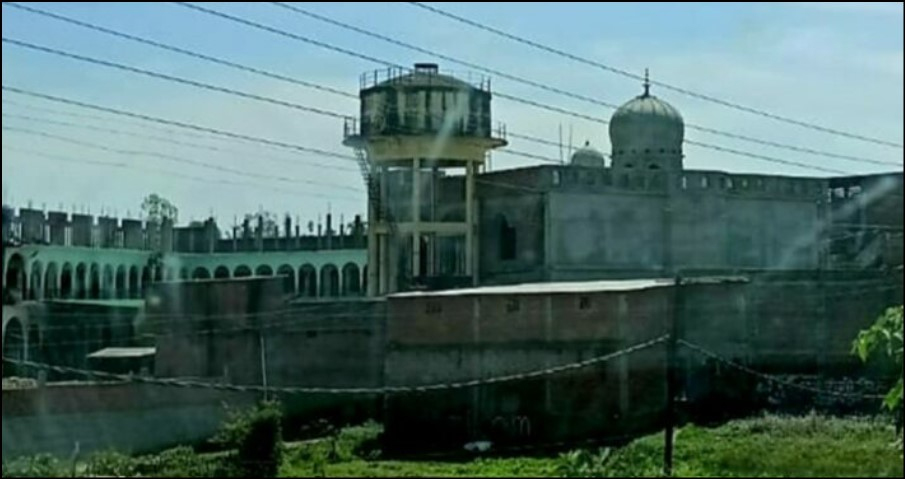
Dehradun, 8 Jun: An administrative probe by the district administration in Dehradun has revealed that several mosques, madrasas and even Eidgahs have been constructed on government land in total violation of the rules. It may be recalled that the sealing of a mosque at Thano recently had triggered protests by the Muslim Seva Sangathan, which mobilised members of the community through social media and staged demonstrations before the Dehradun administration. While the organisation claimed that the mosque had been constructed on legally valid land records, in reality, the disputed structure was sealed only after the Mussoorie Dehradun Development Authority (MDDA) found several serious irregularities relating to its construction and land documentation. While the mosque currently remains sealed, a detailed inquiry is presently underway to establish all the facts related to the legality of the structure
In a fresh development, administrative investigations have reportedly revealed that not one or two but dozens of mosques and madrasas in Dehradun district have allegedly been constructed after encroaching upon government land. The district administration is understood to have sought separate reports on the matter both through its own channels and through police intelligence units. According to the officials involved in the exercise, the findings of both investigations are being cross-verified and have been found to be consistent.
Information emerging from the inquiry indicates that several Islamic religious structures in the Vikasnagar pargana area of Pachhwa Doon have been reportedly built on government land. These include Aisha Masjid in Kulhal village, said to be constructed on six biswa of Gram Sabha land; Kuba Masjid at Dhaula Tappad, reportedly built on five biswa of forest land; Jama Masjid in Matak Majri village, allegedly occupying one bigha of Irrigation Department land; and Rahimi Masjid, which is stated to have been constructed on six biswa of land belonging to the Irrigation Department.
The inquiry further found that Eidgah Masjid in Kunja village was built over five biswa of an Irrigation Department drain. Similarly, Momini Masjid in Dhakrani village is reported to have occupied four biswa of Irrigation Department land in the Bajju Khana area. Masjid Madrasa Islamia Arabia Masihul Uloom in Dhakrani village is also reported to have been constructed after encroaching upon 12 biswa of land belonging to the Irrigation Department.
Another structure cited in the inquiry report is Fatima Masjid at Barotiwala village, which is reported to have been built on three biswa of government Gram Sabha land without authorisation.
The investigation has also identified several Eidgahs, including Badi Eidgah Dhakrani, Eidgah Babugarh, Eidgah Line Jeevangarh, Eidgah Herbertpur, Eidgah Kunja and Eidgah Doctorganj, Nawabgarh, as having been constructed on government land. According to the findings, no lease permissions, land allotments or construction approvals have ever been obtained from the government authorities for these structures.
The officials also claim that the report further reveals that most of these alleged encroachments and constructions took place during the tenure of Congress governments headed by Narayan Dutt Tiwari and Harish Rawat. It states that as many as 84 mosques, madrasas, Eidgahs and other Islamic structures have come to light in the Vikasnagar pargana area. Before the creation of Uttarakhand state in 2000, the number of such structures in the region was reportedly only 14.
The findings also assert that significant demographic changes have occurred in the Pachhwa Doon region over the years, with 29 villages that were once Hindu-majority becoming Muslim-majority settlements. The report characterises this as evidence of rapid Islamisation in the region, although no official demographic analysis accompanying the inquiry has been made public.
The issue has gained further attention in light of the Dhami government’s ongoing anti-encroachment campaign. The state administration has previously removed around 85 allegedly illegal mazaars from government land across different parts of the region.
The Pachhwa Doon belt, bordering both Himachal Pradesh and Uttar Pradesh (UP), has frequently figured in the discussions surrounding demographic changes, land encroachments and settlement patterns in Uttarakhand and particularly in Dehradun, making it a politically and socially sensitive region in recent years.
In several identified locations, mosques have not only expanded in size but have also become increasingly elaborate in design. This trend has led to discussions and wide speculations among the local residents and social organisations regarding the growing scale of religious infrastructure and whether adequate regulatory oversight is being exercised over such developments.
Concerns have also been raised regarding compliance with construction regulations. Officials and local observers point out that obtaining formal permission requires submission of land ownership records, institutional registration details, audited financial statements and other supporting documents. In many cases, it is alleged that mosque management committees have been unable or unwilling to furnish such records. Allegations have also surfaced that several religious structures were erected on encroached government land and subsequently registered with the Waqf Board, making administrative intervention more complicated.
Similar issues reportedly emerged during the recent exercise of recording Waqf properties on the Umeed Portal, where questions concerning land ownership and documentation surfaced in several cases. The developments have fuelled concerns among some local ‘Sanatan’ organisations, which argue that the increasing presence of Islamic religious structures in parts of Uttarakhand is altering the traditional cultural landscape of the state.