By Arun Pratap Singh
Garhwal Post Bureau
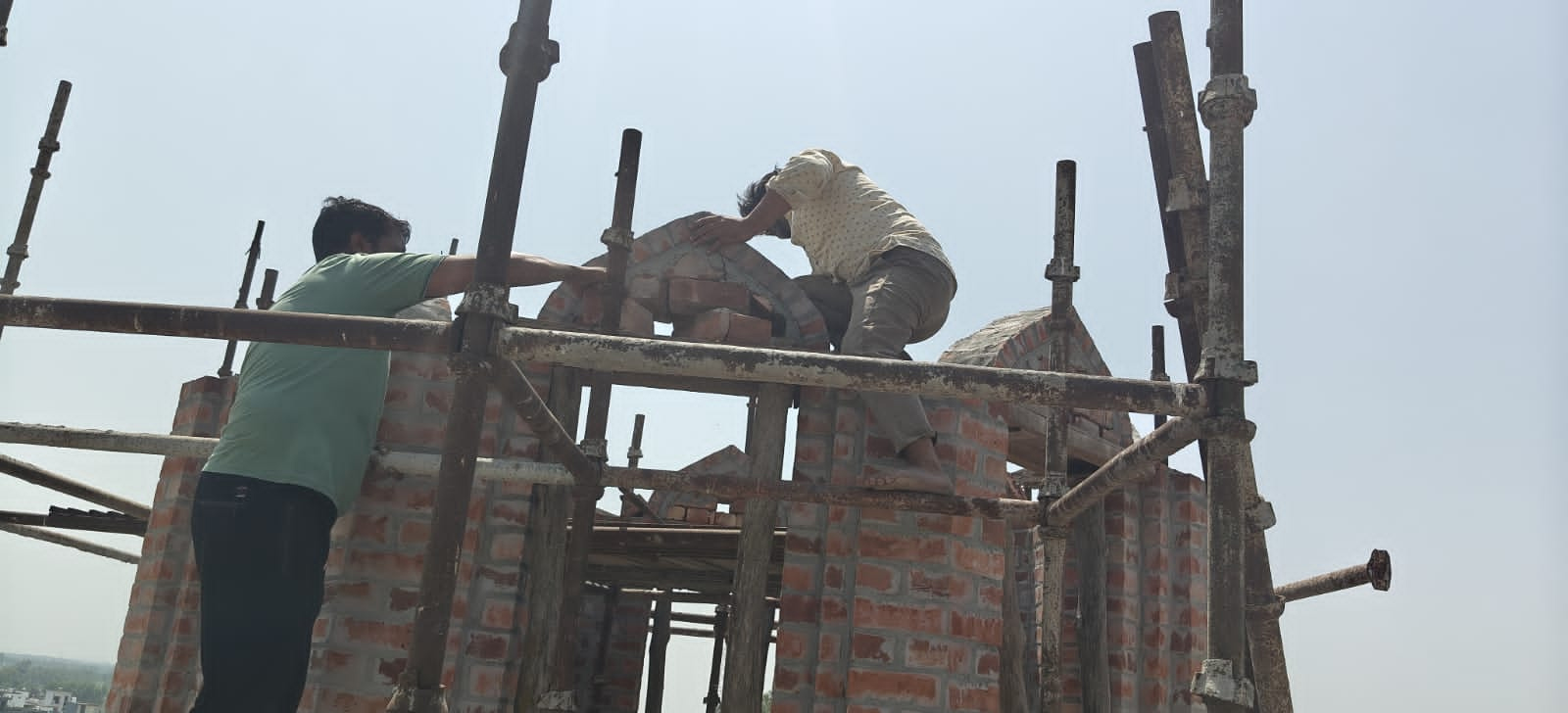
Dehradun/Haridwar, 8 Jun: Work to demolish the towering minarets of an under-construction mosque in the Sultanpur Nagar Panchayat area of Haridwar district has begun following the directions issued by Haridwar district administration. The exercise had been launched earlier as well but was reportedly halted due to internal disputes among the members of the mosque management committee.
Haridwar District Magistrate Mayur Dixit stated that the action is being carried out in accordance with directions issued by the Dhami government. He added that complaints regarding the construction had also been registered on the Chief Minister’s portal, prompting administrative scrutiny of the project.
It may be recalled that nearly ten months ago the mosque and its unusually tall minarets were found not to be in conformity with prescribed norms. The officials had also observed that neither the district administration nor any competent development authority had granted permission for the construction. It has also been claimed that fresh construction activity has also been noticed at the site.
It may further be recalled that the issue had attracted considerable attention on social media, following which the Haridwar administration intervened and had issued notices halting further construction. Consequently, work on the mosque was stopped pending examination of the relevant permissions and compliance requirements.
The mosque first came into public focus in October 2025 amid reports that it is being developed as the largest mosque in Uttarakhand, with particular attention centred on the proposed height of its minarets. The Haridwar district administration subsequently ordered a halt to the construction and also served notices on the management. According to official sources, no satisfactory response has been received to those notices, leading to the inference that the construction is proceeding without the requisite approvals from government authorities.
Reports indicate that the funds for the project had been mobilised by promoting it as the state’s largest mosque and that several influential members of the Muslim community, including retired and serving bureaucrats, are believed to have extended support to the initiative. At present, SDM Anil Shukla is supervising and monitoring the process of reducing the height of the minarets in compliance with administrative directions.
The issue has also drawn attention to Supreme Court directives issued in 2009 and 2016, which emphasised that no religious structure should be constructed without the permission of the District Magistrate or competent authority. The objective of these directions was to prevent unauthorised religious constructions on public land and to ensure that all safety, planning and security considerations are adequately addressed before such projects are undertaken.
The Sultanpur case has reignited a broader debate regarding the construction of mosques across Uttarakhand. According to available government data, more than 722 mosques have been constructed in the state. Haridwar district accounts for the highest number, with approximately 322 mosques, followed by Dehradun with 155, Udham Singh Nagar with 144 and Nainital with 48. Observers note that many of these structures have undergone expansion or beautification works in recent years.
Questions have also been raised regarding adherence to technical and safety norms in the Sultanpur project. According to information available, no approved building plan was obtained prior to construction. Consequently, clearances from departments such as Fire Services, the Public Works Department and other statutory agencies were allegedly not secured. Under normal circumstances, even private residential construction is subject to detailed regulations concerning height, parking facilities, setbacks and structural safety. Critics contend that similar standards were not followed during the construction of the mosque.
Building regulations generally permit structures up to 12 metres in height in hill areas, while in the plains the permissible limit is approximately 30 metres, or around 100 feet, subject to applicable regulations and approvals. However, the proposed mosque minarets reportedly reached nearly 250 feet, raising questions about their conformity with the established norms. According to technical requirements, buildings exceeding certain height thresholds require additional approvals from the government and specialised structural engineering assessments, including scrutiny by expert institutions where applicable.
Commenting on the matter, Haridwar District Magistrate Mayur Dixit said that when the issue first came to the administration’s notice, notices were issued and construction was immediately halted. He stated that the mosque committee itself submitted a proposal offering to remove the minarets, which was subsequently approved by the administration. Given the exceptional height of the structures, he explained, manual dismantling was considered the safest option, as the use of heavy machinery could increase the risk of accidents. He added that the SDM has been instructed to submit daily progress reports regarding the removal work.