Interview with RV Gardner
By SUNITA VIJAY
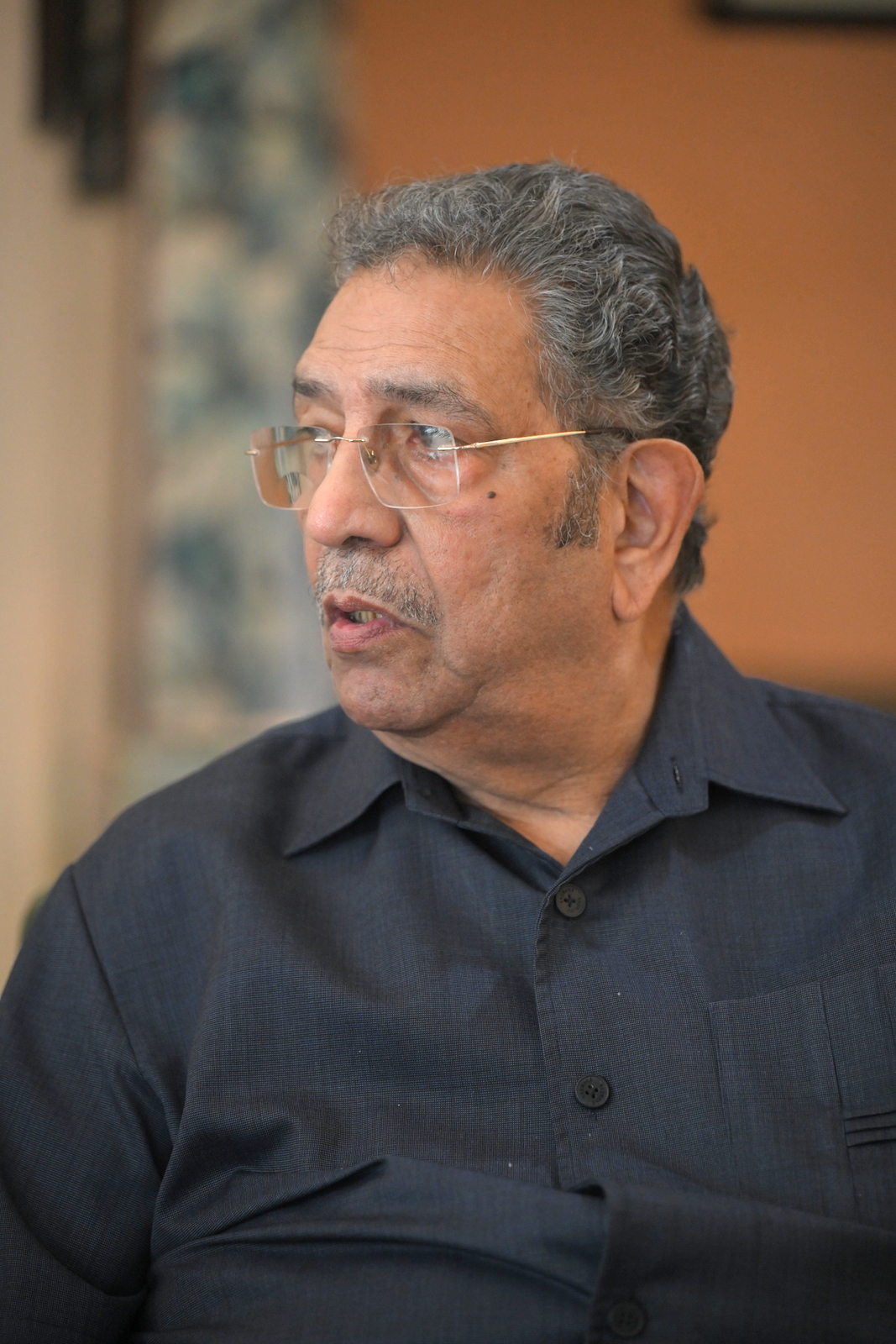
RV Gardner, former MLA and recipient of the prestigious ‘Legends in Education 2024 Award’, is the long-serving Principal of St Thomas’ College, Dehradun. Born into a distinguished Anglo-Indian family with a rich British military heritage, his lineage traces back to Colonel William Lineaus Gardner, who founded the famed Gardner’s Horse regiment, now known as the Second Lancers of the Indian Army.
A talented sportsperson in his youth, Gardner played both cricket and hockey at the First-Class Level. For the past 46 years, he has led St Thomas’ College with remarkable dedication, vision, and commitment, transforming it into one of the region’s most respected educational institutions. His passion for education remains as strong as ever; he continues to approach each day with boundless energy and enthusiasm, finding immense joy and purpose in nurturing young minds and shaping the future of generations of students.
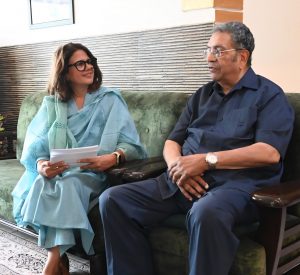
You have received many awards, lately the ‘Legends in Education 2024 Award’. What does this recognition mean to you?
It means a lot, especially when you do not work for recognition. Being recognised as a legend is a wonderful feeling. The word itself speaks volumes. It is both humbling and gratifying to know that one’s contributions have been acknowledged.
You have led this institution for over four decades. It’s a remarkably long tenure by any standard. What have been the greatest advantages of such continuity in leadership, or were there any challenges or drawbacks that came with remaining at the helm for so many years?
Before joining St Thomas’ College, my entire experience was in boarding schools, first as a student and then as a teacher. Boarding schools have a unique culture, with strong student teacher bonds and a vibrant co curricular environment.
When I joined St Thomas’ in 1980, I was disappointed by the lack of activities and even wondered if I had made the wrong decision. I approached my former Principal at Cambrian Hall, who encouraged me to stay and assured me of the Board’s support in bringing about change.
I joined in July and became Principal by October. The academic results that year were alarming, with nearly 50 percent of students failing. Improving academic standards became my first priority. Today, we have a 100 percent pass rate, with students scoring as high as 98 99 percent.
I also noticed that very few students stayed back for games. At 33, leading a staff largely older than myself was not easy, but gradually we expanded co curricular opportunities and built a more vibrant school culture.
As results improved, some of our strongest students left after Class X for other schools. We addressed that challenge, and today students are eager to seek admission to St Thomas’. We have also consistently encouraged parents and students to focus on one goal at a time rather than trying to balance board examinations with intensive coaching commitments.
Over the years, I received opportunities elsewhere but never felt the need to leave. I was never motivated by money or position. What mattered was the Board’s trust and the freedom to pursue a long-term vision for the school. Looking back, I believe that continuity in leadership, combined with that trust, has been instrumental in shaping St Thomas’ College into what it is today. Building an institution takes time, patience, and consistency. I enjoy my work, and I often tell my teachers, “If you wake up in the morning feeling happy about going to school, you know you are in the right place”.
You have often spoken about reforms initiated during your tenure. Which of these reforms do you consider your most significant contribution to the institution?
When I joined in 1980, I felt that the girl child was not being given the importance she deserved. I wanted to change that by creating opportunities and encouraging girls to come forward, particularly in sports. Many were hesitant to stay for games after 4 p.m., especially in winter when it gets dark early, so their safety had to be ensured. Teachers remained on duty until parents arrived to pick them up.
We consciously removed these barriers and gave girls opportunities at par with boys. They began participating in cricket, gymnastics, and other activities. I am particularly proud of their progress. Today, they excel in sports and co-curricular activities, and St Thomas’ College remains committed to encouraging girls’ participation while ensuring By SUNITA VIJAY RV Gardner, former MLA and recipient of the prestigious ‘Legends in Education 2024 Award’, is the long-serving Principal of St Thomas’ College, Dehradun. Born into a distinguished Anglo-Indian family with a rich British military heritage, his lineage traces back to Colonel William Lineaus Gardner, who founded the famed Gardner’s Horse regiment, now known as the Second Lancers of the Indian Army. A talented sportsperson in his youth, Gardner played both cricket and hockey at the First-Class Level. For the past 46 years, he has led St Thomas’ College with remarkable dedication, vision, and commitment, transforming it into one of the region’s most respected educational institutions. His passion for education remains as strong as ever; he continues to approach each day with boundless energy and enthusiasm, finding immense joy and purpose in nurturing young minds and shaping the future of generations of students. their safety.
Understanding Generations
You have taught and guided at least three generations. You have seen the pre internet period, smartphones, and now AI. What are the most striking differences you notice between students of the 1980s and today’s Gen Z learners?
It is difficult to say which generation of students is better. While I would gladly return to some of the old methods of teaching, one has to adapt to changing times.
Today, if you ask a child to write a letter, many struggle to do so without seeking help from the internet. The love for books and reading also appears to be diminishing, and as educators, we constantly look for ways to address this challenge.
For instance, when organising debates, I often choose topics that seem simple but are not easily researched online. If material is readily available on the internet, students can prepare impressive arguments within minutes with the help of AI.
To encourage reading, we issue books to students and later ask them to present a brief summary of what they have read. We have also noticed that many students flip through the school magazine primarily for photographs rather than articles, so we conduct a content-based test to encourage meaningful engagement.
These may seem like small initiatives, but they are among the ways we adapt to changing times while preserving the habits and values that contribute to genuine learning.
Are students today more informed and confident than earlier generations, or are they simply facing a different set of challenges?
Yes, students today are undoubtedly more informed, but many are also unguided and insufficiently monitored. I notice that this generation is heavily dependent on their phones; some cannot stay away from them even for a few minutes and become restless when asked to do so. Homework habits have also declined. The issues we once encountered mainly with Classes XI and XII are now visible among students of Classes VII, VIII, and IX. I also find that girls today compete with boys in all kinds of mischief and, at times, even surpass them. The language they use is something I would not even repeat.
Over the decades, the meaning of success has changed considerably. At a time when social media influencers and content creators can achieve fame and financial success outside traditional educational pathways, while marks and rankings still dominate perceptions of achievement, how do you view success today?
Everybody seems to be looking only at marks. Peer pressure is immense. As soon as examination results are declared, many students are eager to have their photographs published. But success cannot be measured merely by marks or publicity. I tell them, you may be a topper and a high scorer, but what matters to me is what happens after you leave school. When you return years later, I want to know what you are doing with your life, what position you hold in society, what kind of professional and human being you have become, and most importantly, whether you are happy. Today, there is also less motivation among some young people to toil for years in pursuit of academic qualifications because social media, vlogging, and content creation offer alternative paths to recognition and financial reward.
In your view, are parents raising children differently today? How has this impacted schooling?
Yes, they are. Home is the first school. One has to change with changing times, but whenever a complaint goes to the parents, they come and say, “We have sent our ward to your school to improve; you handle them.” We have counsellors for students as well as parents. Many times, a few parents support their kids in their wrongdoings, but there are also some sensible parents.
What has been the most rewarding aspect of your journey so far?
When many residents of Doon come and say that my students have spark and they see the reflection of my personality in them. That’s pretty rewarding. Because I have always worked to improve the school, its system and impart quality education.
Artificial Intelligence and the Future
Artificial Intelligence is rapidly transforming education. Do you see AI as a threat to traditional learning or an opportunity to enhance it?
It is probably a mixture of both. Much depends on how it is used and implemented. We need proper guidance so that students learn to use AI for their growth and benefit rather than become dependent on it. At the same time, I am concerned about excessive reliance on AI. It has already begun affecting students’ ability to read, research, think critically, and write creatively. Everyone wants things done quickly. Tasks such as preparing a debate, which once required hours of effort and research, can now be completed in minutes with AI. Students consult teachers, and teachers themselves often turn to AI. While it offers tremendous opportunities, it must remain a tool rather than a substitute for original thought. That is what worries me.
Contributions of Anglo Indian Community towards school education
The Anglo-Indian community has significantly shaped India’s school education system, most notably by laying the foundation for English-medium education, establishing hundreds of premier institutions, and helping create some of the country’s most respected curriculum boards. How has your heritage shaped your values and approach to leadership?
The Anglo-Indian community contributed not only to education but also to sectors such as the railways, armed forces, and postal and telegraph services. Around Independence, however, many feared they would have no place in the country after the British left, leading large numbers to migrate abroad.
Anglo-Indian schools, as minority institutions, are protected by the Constitution, and states such as Uttarakhand have enacted laws to safeguard their rights and autonomy. This protection has helped preserve their unique identity.
From the beginning, our schools were shaped by British traditions that emphasised discipline, manners, and professionalism. These values have been passed down through generations. Today, although the school is nearly 200 years old, its core principles remain unchanged. Regardless of who serves as Principal, the institution continues to uphold the standards and values that have defined it for generations.
Beyond education, you also served as an MLA. How did your experience in public life influence your understanding of education and nation building?
When I became an MLA, I had resolved not to be like those politicians who never gave immediate answers or took prompt action. I wanted to help people who had been unable to get assistance elsewhere.
A doctor once approached me about the poor condition of the road leading to his nursing home and the absence of streetlights, which inconvenienced patients. I asked for the location, and before he reached home, my team was already measuring the road. Within ten days, the road was repaired and the lights restored.
Residents of one colony told me their road had remained unbuilt since 1947 despite repeated promises. I sanctioned the work immediately, and when it was completed, an elderly resident remarked that for decades they had watched materials arrive and disappear, but this was the first time the road was actually built. Later, while helping minority schools address common concerns, I learnt that, when you are right, collective action is often the most effective response to intimidation.
Dehradun and Personal Journey
What was it about this city that made you choose to settle here permanently?
In 1975, Dehradun was simply beautiful. I joined Cambrian Hall and immediately fell in love with its pleasant weather, warm people, and close-knit school community, where everyone felt like family. I have witnessed Dehradun transform from a quiet educational town into a bustling urban centre.
I cherish countless golden memories of those days. We would cycle for hours and often walk long distances just for the joy of being outdoors. It felt heavenly. Today, with the rapid growth in population, Dehradun has become increasingly crowded, which is a matter of concern. Yet, despite all the changes, my affection for the city remains unchanged.
Legacy and Reflection
After such an illustrious career what keeps you inspired when you walk into school each morning?
The passion for the school is still there. I want to see it grow, do better, and keep improving. You cannot sit back and say, “I have done enough.” While there is repetition in what we do, repetition should not mean stagnation; each repetition should be better than the last. That is what makes the work rewarding. I have always believed that students are the best judges. They ultimately judge you as a Principal, teacher, and individual, and their verdict matters the most.
When future generations look back at your contribution to St Thomas’ College and to education in Uttarakhand, how would you like to be remembered?
I would like to be remembered as someone who did whatever was within his control to uphold high spirits, high standards, and discipline. With age, there is always a tendency to relax and slow down, but I have tried not to let that happen. My passion for the school has remained the same, and I have always believed that there is room to do better and improve. Dehradun has long been regarded as a hub of education. We should be careful to preserve and uphold the reputation for which the city has always been known.
In an era of rapid change, RV Gardner stands as a reassuring symbol of continuity, integrity, and educational excellence. His remarkable journey reminds us that while methods may evolve and technology may transform classrooms, the true purpose of education remains unchanged – to build character, inspire curiosity, and prepare young people to become responsible citizens. As he continues to lead with unwavering conviction, his story remains an inspiration for educators, students, and leaders alike.
Pics: Satpal Gandhi