By S Paul
The young population of the world is being touted as the FUTURE of the world but the ‘Old agers’ (euphemistically called Oldies) remain the PRESENT and the PAST. Many borderline young in the age group of 30-50 may also be a part of the PRESENT. What is this fashionable topic of Intelligence Quotient (IQ) or ‘age difference’ or ‘generation gap’?
IQ= Mental Age/Chronological Age x times 100. Known commonly as the IQ level, mental age is a measure of your intellectual and cognitive development, determined by comparing your performance on standardised tests to the average performance of people in a specific age group. Apps to assess this are available on the web.
Chronological age is the exact time that has passed since your birth (your biological age on the calendar).
The later age is uncontrollable by us but the former i.e. Mental Age is stretchable and extendable by various means to keep whetting our brains and now with the help of AI this has become more potent. Therefore, the elderly of our society can be tasked with social responsibilities as well as the youth for a longer period. Why I have brought this up is because some media are keen to profess that since the age span is on the increase our senior citizens would likely be a burden on the youth.
I am enclosing some chosen names of people of old age who contributed to the societies of the world.

Harry Bernstein (96 years old): Wrote his highly acclaimed, breakthrough memoir, The Invisible Wall, at 96 years of age. He was subsequently awarded a prestigious Guggenheim Fellowship at age 98 and published two more books before passing away at 101.
Laura Ingalls Wilder (65 years old): Published her very first book, Little House in the Big Woods, at age 65. This launched the iconic Little House on the Prairie series, which became a foundational piece of American children’s literature.
Colonel Harland Sanders (65 years old): Officially established the Kentucky Fried Chicken (KFC) restaurant chain at age 65. He spent his retirement years driving across America to franchise his recipe, building a global empire that he sold for millions nine years later.
Ray Kroc (52 years old): Was a struggling multi-mixer salesman before founding the McDonald’s System in 1955 at the age of 52. He successfully bought out the brand and revolutionised the global fast-food industry well into his 60s.
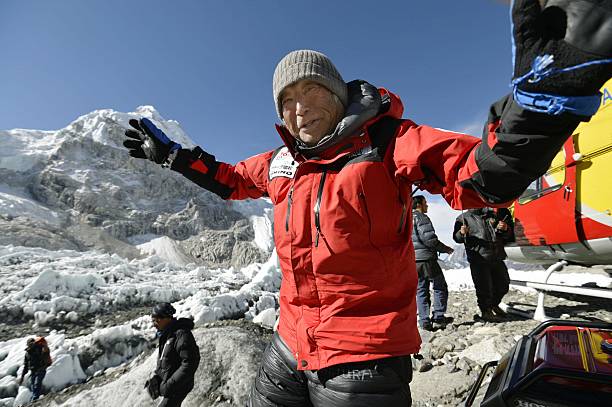
Yuichiro Miura (80 years old): Conquered Mount Everest in 2013 to become the oldest person to reach the summit at 80 years and 223 days old. He overcame multiple complex heart operations and pelvis surgery to achieve this historic feat.
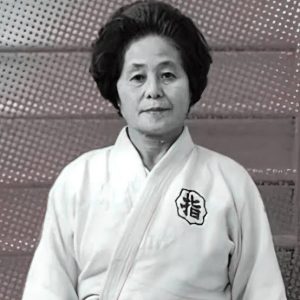
Keiko Fukuda (98 years old): Became the first woman in history to attain a 10th-degree black belt, judo’s highest possible honour, in 2011. She continued teaching self-defence and martial arts classes while battling Parkinson’s disease.
Nelson Mandela (75 years old): Awarded the Nobel Peace Prize at age 75 in 1993, he went on to be elected as South Africa’s president a few months later in his mid-70s. He became a global symbol of reconciliation, successfully uniting a fractured nation after spending 27 years in prison.
Benjamin Franklin (81 years old): Framed and signed the United States Constitution in 1787 at age 81. As a senior statesman, his crucial compromises and calming influence prevented the convention from collapsing, shaping modern democratic governance.
Dr Maya Tandon (87 years old): A retired anaesthesiologist who established the ‘Sahayata’ Trust in her later years. At age 87, she continues actively spearheading efforts that have trained over 133,000 individuals in lifesaving CPR and accident response, heavily impacting rural communities.
Maggie Kuhn (65 years old): Founded the Gray Panthers in 1970 at age 65 after being subjected to forced corporate retirement. She turned her senior years into a powerful movement against ageism, fighting for nursing home reforms and cross-generational social solidarity.
Kishore Rao (82 years old): Opted for early retirement and subsequently co-founded the Bangalore Hospice Trust (Karunashraya). Over the last two decades, he has worked well into his 80s to provide free, dignified, and peaceful end-of-life care to more than 20,000 advanced cancer patients.
So, we see that a well-informed oldie is also capable of contributing to the growth of our society. The invention of AI has made it even easier for the elderly to function socially and more knowledgeably. Therefore, this misconception that the aged would become a burden on the young is not justified. They can in fact raise the milestones for the youth and hence help progress. Also, the concept that having more of a younger population is an asset is misplaced. The proliferation of young blood in a society is a double-edged sword. Youth is full of energy and enthusiasm and seeks job satisfaction. They are impatient and easily incited. Therefore, an abundance of youth without having been given a satisfaction for survival honourably would tend to become a rowdy class of our society. Oldies do not have any juice left in them for such activities and tend to deal with situations more calmly and patiently.
Imagine our military trained ‘Agniveer’; when not able to get into any kind of sustainable vocation could turn to become a mercenary ready to sell his expertise for a high paying client who may not even be a Bhartiya. Our leaders may be considering exporting our highly qualified youth as a commodity, but would that ensure loyalty to their native land? As the trend is developing the local inhabitants of a foreign land would start resenting outsiders’ presence who take up their jobs and become more affluent than them. These NRIs and Expatriates would then come back having enough funds to invest and make our youth feel more jealous and frustrated. A frustrated youth is the source of all the difficult law and order situations for a nation.
Nature has its checks and balances for all kinds of its creation. It tends to trim the extra that breaches its system of sustenance. It creates stress due to lack of resources which translates into self-destruction or calamities. History is replete with such calamitous happenings mostly brought about by the most intelligent of the occupants of this planet. But the same intelligence and the vast experience of our past indicates that we exercise restraints.
The most necessary and immediate restraint currently is to curb our population. The urgently needed importance to this aspect has been very succinctly brought about by Dr AK Srivastava in his article on World Population Day in Garhwal Post page 5 dated 14 July 2026. I take your liberty Dr Saheb to re-quote two of your selected ‘forecast’ by world eminent thinkers. “A finite world can support only a finite population. Therefore, population growth must eventually be ZERO.” – Garret Hardin. It is based upon the Malthusian Theory of population growth; and “Democracy cannot survive overpopulation. Human dignity cannot survive it. Convenience and decency cannot survive it. As you put exceedingly more people into the world, the value of life not only declines, but it also disappears etc.” – Isaac Asimov.
Surely our thinkers and planners cannot be more accurately predictive than these wise men? It appears that our political leadership is wary of such an attempt because it may cost them votes. Also, perhaps the forced family planning executed during an earlier government and their resulting defeat is an example.
Even though educating the lower echelon and the women of our society does help to some extent but not significantly enough to make noticeable difference in the effort to plan finances and resources for the yet increasing population. Imposition of family planning by law may not be a very favourite ploy of our politicians to win elections but for the good and betterment of our nation it is the need of the hour. A recently legislated and enacted instrument is now available to our governments in the form of Uniform Civil Code. Why not implement it forthwith? It would also help control the population demographically in all aspects of the unity and security of our nation. The government must dare it. Otherwise, all these advancements of our nation would only become useless because there would be too many to share. The benefits and social standards of our citizens will become more divisive rather than peacefully productive. So, the leadership must devise ways to check the human population. China tried with harsher methods and prospered because they are not a democracy but surely, we have our own scientists, sociologists and religious thinkers who can let the nation have the benefit of their expertise in this respect. Invariably, qualitative excellence does not come from quantitative preponderance.