 By Anil Raturi
In college, as a young student of English literature, I was drunk with idealism.
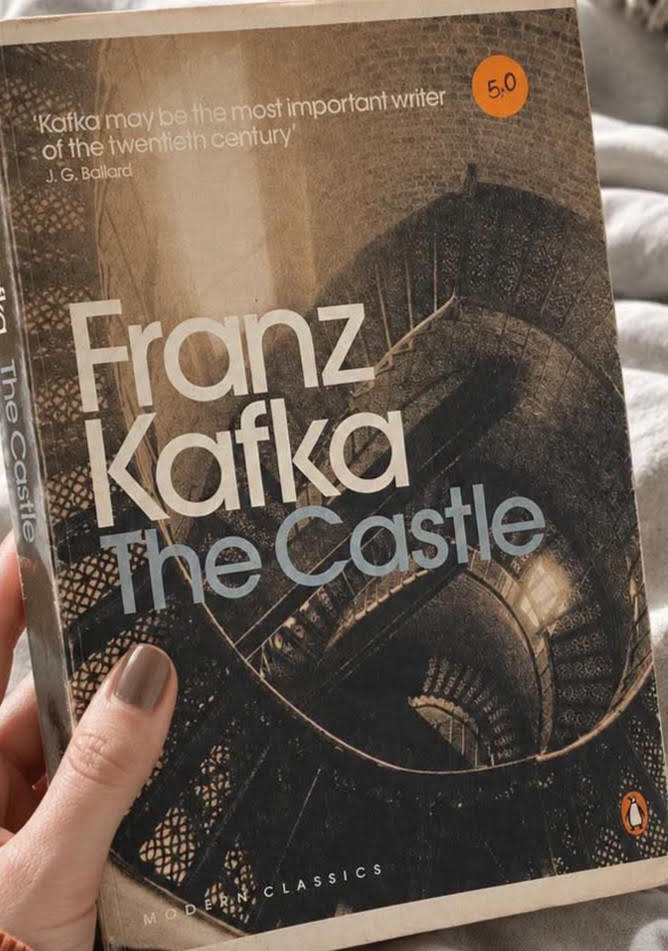
I had read Franz Kafka’s novel, “The Castle”, which evocatively expresses the horror of a system that may not be necessarily evil but only indifferent.
As a student, I could empathise with the predicament and discomfiture of the common man – the “Everyman” – who has ever tried to resolve something through bureaucracy: a bank, a government office, an insurance company, an official who refers you to a department that refers you back to the official!
An official who is never quite unreasonable enough to confront but never quite helpful enough to be of any use.
Looking at the imperfections of the Indian system, I was not only unhappy with it, but also felt that I should do something radical to make things right.
The naivety of youth gives one the confidence to be rebellious.
It provides the privilege of self-belief.
I wanted to change the system, which I perceived was “unjust”.
However, in my youthful ignorance, I really didn’t know what or how I could make a difference.
The newspapers of those days were rife with the brutal police blindings of “Bhagalpur”.
As a student, my perception about the police, to say the least, was very unflattering.
To me it manifested the system’s indifference as well as its unaccountable power.
Then one day, I also saw Govind Nilhani’s iconic film “Ardh Satya” at Delhi’s Chanakya Cinema.
The film’s protagonist, an idealistic Police officer, “Anant” (played by Om Puri), who fights the ills of a corrupt system, inspired me.
I was particularly impressed by Dilip Chitre’s poetic lines in the film:
“चक्रव्यूह में घुसने से पहले,
कौन था मैं और कैसा था,
ये मुझे याद ही न रहेगा….”
(On entering the “system”, will I even remember, how or what I was before joining it..”).
I sat for the 1986 Civil Services Competitive Examination.
Having done reasonably well in it, I had the option of joining the Indian Foriegn Service (IFS).
However, in my youthful idealism, I chose a career in the Police. I believed that it was there that right thinking human beings were most required.
Having donned the uniform and become empowered by law, I recalled Dilip Chitre’s words, the import of which was something to the following effect:
“Will I remember how I saw the system before I entered it? Or will I, after settling in a comfortable groove, slowly without even realising become a part of the very indifferent system which I had set out to change?”
In “Middlemarch”, George Eliot suggests that characters do not fall or change in a single dramatic moment. Instead, tiny compromises accumulate over a period of time and drifting ambitions erode their original ideals without them realising the subtle manner in which they transform.
Subtle solicitations of circumstances tend to change human beings beyond recognition.
It is about four decades since then.
Now retired, when I look back on my years in the service and the reel unwinds, I crystallise some interesting insights.
The stereotypical Civil Servant’s ego, on assuming office, very quickly becomes pathologically inflated.
The authority vested in him/her by the system, intended for public welfare, unfortunately makes the official acquire a misplaced sense of self importance. This breeds indifference, which in turn makes them inaccessible, leading to general inefficiency and corruption within the system.
He ceases to remain a “means” to the “end”, which is ensuring public good. Rather, he becomes an “end” in himself!
In the process the casualty is the common person.
I also realised that despite all the power that any officer may exercise within the system, he is actually only a cog in the huge wheel!
Ultimately, the system is bigger than all of us.
The system is larger than the sum of its parts.
It acquires a Kafkaesque life of its own!
All along my career in the Police, I had to intensely work on not allowing inertia benumb me towards the predicaments of the common people. To remain humble, professional, accessible and committed to help the genuinely needy human beings.
The most important challenge was to keep one’s humaneness intact.
Quite early in my career, I had understood that given the mammoth scale of the system,
I was too insignificant to make any radical change in it. However, even then, I could still find some solace in wiping the tears of some genuine individuals who approached my office for help.
During my University days, I had seen two remarkable films that emphasised the importance of humaneness in the Civil Services.
The first was the Japanese maestro Kurosawa’s film, “Ikiru”, in which the protagonist is a quintessential file pushing indifferent bureaucrat. He is crestfallen on being diagnosed with terminal cancer. The sad event transforms him, making him a more humane officer. He begins to crusade for public welfare, somewhat redeeming himself before finally dying.
Similarly, Mrinal Sen’s film “Bhuvan Shome” portrays a pompous senior Railway Officer, who through his interaction with an ordinary village girl, reclaims his humaneness to change for the better.
Premchand’s short story “Pariksha” also suggests that more than academic degrees, humaneness as a trait is important in a candidate for being considered for appointment to high office.
Having failed to make a dent on the system, while in service, post retirement, I am continuing my endeavour for change,
I authored two books in Hindi.
The first is a fictional novel, titled “Bhanwar, Ek Prem Kahani”, that narrates the story of a professional, humane and an honest IAS officer, who battles the system.
The book emphasises the importance of humility in officers.
The second book is a compilation of selected memoirs from my experience as a police officer. It is titled “Khaki Mein Sthitpragya”.
It delves on the importance of equanimity in life, especially in public service.
(Anil Raturi is a retired IPS officer and former DGP, Uttarakhand.)