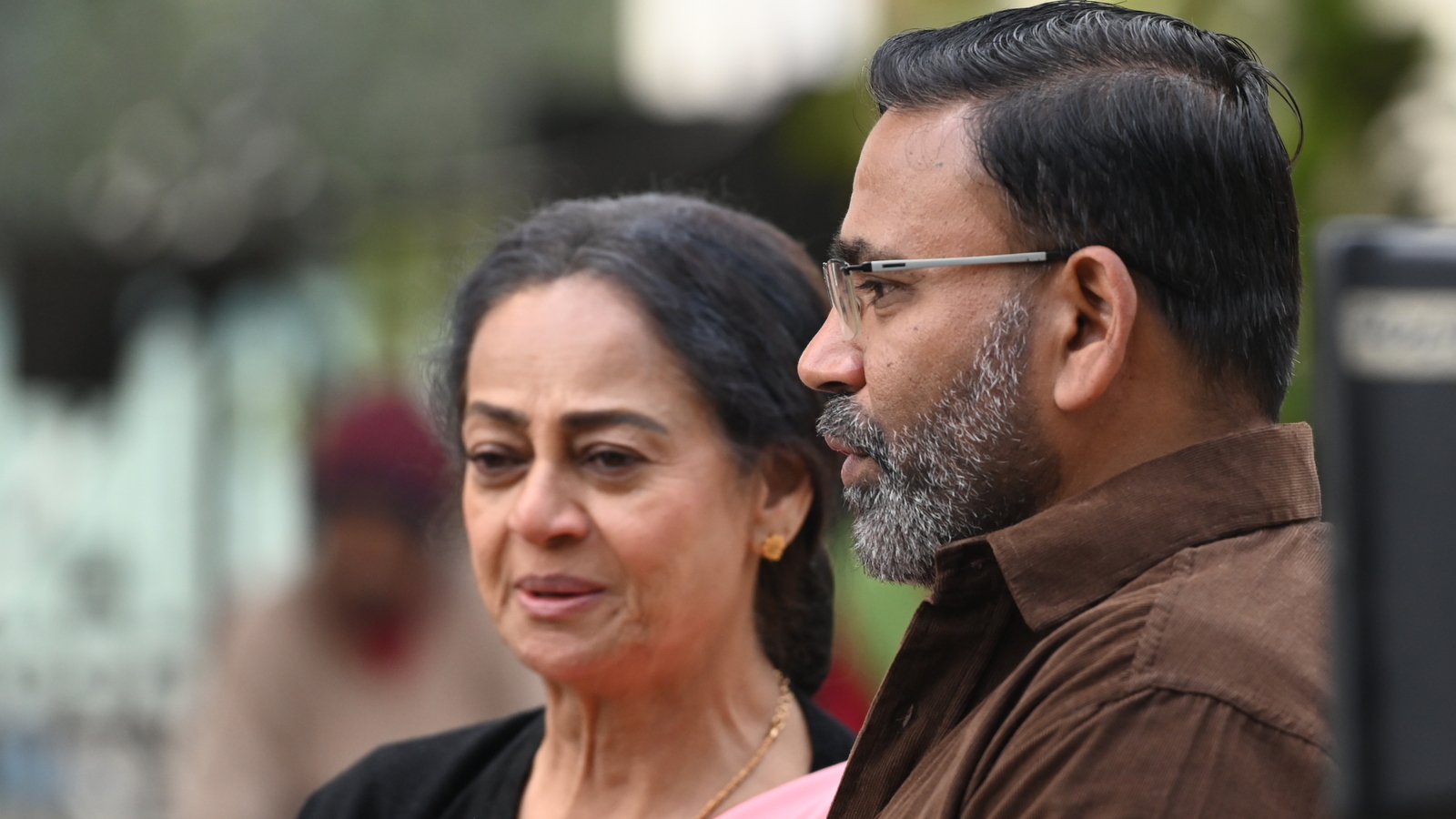
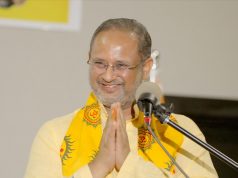
Renowned actor Zarina Wahab with Producer Manu Bhardwaj during the shoot of
‘Ganga’ at Rishikesh. Pics: Satpal Gandhi.
By SUNITA VIJAY
Few actresses have balanced grace, versatility, and longevity as effortlessly as Zarina Wahab. A celebrated presence in both Hindi and Malayalam cinema, she won hearts with her critically acclaimed performances in Chitchor, Gharonda, and Malayalam classics like Madanolsavam, Chamaram, and Adaminte Makan Abu.
Born in Visakhapatnam and trained at the Film and Television Institute of India (FTII), Pune, Zarina brought authenticity to her portrayals of the ‘girl next door’ heroine in the 1970s, earning a Filmfare nomination for Gharonda. Decades later, she continues to leave a lasting impression with memorable roles of a loving and resilient mother in My Name Is Khan or a sophisticated yet nagging mother-in -law in Dil Dhadakne Do, emotionally powerful Amma in Jaat, a rebellious mother in The Narmada Story; she has always proved that true talent only deepens with time.
It was a delightful experience to meet this remarkable actress on the sets of her latest film, Ganga, at Rishikesh, directed by Taaj, with Amit Sadh as co-star. Her timeless charm and simplicity was as evident off screen as it has always been on it.
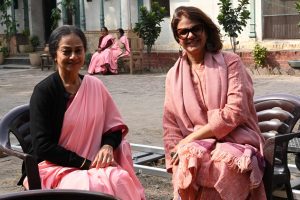
Sunita Vijay with Zarina Wahab.
Your journey in Indian cinema has been nothing short of extraordinary. From making your Bollywood debut in the 1970s to being actively busy with film shoots in 2026, you have remained relevant and admired across generations. What continues to excite you about acting even today?
I believe God has been very kind to me. Acting has never felt like a profession; it has always been my passion. Today, I don’t work because I have to—I work because I genuinely want to. Work is my oxygen; it energises me. The moment I step onto a film set, I feel alive.
Every successful journey has a beginning. What was it that inspired you to become an actress? Looking back, how challenging was it to establish yourself in the film industry?
As a young girl, I was learning Bharatanatyam because I was deeply passionate about dance. As I grew older, I happened to come across an advertisement for the Film and Television Institute of India (FTII), Pune. I used to wonder how acting could possibly be taught in a classroom! I applied, got selected, and that’s where my journey into acting began. I realised that acting is a craft that can be nurtured and refined through proper training.
After graduating, I came to Bombay and had the good fortune of meeting Dev Anand. He gave me my first break in a supporting role in Ishq Ishq Ishq. From there, things gradually began to fall into place. About two years later, I was offered Chitchor.
Chitchor remains one of the most loved classics of Indian cinema. Despite its simple storyline, it became a phenomenal success. In your opinion, what gives the film its timeless appeal?
The biggest credit goes to Basu Chatterjee and Rajshri Productions. They believed that simplicity could be beautiful and powerful. Chitchor was a film rooted in innocence, with an endearing middle-class setting, relatable characters, and emotions that felt real. Its soulful music only added to its magic.
Do you believe a successful career is shaped more by the choices one makes or by destiny?
I have always believed that destiny has its own way of unfolding. Rather than trying to control everything, I have accepted whatever life has chosen to offer me and embraced it with gratitude. I never over planned my journey. I simply gave my best to every role that came my way, and I believe life has been generous to me in return.
Every actor has a unique process of stepping into a character. How do you prepare for a new role? Has your approach to acting evolved over the years?
My approach has remained more or less the same over the years. I am a very spontaneous actor. I don’t like to overanalyse or read too much about a character beforehand because I feel that can sometimes make a performance look rehearsed.
I listen carefully to my director and perform the character the way they envision it. I’ve always trusted spontaneity, and it has never let me down.
Having witnessed the evolution of Indian cinema over nearly five decades, what are the biggest changes you’ve seen—from shooting styles and technology to the work culture on film sets? Having worked with legendary actors as well as today’s younger generation, what advice would you offer aspiring actors?
I consider myself fortunate to have experienced every phase of the film industry. I’ve had the privilege of working with wonderful actors like Amol Palekar, Rajesh Khanna, Dharmendra ji, and many others. The artistes of our time were immensely talented, grounded, and there was a wonderful sense of camaraderie on the sets.
There were no vanity vans in those days. We would sit under the shade of a tree, chat, laugh, and share our meals together. There were no mobile phones or the internet, so people truly connected with one another. Everyone was there for each other. Today, after a shot, most actors retreat to their vanity vans and remain in their own space. The atmosphere has naturally changed. I have always believed in moving with the times, and I enjoy embracing these changes.
The younger generation, too, is exceptionally gifted and brings a fresh energy to the industry. At the same time, I believe they are fortunate in many ways. Earlier, very few people considered acting a profession. Today, there are countless opportunities and platforms for talented actors to showcase their abilities.
My only advice to young actors is simple: focus on your craft. There will always be distractions, but if you remain dedicated to your work, everything else will eventually fall into place.
Having been part of Hindi cinema across different eras, do you think storytelling has changed? And do actors today have more opportunities—or simply greater pressure?
The cinema of the 1970s and ’80s was rooted in family relationships and emotions. Films revolved around mothers, fathers, brothers, sisters, and the warmth of human bonds. Today, cinema is driven more by what audiences want and what sells.
Technology, the internet, and social media have completely transformed the industry. While today’s actors have many more opportunities and platforms to showcase their talent, they also face far greater competition and pressure. Every era has its own charm, but I have very fond memories of the time I belonged to.
Do you believe acting is an innate talent, or is it a craft that can be learned and perfected?
I believe it’s a combination of both. Some part of the talent is innate, while the rest can be polished through training, guidance, and experience. It’s much like a garden—some plants flourish naturally, while others need the care of a gardener to bloom. Acting is no different.
After portraying such a wide range of characters over the years, is there still a role you dream of playing?
I would love to play the role of a mute character. It would be a wonderful challenge to express raw, unfiltered emotions without relying on dialogue. Although I have worked in a silent film before, portraying a character who communicates entirely through expressions and emotions is something I would still love to explore.
Over the course of such a remarkable career, has any particular role transformed you or left a lasting impact on you personally?
I think I’m a very different kind of actor. On the sets, I’m laughing, joking, pulling faces, and chatting with everyone. But the moment the camera rolls, I can switch instantly into an emotionally intense character. And once the day’s shoot is over and I’m on my way home, I leave the character behind. I don’t carry my roles with me. Thankfully, no role has affected me personally till date.
What does success mean to you today?
To be honest, I never entered the film industry with dreams of becoming successful. I was very young then and never thought about fame or recognition. I simply wanted to work. God has given me far more than I had ever imagined or aspired for, and I feel truly grateful.
Today, success, for me, is being happy and content with what I do. As long as I continue to get meaningful work, I consider myself successful.
Was there ever a role you almost accepted but eventually turned down—a decision you later regretted?
Most of the roles I was offered in those days were of the simple, girl-next-door variety. I do remember one film with Amol Palekar that had a wonderful role for me. There was an important scene where I had to walk through water, and my lehenga would have floated up. I wasn’t at ease doing that, so I chose to turn down the film. It was a lovely role, but I have always believed in staying true to my values and my comfort level, and I have never regretted that decision.
The film industry is often said to be more demanding for women, especially when it comes to balancing motherhood and a career. Was that a challenge you experienced as well?
I wouldn’t say the industry is harsh towards women, but it is certainly more challenging for them. I took an eleven-year break from acting to raise my children. Once they had grown up, I decided to return to work, but the biggest question was— where do I begin after such a long gap?
By then, television had become a thriving medium. I accepted a small role that was initially meant to last just a week, but ended up doing it for a year. Looking back, I have no regrets. Family came first, and when the time was right, work found its way back into my life.
Looking back at your journey, is there anything you would have done differently? And what makes you happy today?
Zarina Wahab: No, I am happy with where I am today. I have always been like a river that finds its own course—I simply allowed life to flow naturally. I have been fortunate that nobody ever offended me, misused my trust, or approached me with the wrong intentions. I have accepted life as it came, and I am content with the journey it has taken me on.
You are currently shooting in Uttarakhand—a land renowned for its breathtaking landscapes, spiritual aura, and serene beauty. How has your experience been, and do you connect with the unique vibe of this Himalayan state?
It’s been a wonderful experience. Uttarakhand is incredibly beautiful—the mountains, the weather, and the peaceful atmosphere make it a very special place. I could happily stay here forever. In fact, this has been my longest stay in the state.
I had earlier come here to shoot for Sarojini, and we filmed at the very same ashram where I’m now shooting for Ganga. It feels like a beautiful coincidence to return to the same location for another film. I have always found the people of Uttarakhand to be warm, simple, and kind-hearted. It’s truly a blessed place, and I’m grateful to Vicky for casting me in this film.
Have you had the opportunity to explore the local cuisine or visit some of the nearby places during your stay?
I did manage to visit the local market—though wearing a mask so that I could move around unnoticed. Rishikesh has its own unique charm and a very special vibe. There’s a sense of peace here that’s difficult to describe but easy to feel. I would like to keep coming back here to shoot more.
Taaj: From Dentistry to Directing, following his Passion for Cinema
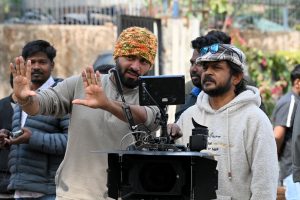
Director Taaj on the sets of movie ‘Ganga’ discusses the upcoming scene with the DOP, Sunil Kumar.
Young, dynamic and brimming with energy, Tejinder Singh ‘Taaj’, the director of Ganga, has spent 14 years in the film industry. A dentist by profession, his passion for cinema eventually led him to filmmaking. Having directed Punjabi films so far, Ganga marks his debut as a Hindi film director.
“Ganga is a story of a mother-son bond and their love. Rishikesh has provided the perfect backdrop for the film, and this ashram fitted our requirements beautifully, which is why we chose to shoot here,” says Taaj.
On casting seasoned actors Zarina Wahab and Amit Sadh as mother and son, he says, “They were a perfect match for the roles. They look wonderful together on screen, and their chemistry comes across beautifully in a frame.”
Interestingly, barring the DOP and Editor, the entire cast and crew are from Uttarakhand. The film captures the many facets of Rishikesh— from its temples and markets to the banks of the Ganga—woven naturally into the story. The film also features two songs, including a melodious lori.
For Taaj, Ganga is also a step towards his larger dream of entering Bollywood. “I consciously chose to make this film in Hindi and not Punjabi because Hindi gives a film the opportunity to connect with a much wider audience.”
Talking about his experience of shooting in Uttarakhand, Taaj says, “It has been a very soulful experience shooting on the banks of the Ganga. We have tried to capture the different moods of Rishikesh. Satish ji was extremely supportive and made us feel comfortable in a new state. The hospitality, warmth, scenic beauty and overall experience have been wonderful. In fact, we are now planning to shoot our next film in Dehradun.”
A short talk with Manu Bhardwaj, Producer of Ganga
Manu Bhardwaj is a man with many dreams and a long road ahead. He lives by Robert Frost’s famous thought of having “miles to go before I sleep” and believes deeply in the power of God and hard work.
“I am spellbound by the beauty of Rishikesh. Ganga has always fascinated me since childhood, and this ashram, where we are shooting, has a unique vibe. I was so drawn to the place that I left the hotel and chose to stay at the ashram. Wherever I point my camera, I find a mesmerising view.
I have officially set up my office in Uttarakhand and plan to shoot more films here. As a producer, I would also love to cast local talent from Uttarakhand. People here are very supportive especially Satish ji, who has been immensely supportive in every way. He is truly the aan, baan aur shaan of Uttarakhand.”
Talking about the cast, he adds, “Working with Zarina ji and Amit Sadh has been a wonderful experience. I have made nine films so far and am also the writer of Ganga. Taaj, the director of the film, and I are good friends. We unanimously agreed to have Zarina ji in mind for the role. We chose Amit because he is handsome, charming, down-to-earth and, above all, a wonderful human being. He is like a brother from another mother.”
He is keen to bring Ganga to the big screen, firmly believing that watching a film in a cinema hall—with a crowd around, popcorn to munch, mobile phones switched off—is an experience like no other. “There is something magical about watching a film together with an audience, with no distractions,” he says.
With three more films in the pipeline, Manu is already looking ahead. He also has a song that he would love to shoot in the picturesque surroundings of Rishikesh.