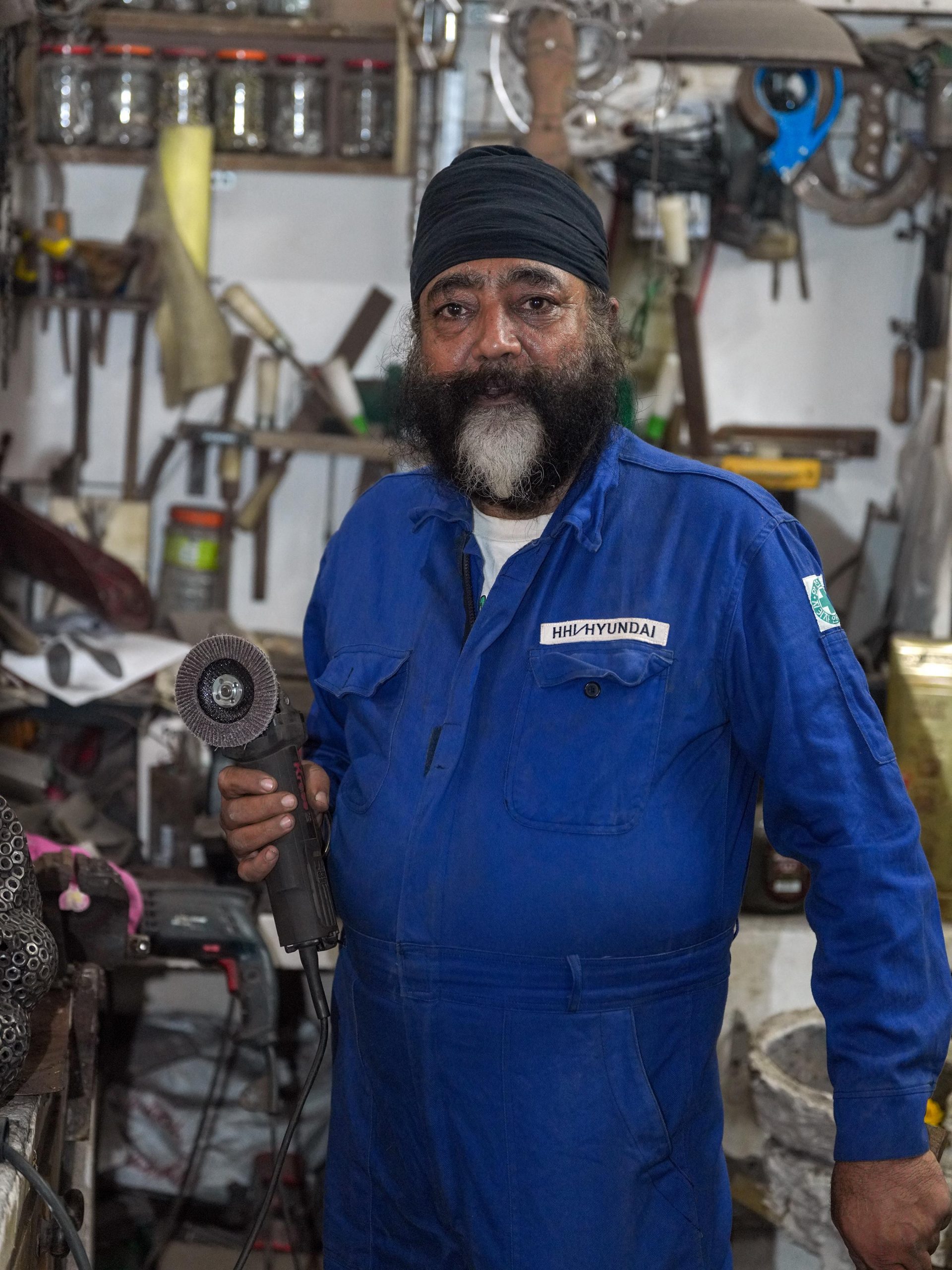
His lens knows no hierarchy—it finds equal wonder in a soaring bird and a shining star!
By SUNITA VIJAY
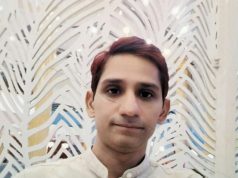
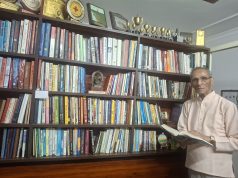
A true Renaissance man, Satpal Singh Gandhi is a rare blend of artist, naturalist, educator, photographer, birder, gardener, philatelist, stargazer, post crosser, collector, passionate upcycler and a lifelong learner, whose curiosity transforms every passion into a creative pursuit.
Whether it’s a celebrity in the spotlight or a bird in flight, his lens celebrates beauty in every frame. For this he waits for moments that only patience can reveal. Apart from being a celebrated photographer and bird watcher, he is a junk curator. His sculptures, crafted from glass, wood, automotive scrap, resin, fibreglass, stone, and other discarded materials, reflect his belief that creativity can breathe new life into the seemingly useless. A sculptor who proves that treasure often wears the disguise of trash!
A retired finance professional from Garhwal Mandal Vikas Nigam (GMVN) Ltd, he has spent his entire life in Dehradun—born, educated, employed, and retired in the city he continues to cherish for its culture, people, and natural heritage.
life, both photographers extraordinaire!
Beyond the world of finance, however, lies the many splendored personality of Satpal Gandhi.
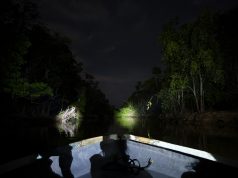
Photography, his first love, has earned him recognition through exhibitions and publications in in-flight magazines, newspapers, coffee-table books, and reference works. Equally passionate about sharing knowledge, he has curated numerous art exhibitions, conducted art workshops at events such as the Tehri Festival and the Mussoorie Winterline Carnival, judged photography competitions, and led more than fifty astronomy and stargazing workshops for schools, colleges, and corporate groups.
His bird photographs have been published in several ornithological books, and his observations on bird behaviour have been widely appreciated by the birding community. Visitors frequently drop by his home studio to learn and to see his collection.
A passionate collector, Satpal has an impressive collection of First Day Covers (FDCs). It’s a special envelope or postal card featuring a newly released postage stamp tied with an official postmark showing the exact date of the stamp’s first day of issue. They are prized collector’s items in philately.
His workshop is a curious conglomeration of discarded objects, where nuts, bolts, rare collection of empty malt whiskey bottles and forgotten metal pieces come together to acquire a new life. Satpal Gandhi truly has an eye for beauty in the most unexpected places. His philosophy is beautifully summed up in the words he lives by: Nothing goes to waste if you have the vision to upcycle it.
Eyes for stars, wings and wonders
You have seamlessly blended finance with art, photography, birding, astronomy, gardening, and upcycling. What has been the common thread that has connected these seemingly different passions throughout your life?
Unlike today, when children have the freedom to pursue unconventional career paths, we had little choice but to opt for professional courses that could secure us a job. There were no career counsellors either. I chose commerce and eventually joined GMVN.
My job was not particularly well-paying, so I would often say, “I earn my bread from my job and my butter from photography.” I pursued photography part-time, especially wedding photography, which was financially rewarding. Later, bird photography brought me money, recognition and immense satisfaction.
Over the years, I developed several other interests. I am essentially a creative person, and one hobby naturally led to another. I fell in love with music during my visits to the Gurudwara, where I would listen to kirtan and eventually began playing the tabla. Meeting people from different walks of life also opened me up to new interests.
Whatever I take up, I try to master it rather than remain a mere “jack of all trades and master of none”.
Photography- The Passion That Never Faded.
You have been a keen birder since the early 1990s. What sparked this interest, and what has been your most memorable birding discovery?
I started birding in the early 1990s when my cousin would often visit me looking for nearby water bodies where he could go birdwatching. At that time, very few people knew about the rich birdlife of Asan Barrage. I accompanied him, became fascinated by the area, bird photography and began documenting its birds.
In 1995, I prepared a checklist of birds at Asan and, along with a friend, wrote an article that was published in Cheetal, the journal of the Wildlife Preservation Society. It was the first-ever article documenting the birdlife of Asan.
One of my most memorable experiences was photographing a Goldeneye, a bird that had not previously been recorded there. I casually shared the photograph with a Delhi birding group, and fellow birders immediately recognised the significance of the sighting. The bird was officially reported at the site seven years later.
The Times of India subsequently approached me for photographic evidence. I shared the photograph, and the sighting was featured on the newspaper’s front page.
One of my proudest achievements as a birder is that, based on my findings and documentation, the Asan Conservation Reserve was recognised as an Important Bird and Biodiversity Area (IBA). It is a significant honour for the wetland and remains one of my most cherished contributions to birding.
If you had to choose just one identity to be remembered by—photographer, sculptor, birder, educator, environmentalist or lifelong learner—which would it be, and why?
I would like to be remembered as a photographer. It has been my oldest passion and, even today, it remains one of my strongest. Photography has allowed me to observe, explore and capture the world around me, and that connection has stayed with me through the years.
Where others see junk, he sees genius
In your hand discarded material finds a soul. What inspired your journey into upcycling and sculpting and how do you decide what a seemingly useless object can become?
I have always been able to visualise the outcome, and I keep collecting junk until an idea strikes me. My interest in sculpting began when my office needed a sculptor for the World Memorial at Gandhi Park. I found Pradeep Sharma, an Indian contemporary sculptor and alumnus of Sir JJ School of Art, Mumbai, for the project. His work intrigued me, so I accompanied him, observed his work and assisted him. He saw a promising learner in me and eventually mentored me in sculpting. That is how my journey into the art form began.
I chose junk as my medium because I wanted to create art using inexpensive, easily available materials.
You often say, “Nothing goes to waste if you have the vision to upcycle it.” Do you believe this philosophy extends beyond art and applies equally to life, people, and experiences?
No effort ever goes waste in life. I believe our experiences, too, can be upcycled into something beautiful. Nothing is really wasted if we know how to give it a new purpose.
As someone who has mentored students and regularly welcomes visitors to your workshop, what gives you greater satisfaction— creating a work of art yourself or inspiring someone else to discover their own creativity?
I would say, both. I have reached a stage where I can teach and share what I have learnt. But when I create something new, I prefer not to be influenced by other people’s ideas. Every creation begins with a vision in my mind, and it is not always possible for another person to understand exactly what I envisage. I can certainly inspire others, but the creative process must remain original. Art can be inspired, but it should never be borrowed.
The Dehradun That Still Lives
Having spent your life in Dehradun, you have witnessed the city’s transformation over decades. What do you cherish about old Dehradun that you wish could be preserved?
The remnants of old Dehradun still exist; we just need to observe them. Birdwatching has greatly sharpened my observation skills. Even as one grows older and the mind may slow down, a birder’s mind remains alert and agile. I can spot an owl even while driving.
Perhaps I notice things that others may overlook. Dehradun still has so many beautiful old buildings, heritage spots and little reminders of its past, but we often fail to stop and observe them. For me, birding has taught me to truly look at the city around me. And it is still beautiful.
Inspire, Don’t Impose; Let Curiosity Be Their Compass
In an age when screens, smartphones and instant digital entertainment have become an integral part of children’s lives, how can we encourage the younger generation to discover the joy of meaningful hobbies?
I have always believed that children learn from what they see around them. We simply need to introduce them to different activities, creative pursuits, art forms and hobbies. As they grow, they will naturally gravitate towards something that interests them and make it their own.
I don’t believe in forcing hobbies on children. Give them exposure, let them explore, and allow their interests to develop naturally.
I have always felt that we learn immensely in a group, where everyone brings a little knowledge and experience to the table. Books and the internet can provide information, but the wisdom shared by someone through years of observation and experience can often teach us much more.
The World Comes Home to a Post Crosser
You have been an enthusiastic post crosser for many years. How has the experience been, and for readers who may be unfamiliar with post crossing, could you tell us what it is all about?
Post crossing is a free online project that connects people across the world through real, physical postcards. For every postcard you send to a member, you are guaranteed to receive one from another random user somewhere in the world.
I have received postcards from so many fascinating places, each carrying a little glimpse of a different culture and part of the world. I treasure every one of them and preserve them carefully in my albums. It helps in keeping alive the interest in handwriting, postal stamps and traditional communication methods.
Satpal Gandhi’s remarkable journey—from balancing numbers to creating art, from chasing birds through forests to transforming discarded objects into treasures—is a story of passion, purpose and an insatiable curiosity.