By Tripti Agarwal
Every year, as India celebrates Independence Day, we remember the sacrifices, struggles and extraordinary journey that brought us freedom. For me, however, Independence Day is not merely a date on the calendar. It is a reminder of a history that I have been fortunate enough to preserve in a very personal way — through stamps and coins.
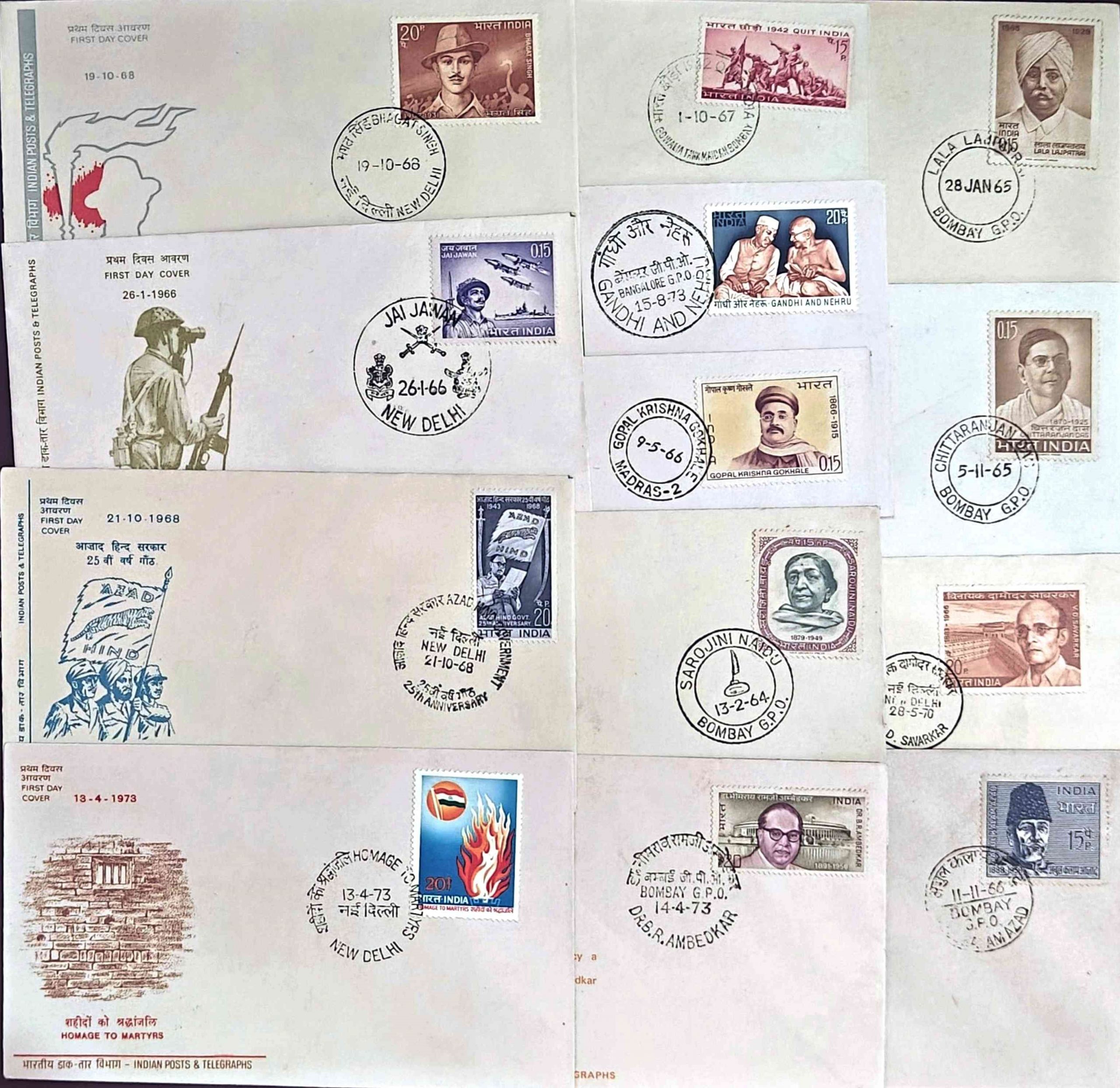
I am a philatelist, numismatist and postcrosser, and over the years I have built a substantial collection of stamps, coins and commemorative issues connected with India’s freedom struggle and its journey as an independent nation. Each piece in my collection carries a fragment of a much larger story — from the Revolt of 1857 and the tribal uprisings, the Jallianwala Bagh massacre and the rise of the freedom movement, to the Non-Cooperation and Swadeshi movements, the Salt Satyagraha, the formation of the Azad Hind Fauj, the Lahore Conspiracy, the Quit India Movement, Independence, the framing of the Constitution and the remarkable journey of the making of our national flag — and much more that shaped the India we know today.
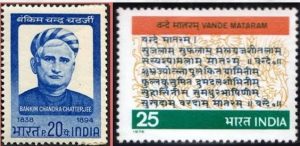
What makes these pieces particularly fascinating is that they were not created merely as collectibles. India Post, the Reserve Bank of India (RBI) and SPMCIL have, over the decades, issued stamps, coins and commemorative pieces to mark events, personalities and milestones that are an integral part of our national history. In doing so, they have created miniature historical records — pieces that can travel through generations long after the celebrations have ended.

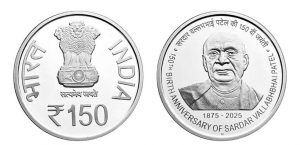
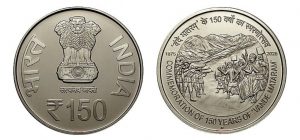
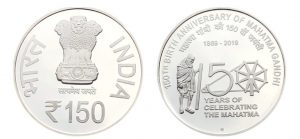
The story of India’s freedom and nation-building has been commemorated through numerous such issues. Coins and stamps have honoured some of the most influential personalities of our history, including Sardar Vallabhbhai Patel; Bhagwan Birsa Munda; Netaji Subhash Chandra Bose; Bhagat Singh; Mahatma Gandhi; Pt Jawaharlal Nehru and many other leaders and heroes whose contributions shaped the nation. These issues provide not only a visual record of our history but also a tangible reminder of the people behind it. Many of these commemorative stamps and coins have found a place in my collection, where they are preserved as pieces of our national memory.
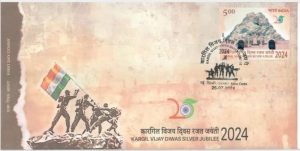
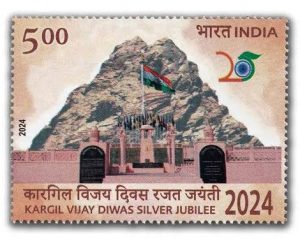
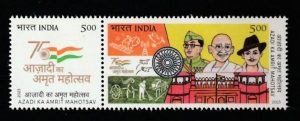
The commemorative issues also extend to defining milestones in independent India. Among them are the series of coins issued to mark 75 years of Independence as part of Azadi Ka Amrit Mahotsav, celebrating the remarkable journey of independent India. There are also coloured silver commemorative coins associated with Operation Vijay, as well as commemorative stamps marking milestones such as the 25th anniversary of India’s victory in the Kargil War. Other issues commemorate the contributions and achievements of the Indian Army, Air Force and Navy, reflecting important chapters in India’s military and national history. Many of these, too, form part of the collection, preserving these stories for future generations.
But perhaps the most meaningful part of my collection is an exhibit that attempts to bring the entire story of India’s freedom struggle together.
Through Stamps, First Day Covers, Miniature Sheets, Souvenir Sheets, Maxim Cards and Pictorial Cancellations, etc., a story is captured in time that is both chronological and deeply human — a story of resistance, sacrifice, leadership, aspirations and ultimately freedom. I have traced India’s journey through the many chapters of the freedom struggle and beyond through a philatelic display. It covers the Revolt of 1857, tribal uprisings, Jallianwala Bagh, the major movements and milestones of the freedom struggle, the Lahore Conspiracy, the Salt Satyagraha, the formation of the Azad Hind Fauj, the Quit India Movement and the eventual achievement of Independence. Moving towards the framing of the Constitution and the journey of the making and evolution of the Indian national flag, showing how the struggle for freedom ultimately transformed into the task of building a nation.
This exhibit has travelled beyond my personal collection and has been displayed at the national and international level. In 2023, at AMRITPEX 2023, the National Philately Exhibition, it received the Third Prize at the national level in the AKAM category.
A stamp is tiny. A coin may fit in the palm of one’s hand. Yet both can carry an enormous amount of history.
For someone who did not live through the freedom movement, a textbook can explain what happened. A documentary can show it. But holding a commemorative stamp issued decades ago, looking at the face of a freedom fighter on a postage stamp, or examining a coin issued to commemorate a defining moment in our national journey creates a different kind of connection with the past.
That is where I believe collectors have a small but important role to play. Institutions such as India Post, RBI and SPMCIL preserve national memory by issuing these commemorative pieces. Collectors, in turn, preserve those pieces and keep them accessible. We become custodians, in a small way, of objects that might otherwise remain tucked away in albums, museums or archives.
And perhaps the most important audience for these collections is the younger generation. Today’s children and young adults have grown up in an India that has always been independent. For them, August 15 is familiar as a national holiday, a flag-hoisting ceremony and a celebration. The struggle that preceded it can sometimes feel distant — something confined to the pages of a history book.
Philately and numismatics can help bridge that distance.
A young person looking at an exhibit can follow the story through actual historical artefacts: the events of 1857, the emergence of nationalist movements, the contributions and sacrifices of freedom fighters, the major movements that shaped the freedom struggle, the road towards Independence, the making of the Constitution and the evolution of our national symbols. Suddenly, history becomes something they can see, examine and question.
In an age of smartphones, social media and everything being available at the click of a button, hobbies that encourage us to slow down, observe and discover can be incredibly valuable. Philately and numismatics are not merely hobbies of collecting stamps and coins; they are hobbies of curiosity.
Every stamp can lead you to a person, an event, a place or an idea. Every coin can make you ask why it was issued, what its symbols represent, and what was happening in the country when it entered circulation. In that sense, a collection is never really complete — because every new piece opens the door to another story.
I would encourage young people to give this hobby a chance. Start small. Pick a theme that interests you — freedom fighters, India’s space journey, wildlife, sports, the Constitution, monuments or even the history of your own city. Begin with whatever you can find. Research it. Talk to other collectors. Visit a philatelic bureau or a coin exhibition. Slowly, those little pieces of paper and metal will begin to tell you stories that no textbook alone can tell.
More importantly, collecting teaches patience, research, attention to detail and preservation. It connects generations. A grandparent may have a stamp or coin that becomes the starting point of a conversation with a grandchild. Something that may have appeared insignificant for decades can suddenly become a doorway into family history and national history.
This, to me, is the real beauty of collecting. I do not consider myself the owner of these pieces as much as their temporary custodian. The stamps and coins in my collection belong to a much larger national story. My responsibility is simply to preserve them carefully, document them, share them and, wherever possible, use them to make history more accessible to others. As India marks its 80th Independence Day in 2026, I find myself looking at these little pieces of paper and metal with a renewed sense of gratitude.
Eighty years of Independence is not merely a milestone to celebrate. It is an opportunity to pause and look back at the extraordinary journey from a nation struggling for freedom to the vibrant India we see today — and to recognise the sacrifices, institutions, ideas and people who shaped that journey.
These stamps and coins remind me that freedom was not achieved in a single day. It was the culmination of decades of struggle, sacrifice, courage and determination. And the India that emerged in 1947 has spent the next eight decades writing a new chapter of its own. And perhaps that is why preserving the memories of that journey matters.
Because nations remember through monuments, books and archives. But they also remember through the smallest of things — a stamp, a coin, an envelope, a commemorative issue. History does not always live in grand monuments. Sometimes, it lives quietly in an album, waiting for someone curious enough to turn the page.
So, this Independence Day, my message to the younger generation is simple:
Do not just read history. Discover it. Collect it. Preserve it. Share it. And then create history of your own. Because the freedom we enjoy today was built by people whose stories deserve to be remembered tomorrow. A stamp may be small. A coin may fit in your palm. But together, they can hold the memory of a nation.
Collect a piece of history. Discover its story. Preserve its memory. And become its custodian for the next generation.