 By: Ganesh Saili
Anyone would gasp at the number of transistors people held, their telescopic antennas flashing like sabres in the air. In 1970, radio commentary had brought cricket into our homes. On top of that, to promote our family planning programme, the government gave away free transistors to those undergoing vasectomies. So, no matter where you turned, you’d find folks glued to their transistors.
A pedantic friend tells me that the correct term is transistorised radio receiver, but practically everyone called it transistor. One-day cricket had come into its own, and the radio commentaries had folks glued to their sets. By 1970, it was huge, bigger than big. The list of commentators included V.M. Chakrapani and Lt. Col. Pusapati Vijaya Ananda Gajapathi Raju, better known as the Maharajahkumar of Vizianagaram or Vizzy, (who once captained India’s Test team). He would describe the first ball and wander off down memory lane, describing his visit to the Oval instead of the action on the field. Nor can you forget Eton-educated Henry Blofeld’s clipped accent; he would describe trivia at the match rather than the bat-and-ball. Mercifully, Melville De Mello’s career as a cricket commentator lasted just a few matches, and luckily Pearson Surita was there; he remains my favourite.
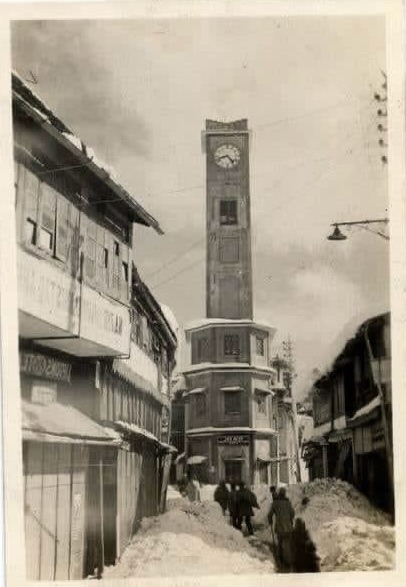
Our old ‘Pilot’ radio stuttered – nothing that a few slaps wouldn’t fix! A little below our home lived David Charles. He would be engrossed in fiddling with the valves in a radio at Saran Lal Kapoor’s Remington typewriter repair shop, below which Charles Senior had a bakery. The master baker was assisted by Maula Bux, who began his career hefting brown and yellow trunks with the logo of Charles Bakery emblazoned on their side, which were carried from door to door to hawk his wares. Their ancestors were the choodiwala, who came as courtiers with Suleman Shikoh, Aurangzeb’s brother, and sought asylum here in the 17th century.
To return to David Charles, I cannot get rid of a sneaky feeling that he knew that the real reason that brought me back time and again had little to do with our perpetually-under-repair radio. Did he know that it was just a lame excuse to see his pretty daughter Chandrabala (per name Gugan)? If we were lucky, we’d go off to the matinee at Rialto cinema. Perforce, we took her younger brother Babloo along too. We called him entertainment tax or ET, poor chap!
By 1935 the only radio in the state of Tehri-Garhwal was with ruler Rajah Nagendra Shah. Commoners were forbidden to go near it. When Gulzari Aswal applied for a license, it was reluctantly granted. And then he had to walk four days to Mussoorie to buy one. Then the wind charger played up; he found that the only reliable radio-mechanic was Banwari Lal, who had to be carried on a palanquin to Tehri on a journey of six days!
In college, circa 1969, I could be found hanging around Maplewood Cottage, which was where the author Ruskin Bond lived at the time. ‘How do I improve my pronunciation?’ I once asked him.
‘Listen to the BBC news,’ he replied.
I did, though it did precious little for my accent. You will find it still stuck between mid-Atlantic and Anglo-Indian.
In the 1960s, I loved to walk around the Upper Chakkar. Going past Seaforth Lodge I could hear the music from the Ramans’ radiogram playing out songs from medium-sized 45 rpm records: ‘Itsy-bitsy teeny-weeny yellow polka red bikini!’
In the Library end of town, the Chateau came up as an escape for Maharajah Jagjit Singh of Kapurthala. His son, Paramjit, fell in love with an English cabaret dancer, Stella Mudge, who was renamed Maharani Narinder Kaur. They built themselves a love nest – called Stella Cottage with extensive gardens and lawns that needed a bevy of seventy-two gardeners.
By May 1949, Maharaja Paramjit Singh was in the Chateau, a lonely old man; he said to his grandson Brigadier Sukhjit Singh: ‘The whole world has once dined at my table, and here I am alone, listening to my radio.’
The world had turned another page; the sun had set on all those who had kingdoms.
Ganesh Saili, born and home-grown in the hills, belongs to those select few whose words are illustrated by their pictures. Author of two dozen books, some translated into twenty languages, his work has found renown worldwide.