Around the World with the Most Travelled Indian
 By Nitin Gairola
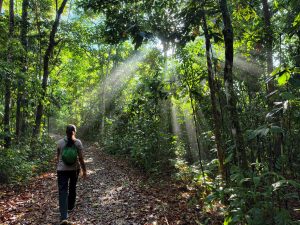
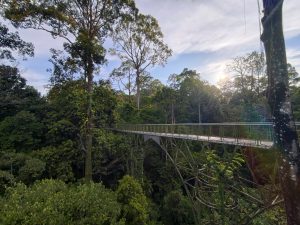
It has poured during the hot afternoon in Sepilok, Borneo as we were viewing the Sun Bears in their semi-wild habitats. Sepilok is a real rainforest but the visitors are allowed to only visit the section where Sun Bears and Orangutans are lured by food, so it is definitely not the real wild like how Sakau and Dunam Valley in Borneo are. So, after pouring incessantly that afternoon, the rainfall started easing a bit and it is then that we decided to step out and head towards the proper rainforest and walk first on a huge man-made metal canopy path (to view the canopy and the emergent layers of the forest) and later we decided to walk on the rainforest floor itself. As you may know, rainforests typically have 4 layers of vegetation – at the bottom is the forest floor and then it has the understory layer i.e. the shrubs and bushes. Over that comes the canopy layer (the thick green layer which has the most wildlife) and finally right on top is the emergent layer, made up of the tallest trees. The emergent layer has some birdlife, but not many animals live at these heights.
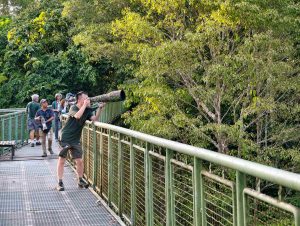
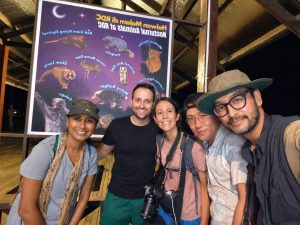
Our aim was to view and study all the 4 layers here in Sepilok and to try to spot the wildlife in each of them. The canopy and emergent layers were easy and didn’t carry any risk as we were on the extremely high and branching walkway. It gave us some fantastic vantage points to look at the larger wildlife such as primates and birds. We were trying to spot an orangutan but no such luck that day. Later we decided to step down and walk on the damp forest floor and we took some very refreshing trails. But after walking half a day, we were really tired and were on our way out. But as fate would have it, we saw our new good friends, Markus and Vicky (Victoria for short) walking in and telling us that the rangers here also organised night walks to see the ‘dark side’ of the rainforest. We had met Markus and Vicky (along with Giannis from Greece) during the Sakau boat safaris and had some good conversations with them on the ride back from Sakau to Sepilok. Markus was a German working in Singapore, Vicky an Argentine working in Australia and Giannis a Greek working around the world on a remote job. Talk about globalisation.
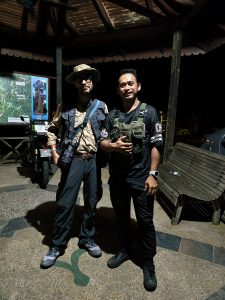
So as soon as Markus, Vicky and a friend of theirs walked in, we were convinced we should do the night walk as well with them. And while the official permitted slots for that night were over, the guards took the money from us nonetheless and told us to join the official group that was being provided a briefing by the forest ranger. We all were thrilled to bits.
The ranger explained the animals we were trying to look for and given that it has poured in the afternoon, the forest floor was fresh and would supposedly be teeming with creepy crawlies at night. And with that, we went into the darkening forest on foot, following our ranger.
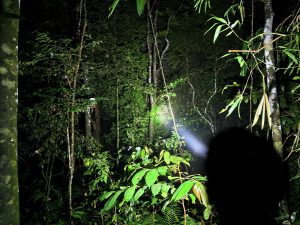
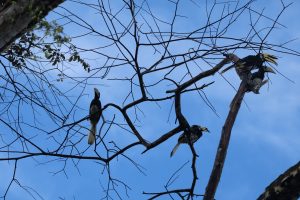
We had earlier seen a few Red Leaf Monkeys and many Eagles and Hornbills but the first animal of the night walk was to be the Red Giant Flying Squirrel, which glides (not flies) from treetop to treetop and it does so during dusk. We were there at the right time but I suppose the squirrel had stage fright that night and didn’t perform its act. We yet waited a bit more and then had to concede to nature.
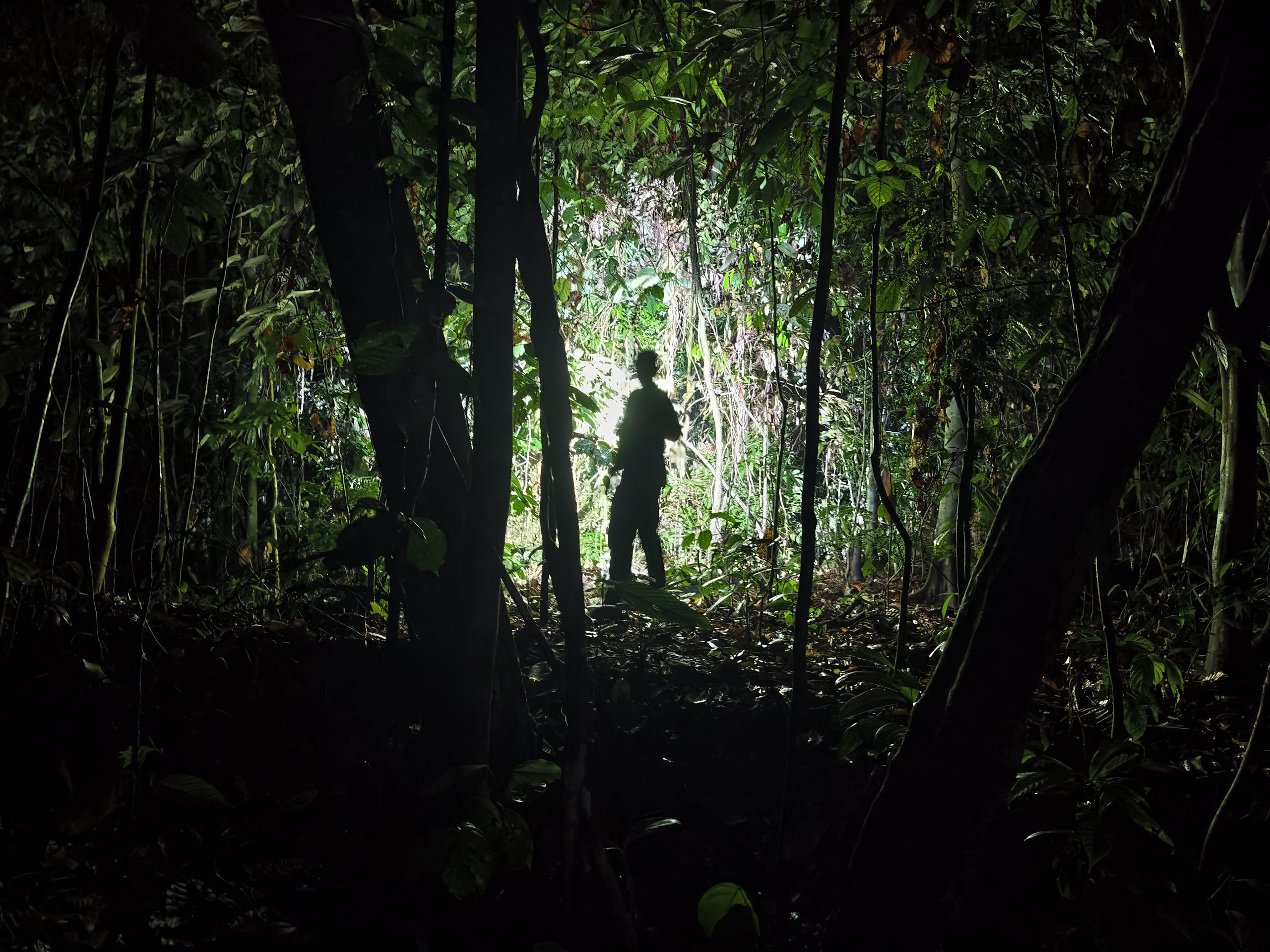
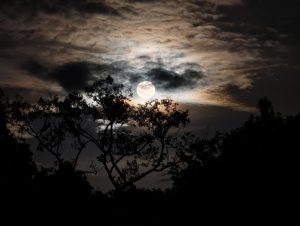
We moved further on the forest floor, behind our ranger and now it had become very dark. The ranger-cum-guide’s torch was on and I had also put the light on my headgear on, so that I could see the way under the thick canopy. The nearly full moon did help a bit as we got deeper into the dark jungle. It was a bit creepy in there as we could only see the outline of the canopy that was covering us from above (and we were told to be silent so as to not scare away the wildlife).
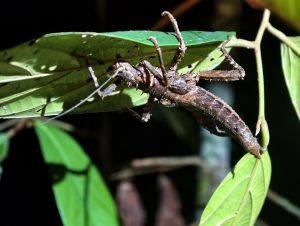
And then the good man did start spotting a few of the things we were interested in and it began with a fleeting glimpse of a Lesser Mouse Deer, which only the ranger and Richa saw. At least he wasn’t pulling a fast one on us since Richa was there to verify. Then came a multi-coloured insect followed by a brown Bornean stick insect. It actually looked like a stick and I could see how it could have camouflaged itself against a dried twig – but unluckily for him, the foliage was lush that night. We saw a few more creepy crawlies but we really were keen on viewing the Slow Loris, which is a poisonous ‘miniature’ primate. It is not only one of the smallest primates but it’s the only one that is venomous. But Slow Loris also didn’t show up that night and we had to move on a bit crestfallen. Just as the insects were aplenty after the rains, the relatively larger mammals were scarce.
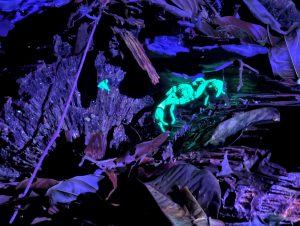
But then our luck started turning a bit and we crossed paths with an illuminated scorpion which was really a very strange sight. My fantastic VivoX300 Pro got some really sharp macro shots of the little beast in all its florescent glow. And as we moved out into a clearing, I also noticed a pair of bright eyes looking at us. The creature stayed there for a bit but then went into the night the moment I tried to capture it with my camera. The guide told us it was either the Common Palm Civet or the Malayan Civet and I never got its image. A bit of a regret I must say but that’s how it goes.
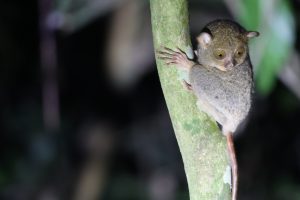
After walking that entire day, no less than 40 kilometres overall, Richa and I were ready to give up completely since we were also really dehydrated. But just then came the surprise closing ceremony when we crossed paths with a Western Tarsier, the second smallest primate which sticks to trees and has super big alien eyes. We ‘sat’ there and admired this unique little animal, which I had also seen in the Philippines a few months prior – but that was the Philippine Tarsier species. I got a couple of dozen images, of which I discarded a dozen and half since it’s not that that easy to take images at night in a rainforest. But the one I have published here is a sharp image and I am glad I got a memory from this walk. But if you notice I just put ‘sat’ in inverted commas, since I also got a memory by doing exactly that. Who in his sane mind decides to sit on a Bornean rainforest floor when one has not even worn proper hiking shoes or gaiters for the calves. While generally overprepared, this time I really went in unprepared and learned my lesson. More on that next Sunday…
Nitin Gairola is an extreme world traveller who has been to every major desert & forest ecoregion on Earth and to around 150 countries & autonomous territories. He is unofficially known as the ‘most travelled Indian’ and this multi-decade exploration program to witness the entire world is named ‘Borderless Planet’. Nitin is a published travel writer & poet too. Join him @ www.instagram.com/MostTravelledIndian/