Film Review
 By Sunita Vijay
The first scene of the movie Ghamasaan begins with a supposedly ‘happy’ marriage ceremony in a village in Bundelkhand. A colloquial folklore flows in the air, yet the atmosphere is loaded with melancholy, carrying the heavy weight of fear and suspicion. The smart interplay of light and darkness, music, camera angles and expressions create the desired effect.
The father arrives to bless the newly married couple, entering through the rear door of an impoverished home in pitch darkness. An unmistakable unease is felt. No one speaks a word, yet the silence says enough. The conversation that follows hints at the situation, and the layers of the story begin to unfold.
Ghamasaan, written and directed by Tigmanshu Dhulia, is neither unexpected nor gratuitous; it is woven into the harsh world the film seeks to portray. There are faint echoes of Dhulia’s earlier success, Paan Singh Tomar, particularly in the way he captures the unforgiving landscape and the people shaped by it. Violence has always been an integral part of Dhulia’s films, and portraying the lawless badlands in raw state is his forte. Once again, he presents the badlands in an unfiltered form, creating memorable characters that are going to stay in our memories for long.
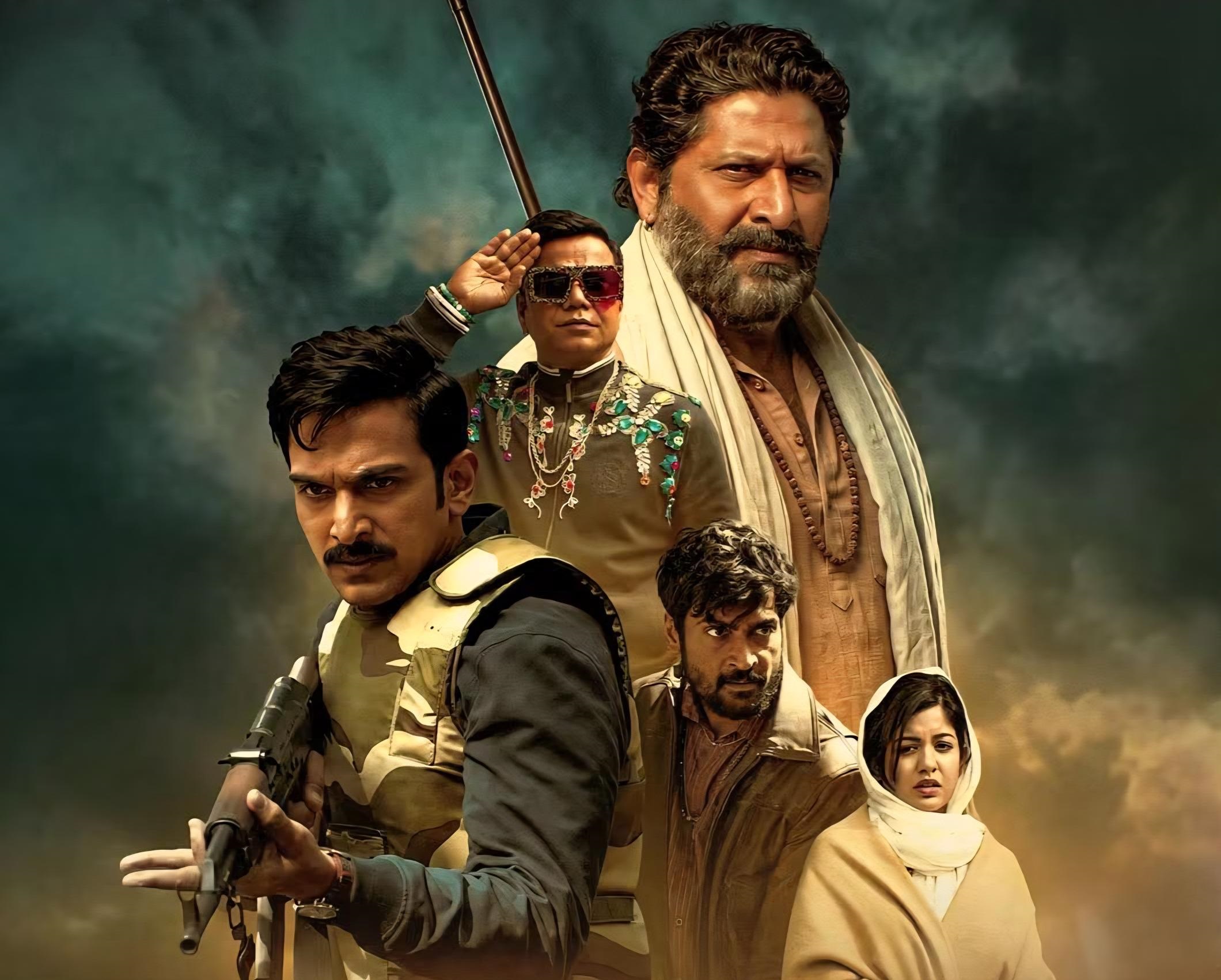
At the centre of this violent world is Maharaj, the leader of the brutal dacoit gang. Played by Arshad Warsi in a strikingly different avatar, Maharaj carries an almost saintly demeanour in his beard and attire, but is barbarically ruthless. He is mischievous and enigmatic. He loves inflicting intentional pain on others. On one hand, he prays; on the other, he sadistically enjoys listening to the screams and cries of people his men attack on his command over the phone.
He rarely ventures out of his hideout in the jungle, preferring to operate from the shadows with calculated slyness. Dhulia keeps Maharaj’s portrayal refreshingly raw—dressed in a soiled inner vest, with old wound marks etched across his face—brings him closer to the stark, meagre lifestyle of a dacoit living far from the trappings of comfort, yet somehow managing all basic livelihood needs. Maharaj’s influence extends beyond this into the political landscape of the state, where his guns and men have the ability to sway elections and their outcomes.
Standing against this formidable force is Aditya Kumar (Pratik Gandhi), an unassuming young IPS officer entrusted with the difficult task of bringing this seemingly uncontrollable force to his knees. As the head of a specially constituted task force, Aditya handpicks his team and sets out to hunt down the man.
The film’s background score work effectively in creating its tense, brooding atmosphere. The rustic folk textured music is supportive. The action sequences have a certain authenticity to them. The fights do not appear overly stylised or choreographed for spectacle; instead, they feel too grounded in the gritty world of the film.
What also makes the narrative interesting is the way Dhulia brings the policeman home. Aditya may be upright in uniform, but behind the tough exterior is a husband whose demanding job often becomes a source of domestic bickering. The danger of his profession eventually spills into his personal space when his wife, Aparna, finds herself in the grip of the very world he is fighting. The film, therefore, does not merely show the risks faced by a police officer; it also quietly underlines the price the family pays. These personal moments, woven into the larger chase, give the film a human touch. Interesting dialogues, understated humour and the easy banter between Aditya and Aparna provide some breathing space amid the tense atmosphere.
Pratik Gandhi is effortlessly natural and exudes a balanced personality—witty at home and focused as an officer at work.
Jatin Goswami, as Angad, is spot on as Maharaj’s loyal right-hand man. He delivers perfectly what is expected of him.
Ishita Dutta, as Aparna, Aditya Kumar’s wife, adds warmth and emotional depth to the otherwise coarse narrative. Her natural performance offers a glimpse of Aditya’s vulnerable side and adds a human dimension to his dangerous world.
Deepraj Rana wears the uniform as it ought to be. As Inspector Harsh, he delivers a restrained and dependable performance, adding credibility to the police team.
Rajpal Yadav, as Kallika, literally chews the scenery, leaving the audience in the aisles and effortlessly outshining everyone around him. Though deeply tormented by Maharaj, the way he carries on with a jovial spirit, finding a reason to smile even in adversity, makes him steal the show.
Ghamasaan is a dark, gritty tale of power, fear and revenge, rooted firmly in the unforgiving terrain of Bundelkhand. At its heart lies the age-old nexus between politicians and cops, but the film also touches a more emotional chord—the wounds of a tribal boy, caste differences, and the toll a family pays when it takes on criminals head-on.
Rich in atmosphere and powered by strong performances, the film could have done with a more compelling plot and tighter storytelling. There are occasional dips, but just when the narrative threatens to lose steam, the next scene pulls it back on track and keeps the momentum going.
What stays with you is Dhulia’s ability to make the landscape speak. The jungle trails, the postcard sceneries, raw atmospheric visual identity and the horrendous gang! The film’s authenticity is heightened by Dhulia’s decision to shoot in real locations, allowing the landscape and rugged terrain of the Indian heartland to become an integral part of the story. Ghamasaan may not have a watertight plot, but its raw setting, memorable characters and flashes of humour keep it from losing its grip on the audience.