Around the World with the Most Travelled Indian
 By Nitin Gairola
The explorer, Mike Horn, started his Ted Talk with a simple question – He asked the audience ‘Why do I do what I do and why do you do what you do?’ Naturally he answered it himself by stating ‘it is because we can’. So basically, what he wanted to say was that our choices in life are generally a function of our capability and ability and we reverse work from there and choose our paths in life (and justify them at all costs, if I may add). And if these choices happen to intersect with your passion as well, besides providing economic value, then you become one of the lucky few.
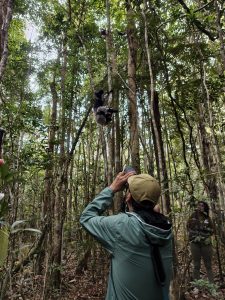
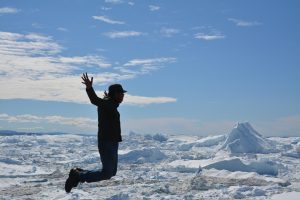
In my case, I could not come close to being a true explorer and that’s the blunt truth. As I have said many times, I am simply not tough enough (heck even my eyesight isn’t 20/20). So, the next best thing for me was to travel and explore the world – wider (but not deeper) than anyone else before. You see, that mindset for ‘world records’ and ‘world firsts’ didn’t change (it’s what most geographic explorers chase), but the capability just wasn’t there to set out on expeditions and break single-event records. And that’s why came this idea of wide travel to see ‘every place’ on Earth as an extreme world traveller. Now, ‘every place’ is really vague and can be arbitrary, but at the highest level in world travel it can be to visit every country on Earth and also to visit the entire natural world, which is what I am onto and up to.
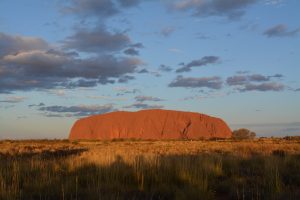
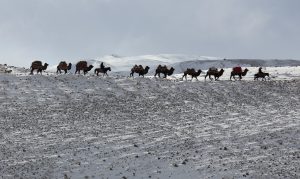
And that’s why Madagascar fit the bill on both fronts – it is not just another UN country but also a natural world unto itself; it’s one of the most unique & exotic wildlife destinations anywhere on Earth and harbours the endemic lemurs – all 100-plus species of them, found nowhere else on our planet. It thus adds to my quest to see all the ‘greens’ of Earth, i.e., all major forests & grasslands on our planet. I am yet to officially register it as a world record and I intend to do so after I visit the rainforests of Papua New Guinea and the Primorye Forest (Primorsky Krai) of far-Eastern Siberia. I have visited both these larger ecosystems but not the actual local forests within the national park limits and, hence, this has to wait till 2027 for it to be turned into a certified record. And just like visiting the ‘greens’ of the planet, I am visiting all ‘dry-lands’ on Earth as well, and that list includes not just all the deserts but also the cold polar ice caps of the Arctic and Antarctic and all the tundra regions on the planet, too (which, just like deserts, receive very little precipitation and hence are considered ‘desert-like’ or arid too). I have to officially register this with proofs as well, and I intend to do so next year, too. Getting these things verified is quite a task as you can imagine.
And, so, I landed in Antananarivo, the capital of Madagascar, at around 3 a.m. which was perfectly strange in a place where you wouldn’t want to be on your own at 3 a.m. But since I had got a relatively cheaper flight, I wasn’t complaining. And that’s why for just 400 metres, I had pre-ordered a taxi to my ‘hotel’, since I wasn’t taking a risk with active street dogs or thugs. I was rather sleepless and then I got into a hotel that was so silent that it was really very noisy. Because there was no need to have a fan, and it was deep in the night, I could hear a lot of dogs, near & far, barking – howling and cats bouncing on the tin sheds and what not. My tour arranger, Rija and his friend and driver, Meme were to arrive by 10 a.m. and I really hoped to get some sleep from 4 to 9 a.m. Eventually I did get a few hours, perhaps 2-3, but not the 5 hours I had hoped for from an ‘airport hotel’. This was one of the worst overnight stays I had had, but honestly, I did go cheap on the price and that’s why I paid the price. At least they had electricity that night which I learned is not always the case.
And then I met Rija, his wonderful wife and daughter in the morning and after he told me what’s in store for the day, things started to look brighter. I exchanged 200 USD and got 860,000 Malagasy Ariary in return and it was quite a task to count it all, even with bills of 10,000. I had a mighty thick wallet now and I was nearly a millionaire in one single transaction – and I was getting noticed. After seeing this I realised how good we have it in India with our digital payments. Here at the Antananarivo airport, I had given a brand new 100 USD bill for my 35 USD visa on arrival (since they didn’t have the credit card facility) and in return I got 1 slightly torn 20 USD bill and another old 20 USD bill (i.e., earlier than 2006). Now, in the US, these greenbacks are fine but I have seen that elsewhere they are useless and the banks don’t touch them. I was too sleepy that morning to realise what had happened till the money exchanger refused to take these notes. Rija felt really sorry about how I had been swindled but its all part and parcel of travel. It doesn’t mean all people are like this.
Money matters aside, I was introduced to Meme who would not only be driving the Toyota Land Cruiser (what else) for all the days in Madagascar but would also be my guide and nearly a bodyguard of sorts. I couldn’t believe how well he took care of me during the coming days and for that I am really indebted to him. We made it through the days without a single song (no signal) during our drives east, west and north of the country and would have hardly exchanged a few words other than names of the spirits we liked and the places we have visited (it’s a pity we both knew different languages). Our bond during this trip was purely on shared humanity and a stillness of mind that comes when in the natural world.
On the first day I was heading towards yet another forest ecosystem, and this one was really so unique thanks to the distinct evolutionary path that Madagascar took. The green & dry-lands just keep adding up and with each visit I find so much peace in the midst of something that is actually a grinding quest (blessed are those that wander aimlessly and I hope one day I can too). Right now, I am mapping the entire world – both political & natural – and trying to do what no one has ever done. This has sort of become my life’s primary quest to understand the world first hand and Madagascar was another piece of the planet puzzle that I tried to colour.
Next week I will take you with me for some Lemur tracking in the wild, the only place where wildlife should be. Wildlife outside the wild is a bit of a paradox, isn’t it? There is nothing quite like tracking the wild and then finding it or at times failing to find what you were looking for. The thrill is in the chase and I chose to chase the exotic – from the Antarctic to the Arctic and from Borneo to the Congo and everything else in between. Tell me, how does one tame a wild heart when it looks at a world map?
Nitin Gairola is an extreme world traveller who has been to every major desert & forest ecoregion on Earth and to around 150 countries & autonomous territories. He is unofficially known as the ‘most travelled Indian’ and this multi-decade exploration program to witness the entire world is named ‘Borderless Planet’. Nitin is a published travel writer & poet too. Join him @ www.instagram.com/MostTravelledIndian/