 By Ganesh Saili
You could not have faulted any one of the three!
After all, each one had accomplished the task set out for them. The first, Gurbachan Singh Seistian: an ancestor had moved from his village in Punjab to Seistian, Iran. At fifteen, he had come as part of Bibi’s trousseau. His hard work had paid off, and he was the Chief Accountant of a group whose businesses extended from Bangalore to Bannu and from Mhow to Murree. On that day, he just came along for the ride. The second was Sethi Sahib; he was the General Manager, and you’d have found him wearing a three-piece suit, with a limp rosebud garnishing his lapel. The last was Chatter Singh Negi; he had begun life as a ballboy chasing tennis balls and had risen to Front Desk Manager.
Who could have faulted them?
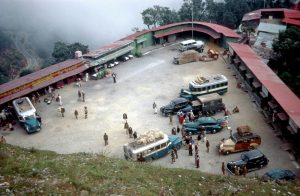
After all, they were seeing off Rai Bahadur Captain Kirparam, Bibiji’s husband, their Boss. The couple was taking the night train to Delhi. Captain Sahib’s rags-to-riches story is the stuff of local lore: it saw him start a catering business, graduate to running a canteen (for Allied troops during the War), and then build barracks for the German and Italian prisoners of war interned in Dehradun. In 1946, he bought the twenty-one-acre spread of the largest resort in a hill station.
Anyway, on that fateful day, a rickety taxi from the bus-stand took them down to the train station in Dehradun. Together, the aforementioned trio made sure the Boss and his wife boarded the train on time.
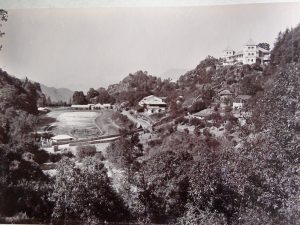
If you insist on assigning culpability, lay the blame at the door of the Station Master, Dehradun. Who asked him to have three trains: the Janta Express, the Howrah Express and the Mussoorie Express, depart from the platforms so close to each other?
Our threesome made sure their charges were settled comfortably. Negi opened the hold-all and patted the creases flat. Sethi produced the tiffin-carrier that he had carried gingerly between his feet, to avoid the sloshing caused by the swaying of a hill road. Finally, the train tooted; before the carriage wheels clanged, it was time for genuflecting goodbyes. Watching the tail lights of the last bogey being swallowed up by the dark, they hastened to the taxi to go home.
The next morning trouble knocked. Captain Saab was on the phone. Horror of horrors, he had woken up at Lucknow’s Charbagh Station instead of Delhi.
Fifty years later, a similar thing almost happened to a friend of mine. The publisher’s office sent a bright young girl to see him off; the pretty editorial assistant was asked to make sure my friend (going for a book launch) arrived in time for the Kolkata Book Fair. Early in the morning, there were many fast-track trains that were leaving Delhi. She helped him board what she thought was the train to Kolkata.
‘What time do we reach Calcutta?’ asked the author, chit-chatting with a co-traveller.
‘Sir! But this train goes to Chandigarh!’ he said.
‘We tumbled out really quickly!’ my friend tells me.
Fortunately, the world has moved on.
When I was a child, my Nani (grandmother, mother’s mother) used to take the trumba – a slow passenger train- on what we called ‘her annual pilgrimage’ to meet up with relatives in Haridwar. Small wonder it took forever; it stopped at all the little dents along the way: Harrawala, Doiwala, Raiwala, Motichur and Kansrao. But I was accompanying her because of Nani’s tiffin-carrier, stuffed with aloo-pooris. Don’t ask me why she carried so much for that short ride to the next-door town.
Though I remember the cloying taste of Doiwala’s chai; that, and the sound of the tonga-ride, clip-clopping our way to a relative’s home, and arriving at what was no more than a room above a little shop.
I can still rub my eyes and recall the smoke from those coal-fired steam engines which sent grit into your eyes. Just before Haridwar were two tunnels, where the clickety-clack of the wheels echoed off the tunnel walls.
The trumba had reached its destination.
Often a man stands with his eyes shut, and wonders why it’s dark!
(Ganesh Saili, born and home-grown in the hills, belongs to those select few whose words are illustrated by his pictures. Author of two dozen books, some translated into twenty languages. The author’s work has found renown worldwide.)