 By Dr Rajendra Dobhal
Since its inception in 2017, the R.S. Tolia Forum (RSTF) at VoW has emerged as a significant platform for dialogue, reflection and public engagement on the social, environmental, cultural, economic and developmental concerns of Uttarakhand and the Himalayan region. Inspired by the vision and legacy of Dr. R.S. Tolia, the Forum has brought together scholars, policymakers, administrators, scientists, environmentalists, journalists, writers and civil society representatives to deliberate on issues that directly affect mountain communities.
The Forum was launched in 2017 by P.D. Rai, Member of Parliament, with a programme that commemorated and reflected upon the life and contribution of Dr. R.S. Tolia. The release of a book on Dr. Tolia by S.K. Das, N.S. Naplachayal and B.K. Joshi, along with tributes from his colleagues and well-wishers, established the intellectual and institutional foundation of the RS Tolia Forum. From the outset, the RSTF positioned itself as a space where mountain-specific challenges could be discussed through multiple perspectives, rather than being viewed only through conventional development frameworks.
One of RSTF’s enduring contributions has been to connect contemporary debates with the historical and cultural heritage of Uttarakhand and the Himalayas. Its early programmes included “The Changing Landscape” with Anup Shah, “The Decadal Journeys – Askot to Arakot” associated with PAHAR/Shekhar Pathak, and “Asia Ki Peeth Par” with Uma Bhatt and Shekhar Pathak. The presentation curated by Lokesh Ohri on the Pundit Brothers, Nain Singh and Kishen Singh Rawat, further highlighted the remarkable history of Himalayan exploration and documentation. Through these initiatives, RSTF has helped preserve and bring wider attention to the region’s oral histories, literature, exploration traditions, natural history and cultural memory.
Sustainability has been a consistent thread throughout the Forum’s journey. RSTF has addressed the relationship between economic development, ecological sustainability and mountain livelihoods, including discussions on the state of Indian mountains, Sustainable Development Goals and the way ahead for mountain states. The Forum has repeatedly emphasised that development strategies for mountain states need to recognise their distinctive geography, fragile ecosystems, limited carrying capacity and dispersed rural economies. Its engagement with the Sustainable Development Forum of Uttaranchal (SDFU) and the India Mountain Initiative (IMI) has further strengthened its engagement with wider national and Himalayan development debates.
Migration has been one of the most important themes addressed by RSTF. In 2018, the Forum examined “The Meta Narratives of Migration in Uttarakhand”, bringing together researchers, administrators and practitioners to explore the causes and consequences of migration. The subject was revisited in 2019 through “Reverse Migration – Experiential Sharing”. This was particularly significant because it moved the conversation beyond the documentation of outmigration towards understanding the possibilities and constraints of reverse migration, rural regeneration and livelihood creation. During the COVID-19 pandemic in 2020, RSTF again addressed reverse migration in the context of the state’s economy and the urgent need for microfinance and livelihood support. Thus, the Forum has maintained continuity on one of Uttarakhand’s most consequential demographic and economic issues.
RSTF has also recognised that sustainable mountain development depends upon viable local livelihoods. Its discussion on Small Holder Agriculture, New Techniques and Value Chains brought together experts and practitioners to consider how technology, improved agricultural practices and better market linkages could strengthen smallholder farming.
The 2019 launch of State of Himalayan Farmers and Farming further reinforced the Forum’s commitment to understanding the realities of Himalayan agriculture and rural economies. This focus has helped place farmers, livelihoods, value chains and local economic opportunities within the larger conversation on sustainable development. Another major milestone came in 2019 when the RSTF organised the “Uttarakhand@20” series to critically examine the state’s journey during its first two decades. The session “Measuring the Yardstick”, curated by the Sustainable Development Forum, brought together policymakers and experts to evaluate the state’s achievements and shortcomings. Discussions on natural resources, sustainable development and reverse migration provided a multidimensional assessment of Uttarakhand’s development trajectory. This initiative was important because it encouraged a shift from simply celebrating the creation of the state to asking a more fundamental question: How far has Uttarakhand progressed towards the aspirations for which it was created?
The 2020 RSTF series demonstrated the Forum’s capacity to respond to an unprecedented crisis. Five programmes examined different dimensions of the pandemic, including:
- The economic impact of COVID-19 and reverse migration;
- The need for microfinance;
- Public health and societal consequences;
- The India-Nepal boundary question; and
- The historical and cultural legacy represented by a tribute to Pitambar Dutt Barthwal.
By bringing together experts from economics, public health, administration and civil society, RSTF created a platform for evidence-informed reflection at a time of considerable uncertainty.
The Forum’s agenda broadened significantly in 2023. ”Science, Public Policy and Public Good”, organised as a tribute to Prof Dhirendra Sharma, demonstrated RSTF’s engagement with the relationship between scientific knowledge and public policy. The session on “AI & the Future of Medicine,” organised in association with Swami Rama Himalayan University, further expanded the Forum’s scope into emerging technologies and healthcare. This evolution is important because it shows that RSTF’s understanding of Himalayan development is not restricted to traditional environmental concerns. It increasingly encompasses science, innovation, healthcare, technology and the future of public institutions.
Environmental sustainability has remained at the heart of RSTF’s work. The 2023 session “Looking Beyond Chipko”, featuring Padma Bhushan awardee Chandi Prasad Bhatt in discussion on climate change and the environment, connected Uttarakhand’s historic environmental movement with the contemporary climate crisis.
In 2025, the Forum further consolidated this focus by presenting itself as the R.S. Tolia Forum for Sustainability. The programme “The Glaciers Are Melting. Are We Listening?” brought science and media perspectives together to discuss the Himalayan ecological crisis and possible futures. This represents a natural evolution of RSTF’s environmental work—from forest conservation and the legacy of Chipko to glacial change, climate risks, ecological resilience and the future of the Himalayas. The 2025 programme “Think Local, Think Global: Mountain Cities of the Future” expanded the sustainability discourse to urbanisation. It recognised that the future of Uttarakhand cannot be discussed only in terms of rural areas and forests; the state’s rapidly changing towns and cities also require sustainable models of planning and development.
The programme’s emphasis on “Think Local, Think Global” reflects RSTF’s broader philosophy: global development goals must be adapted to the particular ecological, social and cultural realities of mountain regions.
In the years since its inception, RSTF has evolved from a forum centred on the life and legacy of Dr. R.S. Tolia into a continuing platform for ideas, dialogue and action on the future of Uttarakhand and the Himalayas. Its principal achievements may be summarised as follows:
- Institutionalising sustained dialogue on Himalayan issues.
- Keeping Dr. R.S. Tolia’s legacy of public service, governance and development alive.
- Connecting history, culture and natural heritage with contemporary policy debates.
- Making sustainable development a central theme of mountain discourse.
- Giving sustained attention to migration, reverse migration and rural livelihoods.
- Promoting discussion on agriculture, farmers and value chains.
- Providing timely intellectual engagement during the COVID-19 crisis.
- Bringing science, technology, AI and public health into the Forum’s agenda.
- Strengthening public discussion on climate change and Himalayan ecology.
- Opening a new conversation on sustainable mountain cities and urban futures.
- Creating dialogue among government, academia, civil society, media and citizens.
Ultimately, the greatest achievement of the R.S. Tolia Forum has been its ability to keep asking the difficult but essential question: What kind of development is appropriate for the mountains?
Over the years, RSTF has helped move this question from a specialised concern to a broader public conversation—one that recognises that the future of Uttarakhand depends upon balancing ecology, economy, culture, technology and human well-being. In this sense, RSTF has grown into not merely a commemorative forum, but a living platform for shaping the intellectual and policy discourse on a sustainable Himalayan future.
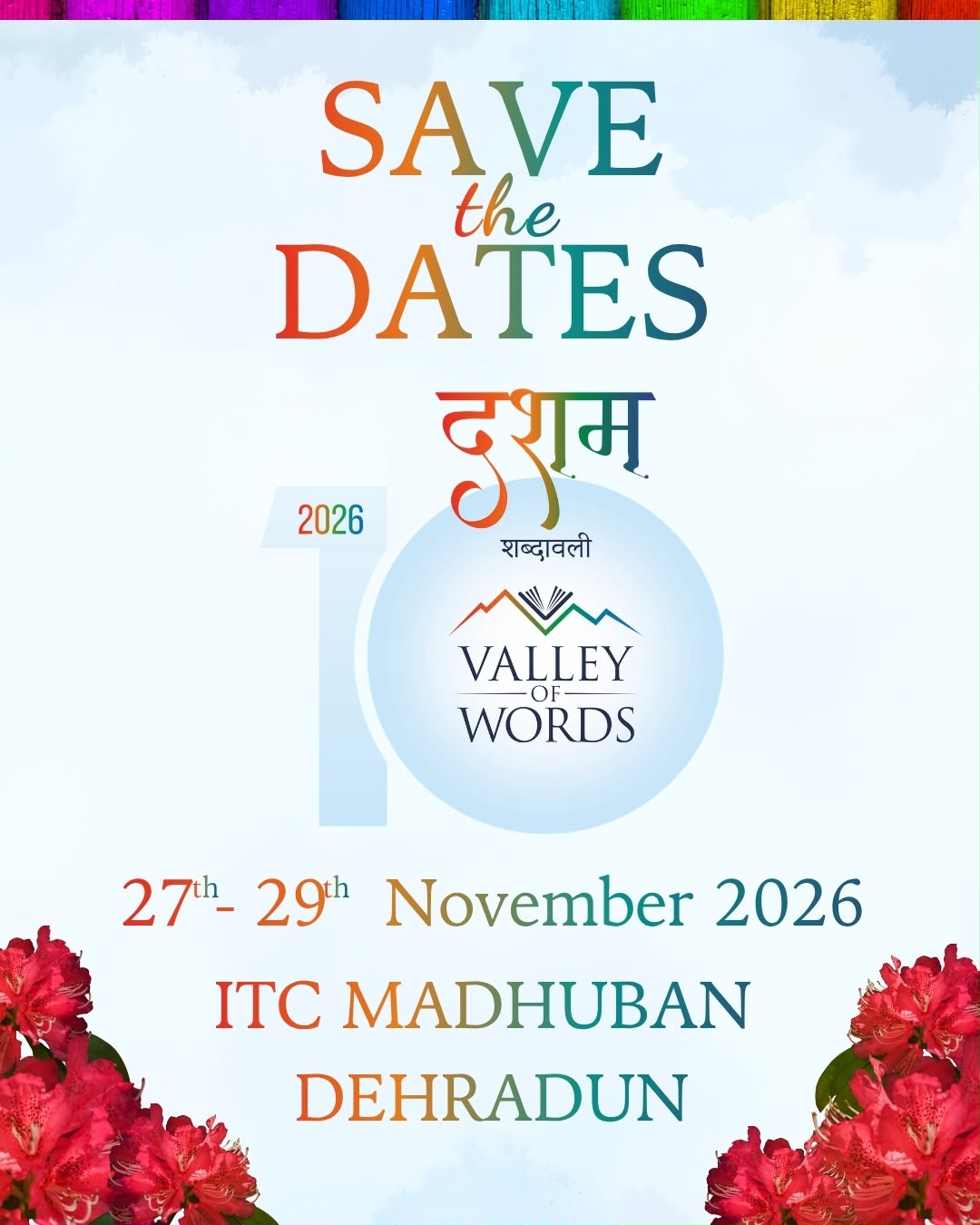
In this tenth year of VoW 2026, we look forward to deliberating on the role of the evolving entrepreneurial ecosystem with reference to Gen Z, towards sustainability across the Himalayas.