 By: Ganesh Saili
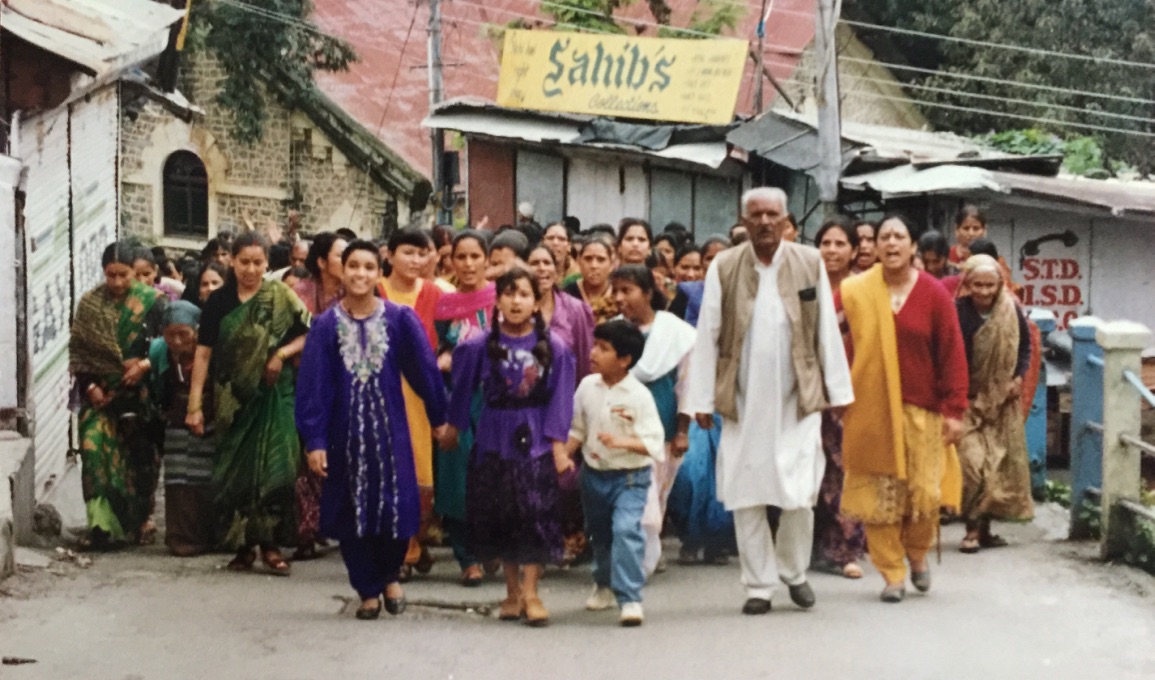
‘Look after those with the golden pen!’ said Hukum Singh Panwar. As the Senior Advocate and Chairperson of the Uttarakhand Sanyukt Sangharsh Samiti – or the Joint Action Committee of Uttarakhand in Mussoorie – he had the unenviable task of deploying us wherever he thought we would suit.
My scribbling credentials get me tasked to look after the gaggle of media hounds headed our way. After the Mussoorie shoot-out of September 2nd, 1994, a curfew was on its fifth day, and it could only get more interesting. At the cross-road outside our home sat a picket of the Provincial Armed Constabulary. They took their job so seriously that their meals were delivered to their posts in shiny aluminium tiffin carriers.
Among the gaggle of scribes descending upon us, two stand out in memory: Charu Lata Joshi of India Today Media Group and Chand Joshi of the Hindustan Times. We thought the former would get Mussoorie’s news on India Today magazine’s cover. There was one problem: she wanted to meet Victor Banerjee at the top of the hill to verify that he was one of us.
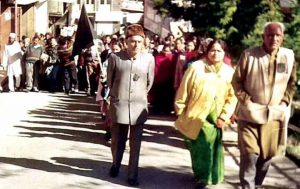
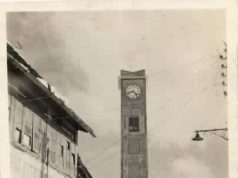
Pic courtesy: Hari Singh Ghansola
How could she get to the Parsonage without being intercepted? In the hills, the troopers on night patrol would see the beams of car headlights from miles away.
Moonlight came to the rescue. Driving at night without headlights on a deodar-lined road is not for the faint-hearted. We got there in silence; the only sound was the chirp of crickets.
What a letdown when the story was published! Forget making it to the cover – we barely got an eight-line paragraph on the last page.
Help came from unexpected quarters, from Chand Joshi, who was staying at Cliff Hall with the irrepressible Sudhir Thapliyal. They had known each other since their journalistic foray into what would one day be called Bangladesh. Chand’s first few pieces appeared on the front page of the Hindustan Times. The dateline was unique: ‘Somewhere in Uttarakhand.’
‘Where is this place?’ yelled an irate Editor.
‘It’s in my heart! It’s in my head!’ he answered. And he could not have been more right. His father, the legendary P.C. Joshi, Secretary of the Communist Party of India, had coined the term Uttarakhand fifty years ago, whilst his illustrious mother, Kalpana Dutt, had taken part in the Chittagong Armoury Raid during the Indian National Movement in 1930.
Sadly, Chand left us on February 4th, 2000, aged just 53., just a few months before Uttarakhand officially gained statehood.
A few months earlier, Rajendra Gosain – Raju – had arrived in Mussoorie from my village of Sail searching for a job. It did not help that he was stone-deaf. I talked Nandu into appointing him as the caretaker of the many bank holiday homes in the rear portion of the Savoy Hotel. He was excellent at what he did and took good care of guests who arrived looking for cheap accommodation.
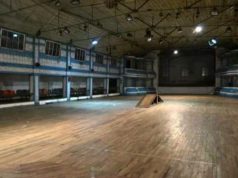
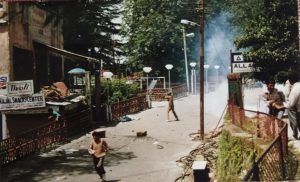
On the day of the Mussoorie Massacre, he was swept along by the crowd of young protestors and soon found himself inside the tin shed next to the Jhoolaghar or Children’s Park. No one knows who started the stone pelting from above, it probably targeted the troopers massed inside as they had converted it into a PAC Camp. The first to be hit by a rock was Tikaram Bhatt, an employee at Kutchery, standing near Badri Prasad Jasola, the then SDM, Mussoorie.
When the crowd burst into their armoury, the troopers opened fire. Seven unarmed protestors died, including the soft-spoken circle officer of police, Uma Kant Tripathi.
What about Raju? Not having heard the din of stones hitting the tin roof, nor the guns going off, or the screams of the wounded, he had a tiny idea of what was transpiring. All he could see was folks jumping out of the windows and running away. Inexplicably, he grabbed a gun and followed suit. Mercifully, before he came to harm, he threw the weapon into the nearby bushes and walked home.
Soon after he quit his job and returned to Sail Village, where he later died of causes unknown.
Ganesh Saili, born and home-grown in the hills, belongs to those select few whose words are illustrated by their pictures. As the author of two dozen books, some translated into twenty languages, his work has found recognition worldwide.