 By: Ganesh Saili
‘Why are they bent on killing Landour & Mussoorie?’ asks Harish Jasani, a young shopkeeper in the Library. It’s late when he phones to give me the news. And once he gets going, there is no stopping him. Careening on, he says: ‘These tourists back their cars, take out LPG cylinders and cook on our veranda!’
In disbelief, I listen.
Driven by Instagram influencers, the Ugly Tourist has found out about our nineteen square miles of magic mountain. At Mullingar, thousands of scooters zip through our narrow lanes.
‘Write your book before everything you love about this place vanishes!’ Harish advises me.
That is exactly what I had set out to do. This is where I was born, grew up to spend a lifetime. I have watched the hordes take over; watched our hills turn from shades of green to the present grey mess of today.
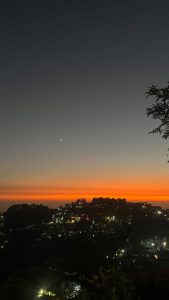
Pic courtesy: Tulika Singh Roy
‘We are adding three hundred rooms a year to the hill station!’ mourns a friend in the know of things.
We do have a young Sub Divisional Magistrate, Rahul Anand, who tries to clean up the mess, but has the unenviable task of putting a band-aid on cancer.
‘With no serious demolition drive,’ says Manu Malla, an ex-Chairman of the Municipal Board, ‘no one seems afraid of the law anymore.’
‘Will the next local election make a difference?’ I take the path of hope.
‘It’s a case of too little, too late!’ Manu sighs despondently.
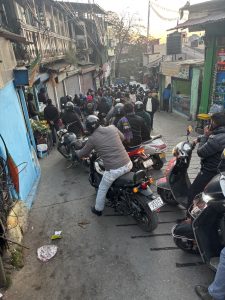
Pic courtesy: Tulika Singh Roy
Meanwhile, the Mall Road, our promenade of old, is now a gutter. ‘It’s the darn ‘Hardwarias’ to blame! Arriving in chartered buses, they use our gutters as public toilets and leave behind only trash!’
The other day, walking the narrow lanes of Landour, I heard the ‘vroooom’ of a car’s exhaust.
“Ah! Must be a shot silencer!’ I tell my granddaughter, Niharika.
‘That’s a Ferrari, Nana! See that horse on the bonnet?’ Niharika, as usual, is right, as a sleek car zooms by.
How do I tell the child that the Age of Wheels is upon us? In the Kaliyug, our ancients had predicted thousands of years ago: ‘Steed shall bestow status.’ Yes! The bigger your car, the more important it’ll make you feel!’
‘It’s all about their cars,’ Sundeep Sahni, a local hotelier, confides. ‘Poor chaps – that’s all they have to show. They are happy even if they park their car inside a bathroom!’
As I write, the flow of foreign tourists has reduced to a trickle. The handful you see are old Woodstock School alumni revisiting the scene. The rest? Domestic tourists. Normally, there would be no problem, except for their ‘anything and everything goes’ attitude.
‘Now! They are peeing against my shop!’ Harish returns on the line.
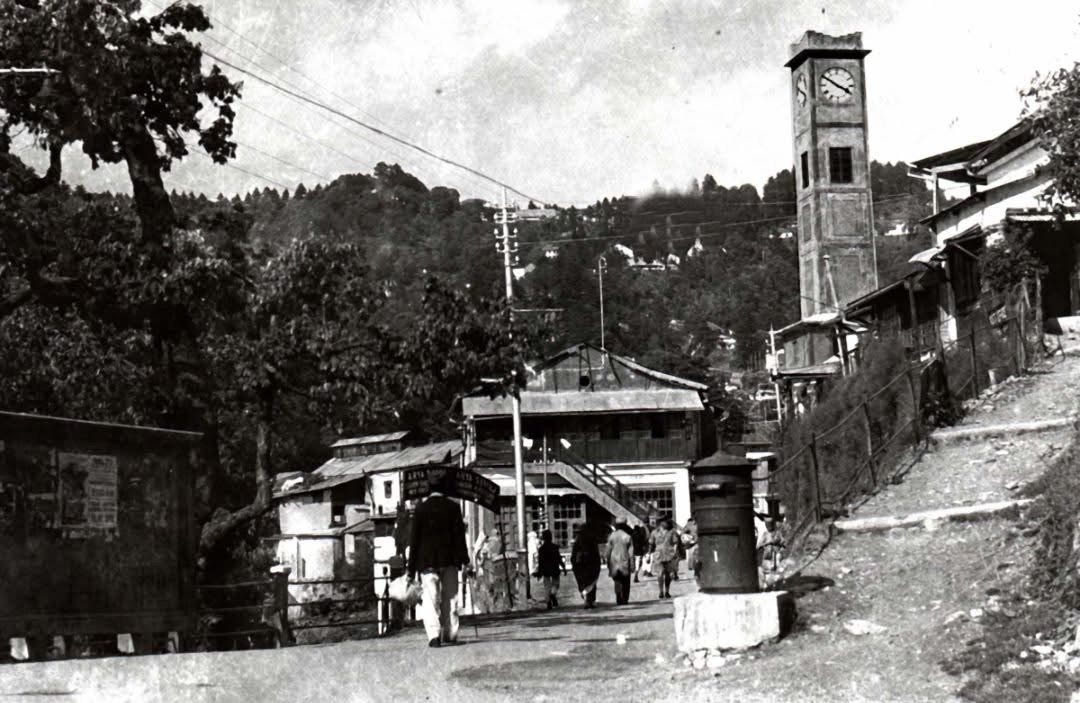
He feels that I, as an old member of the Mussoorie Library (Estb:1843), should do something. And I would, if I only could. But right now, I cannot get through to the Library; it’s gridlocked, and even a fly cannot squeeze through. Vehicles seal the two ends of the Mall more effectively than wine stoppers.
Perhaps you could blame it on the tourist boom, which has meant that every other shack is now a hotel, or at least a guest house, if not an Airbnb. Together, they have turned the hill station into another distended hill slum.
As my friend of old, the late Rupinder Lal, used to say with relish: ‘Once upon a time in Mussoorie, there were just three proper hotels: the Charleville, the Savoy and Hakman’s Grand Hotel. Now there are only ‘hotals’ everywhere!’
When I manage to reach the Library the next morning, the veranda looks like it has been hit by a hurricane: plastic bags, Styrofoam cups, paper napkins, used sanitary pads, soiled diapers, and shattered glass from upturned garbage bins litter the corridor. Not a single perpetrator of this desecration could be seen. Our despoilers had left, leaving behind this evidence to mark their passage and the lingering stench of urine. Truly, trash begets trash.
If things are this bad now, what will they be like fifty years from now? Is this all we shall leave behind for tomorrow’s children?
Ganesh Saili, born and home-grown in the hills, belongs to those select few whose words are illustrated by their pictures. Author of two dozen books, some translated into twenty languages, his work has found renown worldwide.