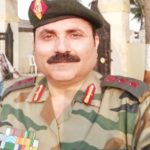
 By Col Bhaskar Bharti (Retd)
When an NDA Reunion Met India’s Aviation Reality
I joined the National Defence Academy in June 1985, at a time when optimism was not a slogan but a discipline. We were boys learning to become officers, taught that leadership meant accountability, crises demanded calm clarity, and that excuses were a sign of moral weakness. Four decades later, when our course planned a reunion from 5 to 7 December 2025 at NDA, Pune, that same optimism returned, creased by age, softened by nostalgia, but very much alive.
For months, the planning and anticipation was built quietly but steadily. WhatsApp groups buzzed like old barracks after lights-out. Names long dormant, resurfaced with ranks, medals, greying hair, and laughter intact. We were not merely planning a reunion; we were preparing to relive a shared youth, to walk once again through corridors of memory, where courage was still raw and dreams unbroken. For many of us, this reunion was not a casual social gathering, it was one of those once-in-a-lifetime moments that time allows sparingly. And then came IndiGo, not turbulence, not weather, not an act of God – but pure, unadulterated mismanagement.
The Cancellation That Cancelled More Than a Flight
I was waiting at the Jolly Grant Airport with couple of more Doonite course mates, excited and charged… And the flight was cancelled – abruptly, casually. Almost arrogantly! No alternatives worth the name. No meaningful communication. No empathy. And when the refund arrived, it came minus “convenience fees”. Convenience for whom, one wonders? Certainly not for those of us stranded between nostalgia and reality. Really, IndiGo? You cancel the service, collapse the system, and still charge us for the inconvenience of your incompetence?
For nearly a fortnight, Indian aviation resembled a badly rehearsed school play: actors clueless, scripts missing, and the audience (passengers) left standing in the aisles. Flights were cancelled, rescheduled, cancelled again. Helplines were ornamental. Ground staff looked as bewildered as passengers. Social media apologies flowed faster than actual solutions. And in this chaos, dreams quietly disintegrated. Alas, almost 50% of our course mates could not make it for the reunion. Men who had once crossed glaciers, jungles, seas, and enemy fire-were defeated by an airline app notification.
What Went Wrong?
In short, everything that could go wrong did.
- Over-aggressive scheduling without backup aircraft or crew.
- Chronic understaffing, especially pilots and ground personnel.
- Operational overstretch, driven by market dominance rather than resilience.
- Absence of contingency planning for disruptions.
- Communication collapse, leaving passengers guessing, pleading, refreshing apps.
IndiGo’s model of relentless efficiency works beautifully, until it doesn’t. When stress hits the system, there is no shock absorber. The result is paralysis disguised as policy. But to lay the blame entirely at IndiGo’s door would be convenient and incomplete.
Crisis Management, Indian Style: Everyone Responsible, No One Accountable
What truly unsettled me was not just the airline’s failure, but the institutional helplessness that followed.
- DGCA issued advisories—after the damage was done.
- Aviation Ministry promised reviews, committees, and “strict monitoring”.
- New guidelines were discussed, debated, and delayed.
- Enforcement, as usual, was conspicuous by its absence.
Passengers were left without basic facilities – no food, no accommodation, no clear information, no dignity. Airlines blamed weather, crew availability, and regulatory constraints. Regulators blamed airlines. Ministries blamed “legacy issues”. And responsibility, like misplaced baggage, went missing. This wasn’t crisis management. This was crisis commentary. In the defence forces, a crisis has a commander. Here, it had hashtags.
Leadership Vacuum at Cruising Altitude
What pained most was the inferior quality of leadership on display. Not a single authoritative voice stood up and said: “This is unacceptable. Here is the plan. Here is the accountability.” Instead, we saw:
- Poor anticipation
- Pathetic coordination
- Reactive decision-making
- Cosmetic apologies
Is this how a country aspiring to be a developed nation handles disruption? If aviation – a highly regulated, technology-driven sector can descend into such confusion, what does that say about our broader governance capacity? Development is not about airport facades or traffic numbers. It is about systems that bend but do not break, and leaders who stand firm when they do.
A Personal Loss, A Collective Failure
For me, the loss was deeply personal. That reunion will not come again in the same form. Time has a way of thinning ranks. Some of us made it, some couldn’t, some may never get another chance. Memories were created, but with empty chairs. The irony is bitter. Men trained to manage war zones were undone by peacetime mismanagement. The uniform taught us that accountability is non-negotiable. Civil aviation taught us that accountability is optional.
Conclusion: Grounded Aspirations
This write-up is not about one airline or one cancelled flight. It is about a systemic malaise, where growth outpaces governance, ambition outruns preparation, and leadership dissolves when tested. IndiGo may dominate the skies, but during this crisis, it couldn’t manage the ground. DGCA may regulate, but it could not enforce. The Ministry may oversee, but it did not lead. And we, the passengers, were left holding boarding passes to nowhere. As an NDA alumnus, I still believe in India’s potential. But potential means little without responsibility. If we aspire to global leadership, we must first learn crisis leadership-clear, compassionate, and accountable. Until then, some of us will remain grounded – not by age or infirmity, but by poor management and poorer leadership. And that, perhaps, is the most tragic turbulence of all.
(The author is an army veteran and a social commentator. He is an alumnus of National Defence Academy and Indian Military Academy. He is a Post Graduate in HRM and Journalism and Mass Communication. He is based in Dehradun.)