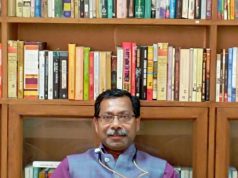
 By Shishir Priyadarshi
Every Republic Day, the country comes together in a shared moment of pride and reflection. We celebrate not only the adoption of the Constitution, but the enduring idea of the India it represents—a nation confident in its diversity, anchored in democratic values, and united by a common purpose. Even as flags rise and anthems are sung, Republic Day should be seen as an opportunity to look beyond ceremony and assess how this constitutional promise is being fulfilled across the many landscapes that make up our country.
In Garhwal and across the Himalayan belt, the idea of the Republic is woven quietly into everyday life. It is reflected in resilience shaped by geography, in village communities bound by cooperation, and in a deep sense of belonging to both place and nation. Here, citizenship is lived not in proximity to power, but in harmony with nature and tradition. Republic Day is therefore an apt moment to reflect on how constitutional values find expression in regions where terrain itself shapes daily choices.
Equality as Context, not Uniformity
The Constitution promises equality, but it does not demand sameness. India’s founders were acutely aware that a country of extraordinary diversity, geographical and cultural, requires governance that is sensitive to context.
In the hills, equality must be understood through the lens of distance, terrain, and ecological fragility. A village on a steep slope engages with national life differently from a town on the plains. Access to healthcare, education, and markets depends not only on policy intent, but also on community resilience and adaptation.
Recognising these differences does not weaken national unity; it strengthens it. A country that respects diversity in lived conditions, as well as in culture and language, deepens the meaning of equality.
Living in Harmony with Nature
Hill communities have long practised environmental stewardship as a way of life. Forests are not merely resources, rivers not just infrastructure, and mountains not obstacles to be overcome. They are part of a deeply harmonious way of living that values balance, continuity, and respect for nature.
This ethos is echoed in the Constitution, which speaks not only of rights, but also of duties. Citizens are entrusted with protecting the environment and preserving the nation’s natural heritage. In the hills, this responsibility is not abstract—it is lived daily.
As climate patterns grow more uncertain, these regions offer the country an important lesson: sustainable development is not a constraint on national ambition, but a prerequisite for lasting prosperity.
Community, Cooperation, and the Spirit of Democracy
One of the quiet strengths of the Indian nation lies in the social capital of its communities. In Garhwal, collective effort by local communities, whether during agricultural cycles, festivals, or moments of hardship, has long been their biggest source of strength.
This spirit mirrors the constitutional vision of participatory democracy. Local institutions, voluntary service, and community leadership demonstrate that nation-building is a shared endeavour. Governance is not only exercised through formal authority, but sustained through trust, cooperation, and civic responsibility.
Republic Day is a reminder that citizenship is an active, not passive, element of our constitution. The strength of the country’s democracy flows upward – from villages and towns where citizens see themselves as stakeholders in the national journey.
Leaving yet Belonging
Hill regions have contributed generations of soldiers, administrators, teachers, and professionals to the service of the nation. Mobility has helped knit India together, carrying the values of the mountains into its institutions and cities.
At the same time, sustaining vibrant hill communities is increasingly recognised as essential to national resilience. Livelihoods rooted in local enterprise, tourism, traditional knowledge, and emerging green opportunities allow citizens to serve the country while remaining connected to their roots.
A nation that enables mobility while encouraging rootedness honours the full meaning of citizenship.
Reaffirming the Strength of the Constitution
Seen from the mountains, the Indian Republic appears less as an abstract structure and more as a living relationship – between citizens and the country, nature and development, and between rights and responsibilities
Republic Day offers an opportunity to reaffirm that this relationship is strongest when it is inclusive, respectful, and forward-looking. The hills do not stand at the margins of the nation; they stand as its sentinels – protecting water sources, climate balance, and cultural continuity. As India advances with confidence toward its future, listening to these quieter frontiers will help ensure that the country remains not only strong, but wise.
Let us celebrate this Republic Day with a resolve to ensure that the Constitution’s promise reaches every slope, valley, and village—binding the nation not just by law, but by shared purpose. Jai Hind!
(The author is President, Chintan Research Foundation.)