By ARUN PRATAP SINGH
Garhwal Post Bureau
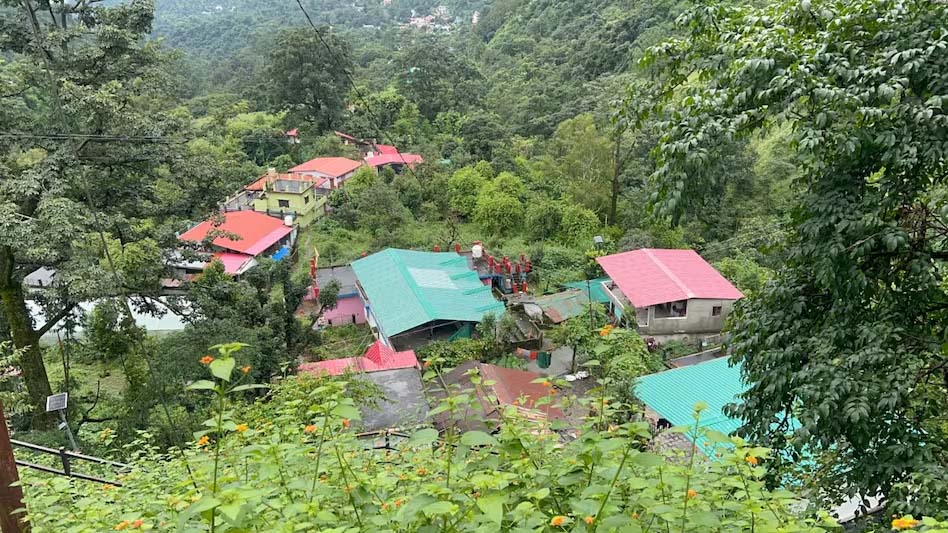
Nainital, 7 Sep: A serious health crisis triggered by suspected contaminated drinking water has gripped Jeolikote and adjoining villages of Nainital district, with more than 250 people reportedly falling ill with diarrhoea, jaundice and typhoid over the past nearly three months, and two persons dying during treatment. The situation has caused widespread fear among residents, who have now become apprehensive about consuming water supplied through the local pipelined system.
After continuing to take the issue rather lightly, the Chief Development Officer of the district today conducted an inspection today of the affected villages and spoke to the villagers. During the visit, villagers raised serious concerns regarding the contaminated drinking water supply, holding the Jal Sansthan (Water Department) responsible for the outbreak due to its negligence. They also complained about the insensitive attitude of the officials, stating that the issue was not taken seriously in time, despite the authorities having been informed about the spread of the disease.
The affected areas include Jeolikote, Ganja, Sariyatal and at least half-a-dozen adjoining villages. According to the residents, cases of vomiting, loose motions, fever, weakness and other symptoms began surfacing around three months ago, but the seriousness of the situation allegedly remained largely ignored by the administration and the related departments until jaundice and other infections began increasing. Several patients have been undergoing treatment at hospitals in Nainital and Haldwani, while those with serious complications have been referred to medical centres in Delhi and Bareilly.
The situation took a grim turn following the deaths of two residents. Sixteen-year-old Ritesh Jeena, a resident of Jeolikote, reportedly developed vomiting, diarrhoea and fever, following which his condition deteriorated. He was initially taken to Haldwani and later referred to Delhi. Doctors at Ram Manohar Lohia Hospital in Delhi reportedly advised a liver transplant, with the cost of treatment estimated at around Rs 1 crore. However, Ritesh died during treatment.
The second victim was 26-year-old Nima Joshi, also a resident of Jeolikote. She developed fever and was subsequently found to be suffering from jaundice and liver infection. As her condition deteriorated, she was shifted to Ram Murti Hospital in Bareilly, where she died during treatment.
Nima Joshi’s death has caused particular anguish among the local residents as she herself had been raising her voice over the alleged contamination of drinking water in the area. She had mobilised the villagers and even participated in a protest demanding action to address the problem. However, within days of raising the issue, she herself fell ill and eventually died during treatment.
The villagers allege that contaminated water is responsible for the spread of the diseases and have demanded an immediate and scientific investigation of the entire water-supply system. There is also suspicion among some villagers that sewage from sewer lines in Nainital town may have entered water sources feeding the local supply tanks. Though this allegation has not yet been scientifically established, the authorities have reportedly isolated a suspected source from the main water-supply tank as a precautionary measure.
The villagers further point out that the problem is not confined to a few households and that several families have more than one member suffering from illness. They allege that even after filtering the water, sediment and other impurities can be seen in it. Many diseases are spreading in the village. Even when they filter the water, there is still muck in it. The water is completely contaminated. The people are suffering from diarrhoea, jaundice and typhoid, but nobody is listening to them the villagers allege. The villagers also point out that the source of the contamination had still not been identified but it is clear that the diseases are spreading because of contaminated water. The villagers are unaware where the contaminated water is coming from. Wherever this water is being supplied, people are falling ill.
Block Pramukh Harish Bisht said efforts had been made to identify the source of contamination, but the problem has not yet been resolved. In some areas, people have been suffering from diarrhoea and typhoid for several days. The local officials inspected the water sources and wherever suspected that contaminated water could be entering the supply, the source has been changed. Despite this, the problem has not been resolved. Bisht said he had visited the water sources along with officials of the Jal Sansthan and health department. Chlorination had also been carried out from the water sources to the storage tanks, but the situation had not improved sufficiently. He said the administration and the departments would have to take concrete measures and that any department found responsible for negligence should focus on corrective action rather than getting caught up in arguments.
Health department teams have meanwhile started camps in the affected areas to screen residents and monitor those showing symptoms. Local residents, however, are demanding a more comprehensive response, including door-to-door health checks in all affected villages, immediate sampling and scientific testing of drinking-water sources and supply lines, regular monitoring of households where patients have been detected and special attention to children and elderly residents.
As a precautionary measure, the administration has also ordered the closure for one week of 10 schools and five Anganwadi centres in the Jeolikote-Ganja-Sariyatal belt. Officials, however, acknowledge that closure of educational institutions alone will not resolve the crisis unless the source of infection is identified and the water-supply network is made completely safe.
Nainital Chief Medical Officer (CMO) Dr Rashmi Pant has appealed to the residents not to panic, assuring them that the health department is closely monitoring the situation. Four beds have been added at Jeolikote PHC and doctors have also been increased. The duty hours of doctors have been extended. Dr Pant has also advised the villagers to maintain proper hygiene and take precautions while consuming water and food. She also appealed to people to drink boiled water, avoid consuming water from open sources and refrain from eating cut fruits and vegetables, particularly during the present outbreak.
With more than 250 people reportedly affected and two deaths already recorded, the immediate priority for the district administration and health department is to identify the precise cause of the infections, secure the drinking-water network and prevent further spread of disease. The villagers have demanded a permanent solution rather than temporary measures, as fear continues to prevail in the affected villages. The developments have also raised questions over the functioning of the departments responsible for drinking-water supply and public health, particularly since residents claim that complaints regarding contaminated water had been raised well before the situation assumed serious proportions.