Garhwal Post Bureau
Mussoorie, 16 Nov: The very existence of Mussoorie is currently under threat due to illegal mining, indiscriminate deforestation, and unregulated construction. Forests of Oak (Banj), Rhododendron (Buransh), and Deodar are being relentlessly cleared, while there are allegations that the hillsides in restricted zones are being ravaged. Despite this, serious questions are being raised regarding the functioning of the relevant departments and the officials responsible.
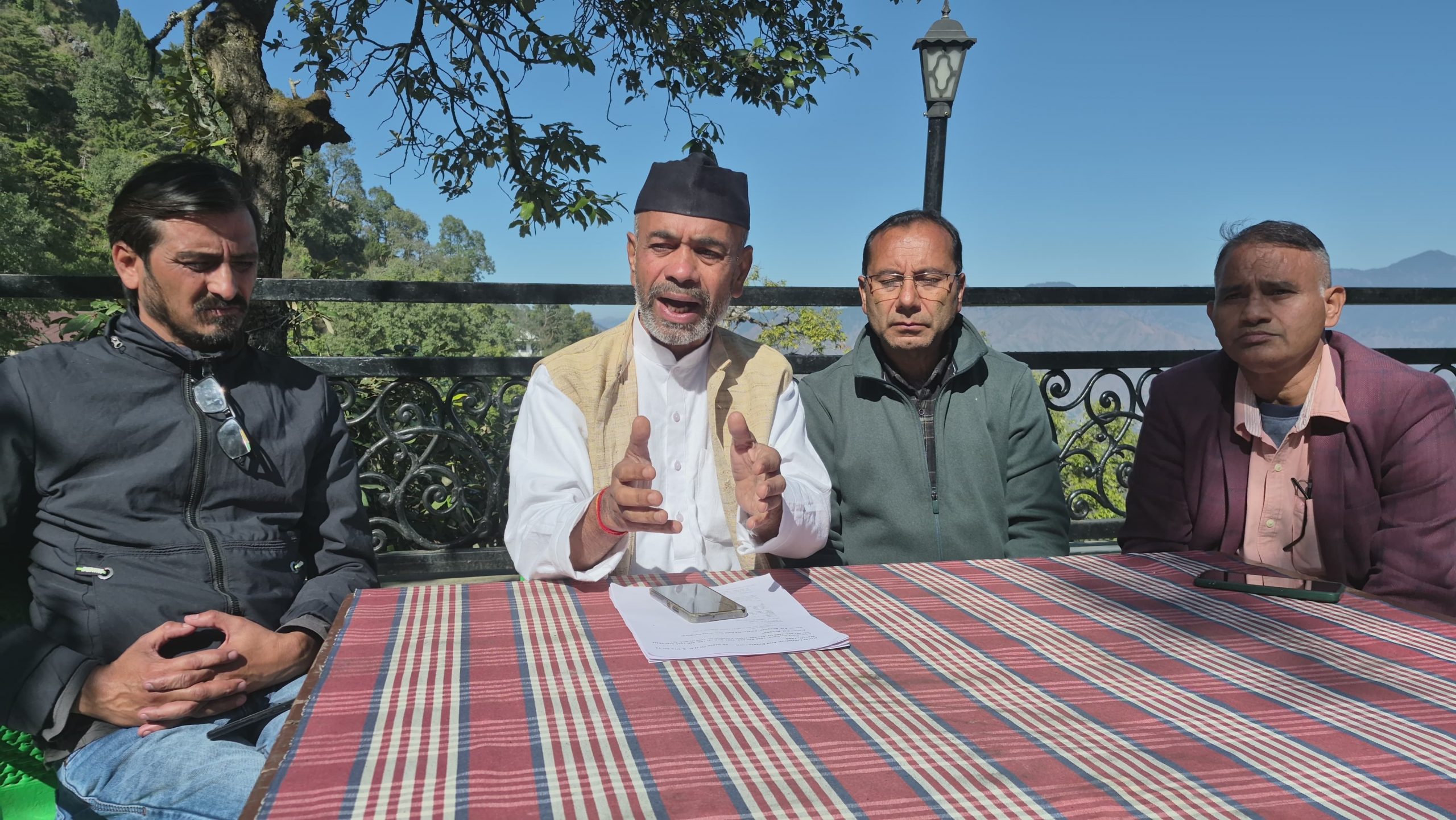
This was stated by BJP state spokesperson Ravindra Jugran during a press conference in Mussoorie. Highlighting a dangerous nexus between the mining mafia, forest land grabbers, builders, and officials, he asserted that those responsible for destroying Mussoorie would not be spared under any circumstances. He emphasized that Mussoorie is not merely a tourist destination; it is a vital part of the Himalayan environment and a significant natural heritage of Uttarakhand. Its forests, mountains, and water sources are crucial for the ecological balance of the entire region. However, the ongoing destruction of forests and mining in the hills have cast a grave shadow over Mussoorie’s future. He alleged that a nexus—comprising politicians, bureaucrats, officials from relevant departments, property dealers, and builders—has taken root within the system, leaving those who exploit natural resources with no fear of the law.
Jugran pointed out that strict legal prohibitions on mining in Mussoorie have long been in place. In 1985, a three-judge Supreme Court bench, presided over by the then-Justice P.N. Bhagwati, imposed a ban on mining in the Mussoorie region. Subsequently, in 1989, the Ministry of Environment and Forests of the Government of India issued a notification regarding the environmental conservation of the Mussoorie region. It was noted that while some individuals have occasionally approached the courts and the central government seeking permission for mining, the existing orders—which impose restrictions—and the relevant environmental provisions have consistently been upheld. Referring to a recent visit to the Barlowganj area, it was alleged that large-scale mining is being carried out there in blatant disregard of the rules; hills are being excavated using JCBs and hammer machines. There is also concern that limestone mining activities may be taking place in the area. Such activities in a restricted zone are entirely unacceptable. If timely action is not taken, there is a risk that the natural character of Mussoorie could be lost forever.
The BJP state spokesperson emphasized the need to make forest laws more effective. The felling of significant tree species poses a grave threat to the environment. Such activities cannot be curbed merely through paperwork or nominal fines. The law should include provisions for such heavy penalties that anyone cutting down trees without authorization would face a significant financial burden. It is essential to amend forest laws and strengthen punitive measures to protect the environment, forests, and mountains.
Jugran stated that no single individual or organization can be held solely responsible for the environmental damage occurring in Mussoorie. Accountability must also be fixed for political parties, elected representatives, administrative officials, and the relevant government departments. He added that the government must maintain a vigilant watch to ensure that any illicit activity in restricted zones is detected in time, allowing for prompt corrective action. He alleged that when corruption and collusion take root within the system, effective action becomes impossible, regardless of the government’s intentions. To address this, the judiciary, the executive, the administration, and elected representatives must all recognize their respective responsibilities. He stated that leaders from all political parties—including both current and former elected representatives—must clarify their stance on this issue. Furthermore, social organizations, environmental activists, and the media must also fulfill their roles in environmental conservation.
Raising concerns regarding construction and development activities in Mussoorie, Jugran leveled serious allegations against the functioning of the Mussoorie-Dehradun Development Authority (MDDA). He noted that the MDDA’s operations have been under constant scrutiny for the past 20–25 years—ever since the formation of the state of Uttarakhand. The current situation is such that an ordinary citizen in Mussoorie struggles even to build a single room, while large-scale, four-story structures are being erected by major hotel operators, resort owners, and property dealers. He alleged that while regulations are strictly enforced for ordinary citizens, no meaningful action is taken against the construction projects of influential individuals. He emphasized that the accountability of MDDA officials must be established. Any senior official found involved in corruption will not be spared; efforts will be made to ensure they are brought to justice. He further warned that the conduct of the authority’s officials must also be investigated.