Review
By Dr Bharti Mishra
There are countless moments in life when we witness a performance, but its impact slowly sinks deep within us. Sometimes, a presentation comes before us that we do not merely watch; we feel it. The dialogues end, the stage lights go out, and the artists bid farewell, but the story continues to live somewhere within us.
While watching ‘With Love, Aap Ki Saiyaara’ at the IRDT Auditorium in Dehradun with Rajneesh Trivedi, I experienced something very similar. Even after the play ended, numerous emotions continued to take shape in my mind, leaving me wondering where to begin.

‘With Love, Aap Ki Saiyaara’ is a deeply sensitive, emotional, and interactive theatrical presentation written, directed, and performed by Juhi Babbar Sonii, with the original character concept by veteran theatre artist Nadira Zaheer Babbar. Achint Marwah and Aprita Kashyap also share the stage alongside Juhi Babbar Sonii. Sponsored by the Department of Culture, Uttarakhand, and organised with the support of the Department of Theatre, Doon University, and Doon Library, the play was presented on 18 September 2026, at the IRDT Auditorium in Dehradun. Having completed more than 130 performances, it has carved a special niche among audiences.
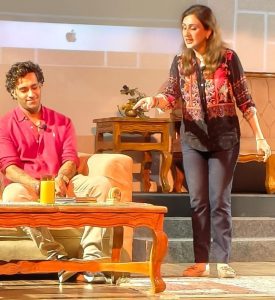
The play explores themes of love, marriage, trust, loneliness, social restrictions, depression, self-respect, and the courage to start afresh through the life of its protagonist, Saiyaara Ali. Saiyaara is an educated, modern, fearless, and confident urban Indian woman who desires to live life on her own terms. Born as the much-loved only daughter of an affluent family, she receives complete support and freedom from her parents. However, life does not always unfold as planned.
At just eighteen, Saiyaara falls in love with an older college professor. Despite her parents’ strong opposition, she chooses this relationship and breaks away from her family. Within a year and a half, the professor leaves her, citing complications arising from his first marriage and children. The sudden collapse of her world leaves her devastated, especially after she had placed all her faith in a love for which she had alienated herself from her parents.

Recovering slowly, Saiyaara later meets a doctor, believing that education and a shared faith will bring understanding and stability. However, control and restrictions soon surface. An innocent moment, such as standing at a bar counter during her brother-in-law’s valima, sparks a severe argument. He objects to her modern attire, demands that she wear a niqab, restricts her movements, and ultimately slaps her. This exposes a broader societal mindset that seeks to control a woman’s individuality and personal choices. This marriage, too, ends in divorce.
Amidst these profound emotional wounds, a deeply disturbing incident occurs when her brother-in-law enters her home and makes a vile attempt to force himself upon her, highlighting the uncomfortable reality of how society can mistake a woman’s loneliness for vulnerability.
Repeated betrayals and emotional harassment plunge Saiyaara into deep depression. Yet the play refuses to portray her merely as a victim; her true journey begins when she strives to rise from her brokenness.
In this arduous recovery, the domestic helper Bina Didi becomes a profound source of emotional support. More than a domestic worker, Bina becomes a silent witness to Saiyaara’s loneliness and an empathetic companion. The poignant episode involving Bina Didi’s bindi—worn in loving memory of her late husband even with Western clothes—contrasts two forms of love: one that seeks to control a woman’s existence and another built on enduring devotion and cherished memory.
Another soothing element in Saiyaara’s life is her deep love for nature. When human relationships fail her, her potted plants become her silent companions. During the isolation of the COVID-19 pandemic, she sits among them, giving words to her inner turmoil, which ultimately takes the form of the book Aap Ki Saiyaara. Nature becomes an emotional sanctuary for her when human beings fall short of understanding her.
Crucially, the play highlights the unwavering support of parents. Despite Saiyaara’s past defiance and mistakes, her parents’ love remains constant. Their affection becomes an emotional anchor, reminding us that while children may drift away, parental love never does.
The centerpiece of the production is Juhi Babbar Sonii’s extraordinary acting. She effortlessly transitions through Saiyaara’s multiple dimensions—a playful girl, a devoted lover, a trusting wife, a broken soul, and a resilient survivor. Her expressive face, impeccable dialogue delivery, and commanding stage presence keep the audience spellbound.
The play’s interactive format further dissolves the barrier between the stage and the audience. Saiyaara directly addresses the viewers, questions them, shares humorous observations, and draws them into moments of silent introspection. Sharp satire on social customs and male entitlement also injects humour into the narrative, preventing it from becoming overwhelmingly heavy.
One of the most remarkable experiences of the evening was the complete concentration of the audience. In an era dominated by mobile cameras and constant screen-checking, the audience remained completely immersed in the performance. No one seemed distracted by their phones; everyone appeared to be living the story unfolding on stage. It was a powerful reminder of theatre’s enduring ability to transport viewers into another world and another life.
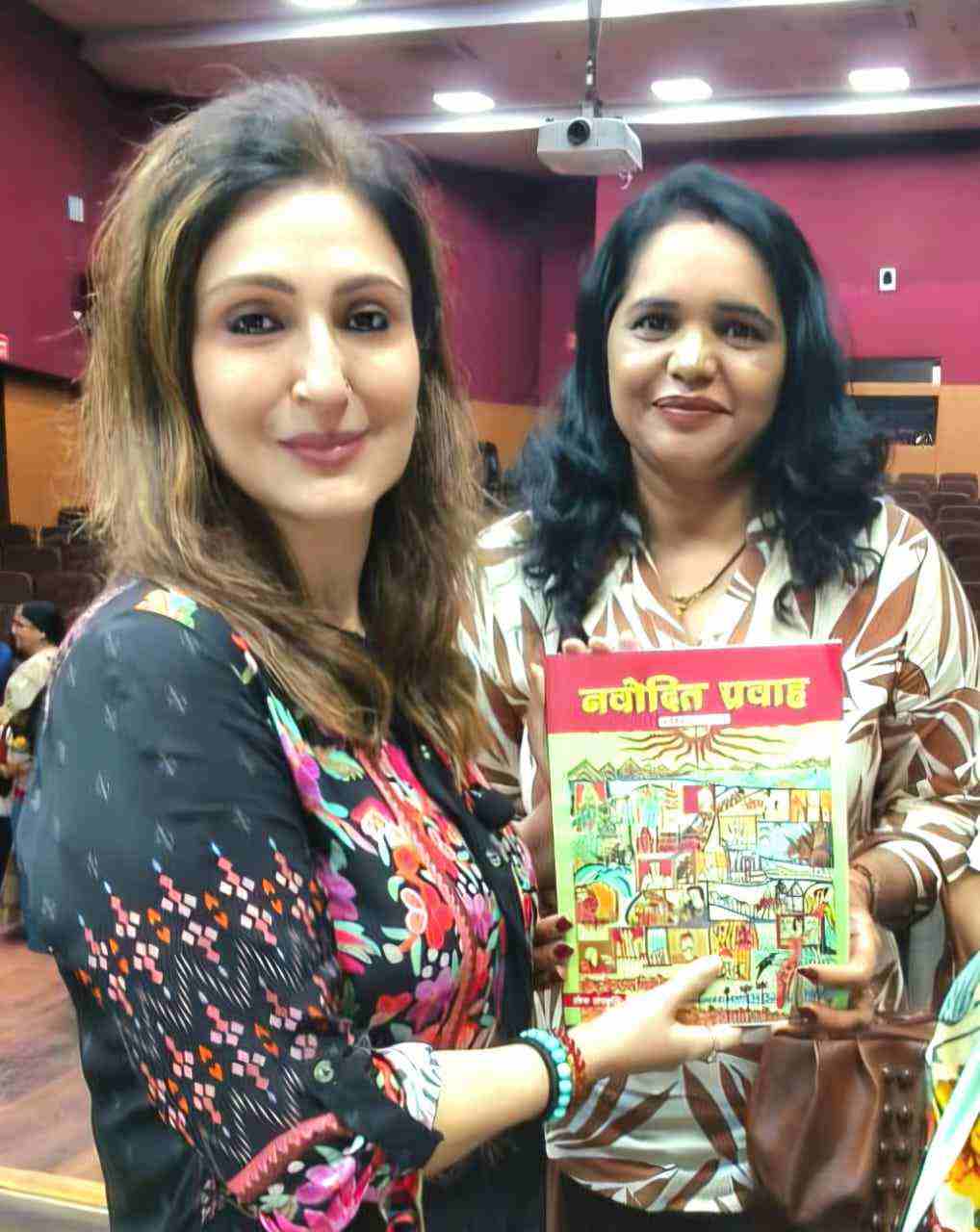
Watching the play alongside Rajneesh Trivedi, Editor-in-Chief of Navodit Pravah, made the evening even more memorable. With Love, Aap Ki Saiyaara is much more than the story of two failed marriages; it is an exploration of self-respect, social restrictions, unconditional parental love, the complexity of relationships, and the rediscovery of hope.
Saiyaara loses much, makes mistakes, and confronts profound pain, but she ultimately transforms her suffering into her voice. Her story becomes a reflection of countless women who love, trust, break, struggle, and eventually find the inner light to rebuild their lives on their own terms.
With Love, Aap Ki Saiyaara is ultimately a story of rebirth—from pain to courage, from brokenness to strength, and of a woman finding her way back to herself.