Uttarakhand at 26
 By Rajat Aikant Sharma
Twenty-six years after statehood, the mountains remember the sacrifices, veterans seek recognition, and a new generation looks towards a future that must be more than a promise.
There are anniversaries that invite celebration, and there are anniversaries that ask us to pause. Uttarakhand’s Foundation Day should perhaps be both.
On November 9, 2000, after decades of aspiration and years of determined struggle, Uttarakhand emerged as a separate state. For the people of the hills, statehood represented more than a change in administrative boundaries. It carried the hope that decisions affecting their lives would be closer to home, their voices would matter, villages would prosper, and future generations would not have to leave their mountains in search of opportunity and dignity.
On November 9, 2026, Uttarakhand completed 26 years and entered its 27th year. In Mussoorie, the day was marked by tributes, prayers, a felicitation ceremony and an evening candlelight vigil. Beneath these rituals of remembrance, however, was a larger question: Have we built the Uttarakhand the movement dreamed of?
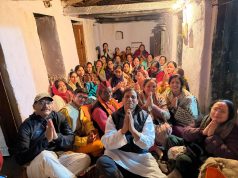
The morning began at Shaheed Sthal near Jhulaghar, where Cabinet Minister and Mussoorie MLA Ganesh Joshi paid tribute to the martyrs. Municipal Council Chairperson Meera Saklani and others joined the remembrance. At Indramani Badoni Chowk on Mall Road, floral tributes were offered to the late Indramani Badoni, a prominent figure of the statehood movement. Later, at the Municipal Council auditorium, activists and martyrs’ families were honoured after a two-minute silence. Several senior veterans attended, some in wheelchairs. Their presence carried a significance no ceremonial address could fully capture. These were people who had lived through the movement, remembered its uncertainties and sacrifices, and carried its hopes into a new century. They are part of Uttarakhand’s living history, not merely names to be read out at an annual function.
For many veterans, the struggle has not entirely ended. Long-pending concerns include house-tax relief, pension and honorarium-related matters, special assistance for martyrs’ families, and completion of the identification process for statehood activists. These are not merely administrative issues. They concern recognition, dignity and whether the promises made to a generation that fought for a separate state have been adequately honoured.
Addressing the gathering, Ganesh Joshi recalled his personal experience of the December 16, 1994 lathi charge in Mussoorie. He said he was injured and that women activists had formed a protective circle around him. He also recalled the participation of ordinary people—vendors, tea sellers, rickshaw operators, traders and residents—in the movement. Referring to government measures concerning horizontal reservation and financial assistance, he said an additional two months had been granted for the identification process. He clarified that pension and honorarium or financial assistance were separate matters. Joshi also mentioned a proposal to name six major roads in Mussoorie after statehood activists. The proposal remains under consideration; it has not been approved.
Yet, a ceremony intended to honour history also exposed a present-day concern. Statehood activist and advocate Manoj Shaili said he had not received information about the event. Recalling years of struggle and the legal battle fought from Mussoorie to the Allahabad High Court, he said contributors to the movement and martyrs’ families deserved to be invited and recognised with dignity. He questioned the coordination behind the event, arguing that a programme to honour activists required proper preparation, a comprehensive list and timely communication.
Devi Godiyal, president of the Statehood Movement Forum, also questioned the invitation process. She said some people had received telephone calls on November 8 about the following day’s programme, while several activists and martyrs’ families had not been informed. She specifically mentioned senior activist Shailendra, who, according to her, had been invited to previous programmes but had not received an invitation this time. Godiyal said people who had grown old after years of struggle deserved sensitivity and respect. She added that she had raised the matter with Ganesh Joshi during the ceremony.
These concerns warrant an official response. They also raise a larger question: what does it mean to honour a movement if some of the people who helped sustain it feel forgotten? A shawl and a garland can express gratitude, but respect must also be reflected in preparation, inclusion and the way people are treated.
Perhaps the most moving aspect of the veterans’ concerns lies beyond their immediate demands. Many do not want to spend the remaining years of their lives repeatedly seeking recognition or fighting for what they believe is owed to them. They want to see the state prosper. They want their children and grandchildren to have opportunities they struggled to secure. They want an Uttarakhand where young people do not have to abandon their mountains in search of a future, where villages remain alive, and where access to education, healthcare and employment does not depend on leaving home.
In the evening, the Congress held a candlelight programme at Shaheed Sthal, Jhulaghar. City Congress president Amit Gupta, senior Congress leader Upendra Thapli, Nagendra Uniyal and party workers lit candles in tribute to the martyrs. Thapli questioned the government’s record on employment, local opportunities, hill development and corruption. Referring to the Ankita Bhandari case, he stressed the need for justice and accountability. Gupta raised concerns over unemployment, healthcare and education, criticised the day’s felicitation arrangements, and alleged that several activists had not been informed in time. He also called for an information board at Shaheed Sthal explaining the identities and contributions of the martyrs.
Political criticism is part of democratic life. But employment, education, healthcare, the future of hill communities and preservation of the movement’s history belong to every Uttarakhandi, beyond party lines.
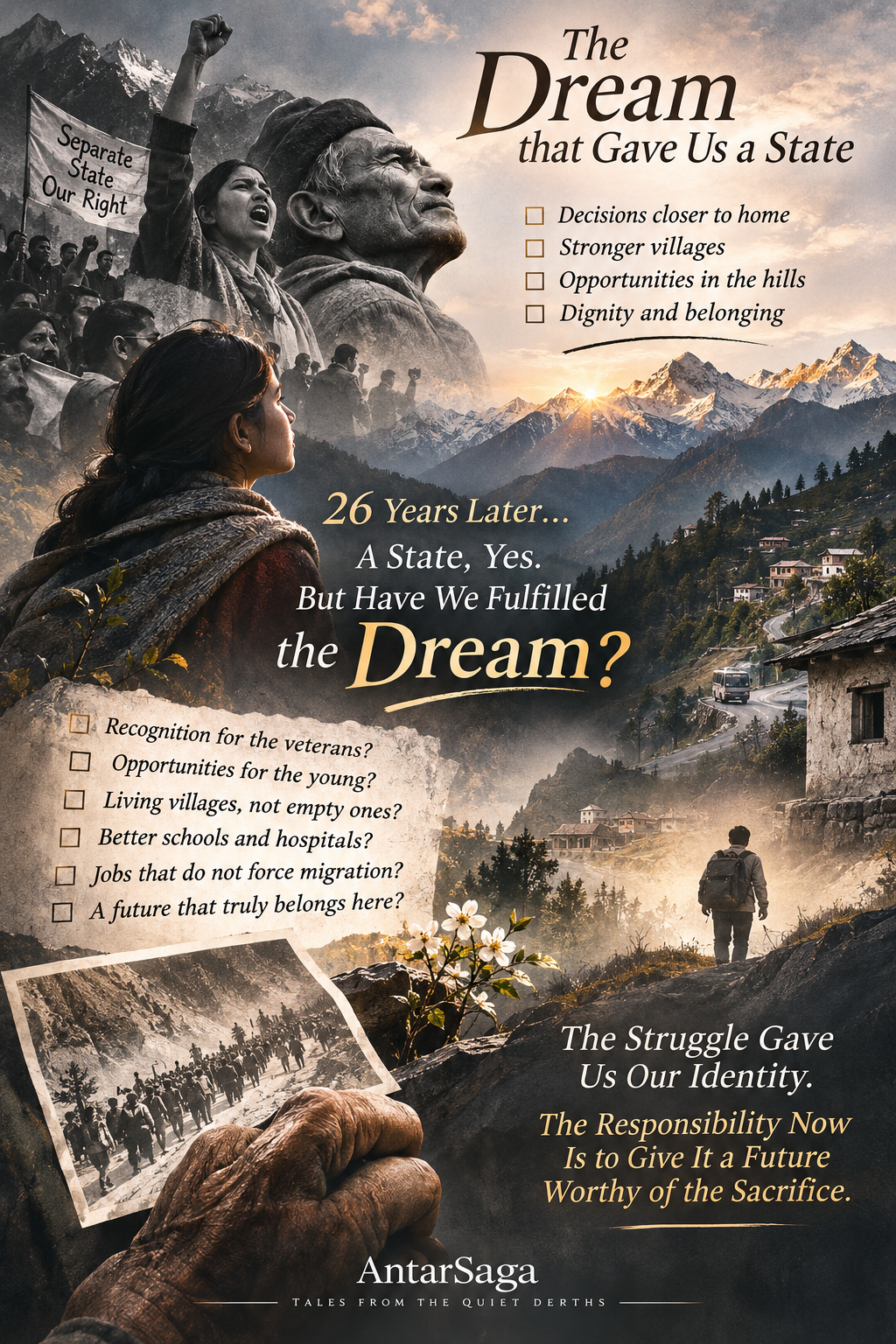
The movement for statehood was never simply about creating another state on the map. It was about self-respect, local participation, opportunity and the hope that people of the mountains would have a greater say in shaping their future. It also carried the aspiration that the hills’ land, forests, water and resources would serve the people who call this region home. The sacrifices made during the struggle must be measured not only by the passage of time or the number of commemorative programmes held each year, but by what has changed in people’s everyday lives.
Twenty-six years is long enough to acknowledge achievements, but also to ask difficult questions without diminishing the sacrifices that made statehood possible. Development must be visible in remote villages, in functioning schools and hospitals, in sustainable livelihoods that allow young people to stay, and in institutions that genuinely listen to ordinary citizens.
The veterans of the movement are growing older. Their memories are living records of a difficult chapter in our history. Their hope is that the next generation inherits a state of possibilities rather than a continuing struggle for basic rights and recognition. Statehood was the destination of one generation’s struggle; building a just, prosperous and inclusive Uttarakhand must be the shared responsibility of the generations that follow.
Those who fought for Uttarakhand did not sacrifice so that future generations would spend every November remembering only what was lost. They fought for what could be built.
The question before the state is no longer simply whether Uttarakhand was created. It is whether the promise of Uttarakhand is being fulfilled.
The struggle gave Uttarakhand its identity. The responsibility now is to give that identity a future worthy of the sacrifice.
(Rajat Aikant Sharma is a journalist, writer, and photojournalist exploring Mussoorie’s civic affairs, culture, history, and human stories. Through AntarSaga, he combines editorial commentary, ground reporting, and visual storytelling to examine local realities, amplify public concerns, and bring meaningful narratives into focus.)