Garhwal Post Bureau
Dehradun, 24 Nov: RSS Uttarakhand Prant Pracharak Dr Shailendra today expressed concern over unplanned construction in the hill areas, migration from the villages and the depopulation of border regions, stressing that development in Uttarakhand must go hand in hand with environmental conservation, preservation of cultural heritage and protection of the unique character of mountain areas. He also underlined the need to distinguish between pilgrimage and tourism, saying that every visitor to Devbhoomi Uttarakhand should experience its spiritual essence.
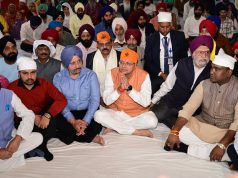
Dr Shailendra was addressing a function organised jointly by Vishva Samvad Kendra, Dehradun, and Vidyottama Vichar Manch at the RSS provincial office on Tilak Road, where the Deepawali special issue of the fortnightly magazine Himalaya Hunkar, titled Uttarakhand and Viksit Bharat, was released today. On the occasion, the poetry collection Garh Jyoti by Dr Raksha Raturi was also unveiled.
Speaking on Uttarakhand’s role in building a developed India, Dr Shailendra said the state occupies an important place in the country’s progress due to advances in road, rail and air connectivity, as well as developments in education, defence, energy and tourism. He observed that Uttarakhand’s significance extends beyond the Char Dham pilgrimage and its rich spiritual legacy because of the presence of educational and strategic institutions of national importance.
Referring to the growing influx of visitors to religious destinations, he said hotels, homestays and local businesses were benefiting from increased pilgrim footfall, but the sanctity of pilgrimage centres must also be preserved. He emphasised that the pilgrimage and conventional tourism serve different purposes and should be viewed separately.
Expressing concern over construction patterns in mountain regions, Dr Shailendra said building activity should take into account traditional architectural practices and the environmental conditions of the Himalayas. He remarked that the construction of seven- or eight-storey buildings in areas suited only for two-storey structures was a serious issue and that development could not come at the cost of nature and local conditions.
He noted that while cities such as Dehradun, Haridwar, Haldwani and Rudrapur are witnessing rising populations, many villages in the hill regions are becoming deserted. To reverse migration and retain population in border villages, he said employment opportunities and basic facilities must be strengthened. Promoting Ayurveda, agriculture, horticulture and small-scale industries can help generate livelihoods at the local level, he added. He also highlighted the strategic importance of Uttarakhand’s borders with Nepal and China.
Referring to Joshimath, Dr Shailendra said the disaster had adversely affected local markets and business activity. While affected residents had received compensation, he said efforts are still needed to revive and strengthen the local economy.
He also stressed the importance of familiarising younger generations with national heroes and freedom fighters such as Bhagat Singh, Subhas Chandra Bose and Chandrashekhar Azad. Preservation of Uttarakhand’s folk culture, local languages and folk artists, he said, remains a shared responsibility of society.
During the programme, Garh Jyoti, a poetry collection authored by Dr Raksha Raturi based on the lives, struggles, sacrifices and national service of eminent personalities from Uttarakhand, was also released. The book presents through poetry the lives and contributions of 21 distinguished personalities, including Veerangana Tilu Rauteli, Sridev Suman, Gaura Devi, Sundarlal Bahuguna and General Bipin Rawat, and aims to introduce younger generations to the state’s rich legacy and inspiring figures.
Welcoming the guests, Vishva Samvad Kendra President Surendra Mittal said the festival of Deepawali inspires society to move from darkness and adversity towards light, knowledge, wisdom and righteous conduct. He described Dr Shailendra’s address as relevant, insightful and rich in practical observations.
Mittal also appreciated the inclusion of emerging writers alongside established authors in the special issue, which features articles on Uttarakhand’s development, socio-cultural concerns and the vision of a developed India.
Among those present were Vishva Samvad Kendra Secretary Rajkumar Tonk, Himalaya Hunkar editor Ranjit Singh Jyala, Vijay Juneja, Sanjay, Gajendra Khanduri, Ajay Joshi, Prem Chamola and representatives and workers from various organisations. The proceedings were conducted by Manish Bagdi.