Garhwal Post Bureau
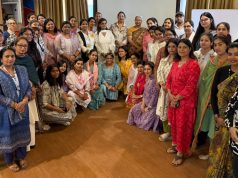
Dehradun, 20 Feb: A stakeholder dialogue on “Gendered Livelihood Risk and Adaptation in the Himalayan Region” was successfully organised today at the Department of Geography, Dr Nityanand Himalayan Research and Study Centre. The programme brought together academicians, researchers, journalists, NGO representatives, and community members to deliberate on climate vulnerability, gendered risks, and sustainable adaptation strategies in the Himalayan region. The Chief Guest was Prof Surekha Dangwal from Doon University.
The dialogue was organised by Dr Abhilasha Kannaujia, Assistant Professor, Department of Geography. Prof HC Purohit, Dean, School of Management, also marked his presence and addressed the gathering, highlighting the pressing concerns of climate sustainability, the impacts of climate change on local populations, and the need for realistic population-based planning. Prof Rajendra P Mamgain (HOD of Economics Department, Dean, School of Social Science, Doon University) emphasised capacity building for local communities, resource mapping, and the crucial role of NGOs in strengthening cultural ties to land-based livelihoods. He also raised concerns over recurring forest fires caused by the dominance of pine forests and underscored the absence of structured policy recommendations reaching local communities. Dr Vipin Kumar, Head of the Department of Geology, Doon University, discussed the role of agroforestry and geological insights in developing sustainable adaptation strategies. Prof Ajay Pratap Singh, Head of the Department of Applied Psychology at Veer Bahadur Singh Purvanchal University, shed light on the psychological dimensions of disasters, focusing on trauma and coping mechanisms among affected populations.
Environmental journalist Megha Prakash spoke on the importance of cluster development for herbal medicinal plants in hill regions and pointed to the limited institutional support available from NGOs. Representative from Pragati NGO, Dehradun, Sonali Sharma, along with Nirmala Devi and Reeta Negi, advocated for government-supported agroforestry initiatives that could enhance women’s income generation and economic resilience. Dr Juhee Prasad, Assistant Professor of Media and Communication Studies, Doon University, highlighted the transformative role of community radio in empowering women and sustaining livelihoods in remote Himalayan regions. Aabshar Abbasi further elaborated on the importance of community radio in promoting health and education awareness and addressing challenges in emergency response communication. Grassroots representatives from Bhatwari block, Uttarkashi, Pratibha Bisht, Anita Rana, Rita Bisht, and Bharti Bisht shared field-level experiences regarding gendered livelihood risks. They discussed the functioning of Self-Help Groups and ongoing community initiatives aimed at enhancing resilience. The programme featured two sessions. The first session comprised an open discussion where dignitaries, researchers, and participants shared diverse perspectives on the theme. The second session focused on policy recommendations and concluding remarks, consolidating key insights for future action.
Other contributors included Dr Pallavi Upreti and Dr Sonu Kaur, Assistant Professor, Department of Geography, Doon University, who emphasised crop diversification and resource mapping as critical adaptation strategies. PhD scholars from the Department of Geography actively participated, contributing to the scholarly and practical dimensions of the dialogue. The stakeholder dialogue concluded as an enriching and collaborative academic engagement, fostering interdisciplinary understanding and actionable policy insights toward gender-sensitive climate adaptation in the Himalayan region.