BIS ‘Manak Manthan’ held in Doon on Adventure Tourism Safety Management System
Garhwal Post Bureau
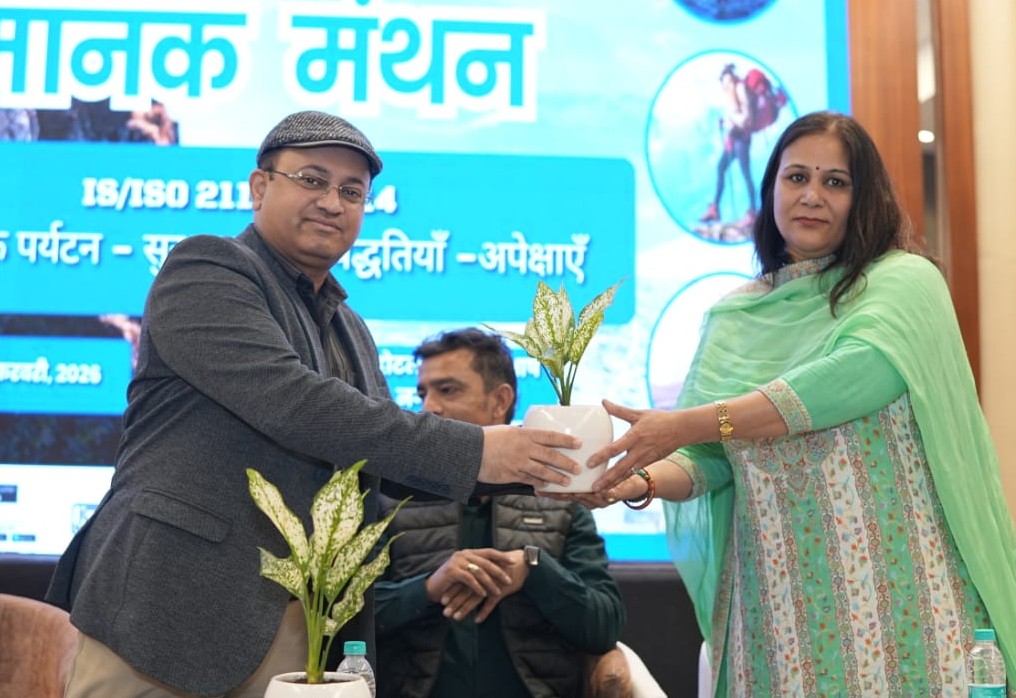
Dehradun, 27 Feb: More than 100 participants actively participated in the ‘Manak Manthan’ programme organised by the Bureau of Indian Standards (BIS), Dehradun today, with the deliberations centred on ‘IS 21101:2014 — Adventure Tourism Safety Management System Requirements’. The discussion witnessed participation of adventure tourism operators, certification bodies, testing and inspection agencies, regulatory institutions and the consumer representatives for comprehensive discussions on strengthening safety frameworks in the sector.
The chief guest on the occasion was Additional Secretary, Tourism Department, Uttarakhand, Abhishek Ruhela. Addressing the gathering, Ruhela underlined the immense potential of adventure sports in the state and stated that to establish Uttarakhand as a safe and responsible adventure destination, clear Standard Operating Procedures (SOPs), robust risk management mechanisms and strict compliance with safety standards are very essential. He called upon all stakeholders to work collectively towards developing adventure tourism in line with the international standards.
Saurabh Tiwari, Director and Head, BIS Dehradun, emphasised on the need for effective implementation of IS 21101:2014. He stated that the standard developed by BIS provides the foundation for establishing a strong and risk-based management system in adventure tourism activities. He highlighted the indispensability of a structured safety management system in a mountainous State like Uttarakhand and stressed the importance of coordinated efforts among industry stakeholders, service providers and regulatory bodies.
As special guests, Pankaj Gupta, President of IAU, and Harendra Garg, President of SMAU, were present and they also expressed their views on the necessity of compliance with safety standards from the industry’s perspective.
The detailed technical session of the programme was delivered by Ravindra Dogra from the National Institute of Water Sports (NIWS), Goa. In a comprehensive presentation, Dogra elaborated on various aspects of IS 21101:2014, including safety policy and leadership roles, allocation of organisational responsibilities, identification and assessment of activity-specific risks, effective risk control measures, operational controls and standardised procedures (SOPs), regular inspection and maintenance of equipment, participant safety briefings, emergency preparedness and prompt response mechanisms, rescue plans and mock drills, the requirement of trained and certified guides, capacity building and regular training, incident reporting systems, internal audits, performance evaluation and the process of continual improvement. He stated that IS 21101:2014 is not merely a compliance document but a comprehensive management framework aimed at fostering a culture of safety in adventure tourism, systematically controlling risks and minimising the possibility of accidents.
Darpan Chalia, Deputy Director, BIS, highlighted the importance of standardisation in adventure sports and observed that an effective safety management system enhances consumer confidence and ensures long-term sustainability of the industry.
During the programme, an open discussion was also held on the key provisions of IS 21101:2014, its effective implementation, possible revisions and State-specific requirements. Participants shared their suggestions and experiences, which were considered significant steps towards making safety standards in the adventure tourism sector more practical and effective.
During the meeting, a collective resolve was made to make adventure tourism safer, responsible and fully aligned with international standards.