By Arun Pratap Singh
Garhwal Post Bureau
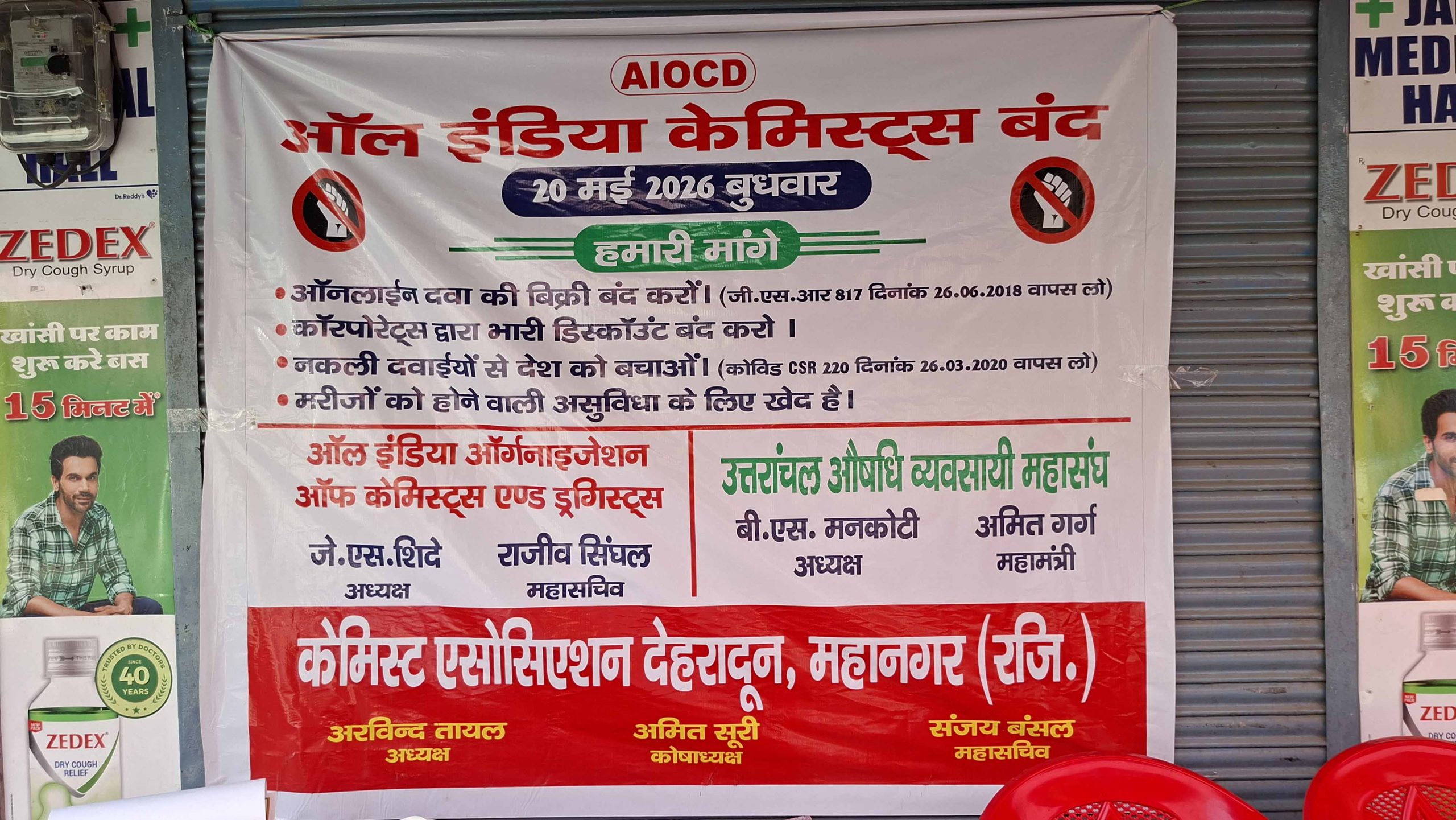
Dehradun, 20 May: Medical stores across Uttarakhand remained shut for 24 hours till late evening today, as chemists and druggists joined the nationwide strike called by the All India Organisation of Chemists and Druggists in protest against the growing expansion of e-pharmacy and online medicine sales. The symbolic shutdown, which began at midnight on 19 May and continued till midnight tonight, saw overwhelming participation from retail and wholesale medicine traders, severely affecting pharmaceutical business activity across the state while simultaneously intensifying the debate over the future of traditional medical stores.
According to traders’ associations, nearly 95 per cent of medical stores across Uttarakhand remained closed during the strike, while in Dehradun district alone around 98 per cent shops downed shutters in support of the protest. Out of more than 11,000 medical stores operating in Uttarakhand, the vast majority participated in the bandh, resulting in a major financial impact on the pharmaceutical trade. In Dehradun alone, the one-day closure reportedly affected business worth nearly Rs 12 crores.
The protesting chemists said the rapid growth of online medicine platforms and heavy discounts being offered by large corporate-backed e-pharmacy companies had emerged as a serious threat to the survival of retail and wholesale medical stores. Traders argued that traditional chemists, who have served local communities for decades, are increasingly struggling to compete against online platforms offering medicines at lower prices and home delivery facilities.
The issue has gained further momentum after the Covid-19 pandemic, during which e-commerce and online delivery services became widely accepted among consumers. Traders admitted that online medicine platforms gained popularity because of convenience, doorstep delivery and discounted prices, but they assert that that unchecked growth of e-pharmacy services may eventually destroy small and medium-scale pharmaceutical businesses across the country. They claimed that every year conventional retail and wholesale trade is shrinking as the consumers are increasingly shifted towards digital platforms.
Speaking about the strike, Wholesale Chemists Association Dehradun General Secretary Akash Prabhakar said the protest is aimed at opposing the uncontrolled expansion of online medicine trade and the aggressive discount policies adopted by corporate companies. He said medical store operators across the country are deeply concerned about their future livelihood if e-pharmacy platforms continue to expand without stricter regulation. He reminded that the associations had repeatedly raised their concerns before authorities in the past, but no concrete action has been taken so far to curb online trading of medicines.
Despite the large-scale shutdown, chemists’ associations claimed they have taken adequate steps to ensure that patients did not face major hardship during the strike. Essential services, including Jan Aushadhi Kendras, pharmacies operating inside hospitals and around five per cent medical stores dealing in emergency medicines, vaccines and injections, were exempted from the bandh. Alternative arrangements were also made city-wise and contact numbers of selected operational medical stores were shared with the administration and the public so that emergency medicines remained accessible.
District Chemists Association Dehradun president Manish Nanda said Dehradun district alone witnesses medicine trade worth nearly Rs 10 to Rs 12 crores every day, and the one-day symbolic strike had caused significant losses to traders. However, he maintained that the associations had ensured that no patient suffered because of the protest. He said the agitation is not directed against the public but against the growing dominance of e-pharmacy companies and corporate discount models which, according to traders, threaten the existence of lakhs of small chemists across the country.
Nanda further said there are nearly 12.5 lakh medical stores across India, directly and indirectly supporting the livelihoods of crores of people. He warned that if the government fails to regulate or restrict online medicine platforms, the future of traditional medical stores would become uncertain. He reiterated the demand that the e-pharmacy system should either be completely stopped or brought under far stricter control to protect conventional traders.
Wholesale Chemists’ Association Dehradun president Sanjeev Taneja said the administration had assured traders that their concerns would be conveyed to the appropriate authorities, but traders were still waiting for concrete action on the ground. He said the current protest is only a symbolic one-day shutdown, but if no satisfactory decision is taken by the government, the All India Organisation of Chemists and Druggists would consider stronger agitation in future, including the possibility of an indefinite nationwide strike.
Meanwhile, the Food and Drug Administration (FDA) also remained on alert throughout the bandh. Additional Commissioner Tajbar Singh Jaggi said all the Drugs Inspectors have been deployed in the field to monitor the situation and ensure that emergency medicines remain available to patients. He said reports have been received that some medical stores are functioning for emergency needs and authorities are closely monitoring the situation. Jaggi warned that if any patient is denied essential medicines during an emergency, strict action would be taken under the Drugs Act, including cancellation of licences and registration of cases against the medical stores concerned.