By Arun Pratap Singh
Garhwal Post Bureau
Dehradun, 26 Jun: The successful entry of a couple of groups of Nihang Sikhs into Dehradun despite prior intelligence inputs, extensive police deployment and elaborate security arrangements along the Uttarakhand-Himachal Pradesh border has raised serious questions over the effectiveness of the police, intelligence network and administrative preparedness. The sequence of events has also triggered widespread public resentment in Dehradun as well as in the hill districts, with many questioning whether the administration’s handling of the sensitive law and order situation reflected an unduly conciliatory approach despite repeated provocations. Protests are being held in places like Rudraprayag and Srinagar over the alleged lack of strict action by the Police in dealing with the ‘hooliganism’ of the Nihangs and the way the Nihangs were allowed to go scot free after vacating the Nagrasu Gurdwara.
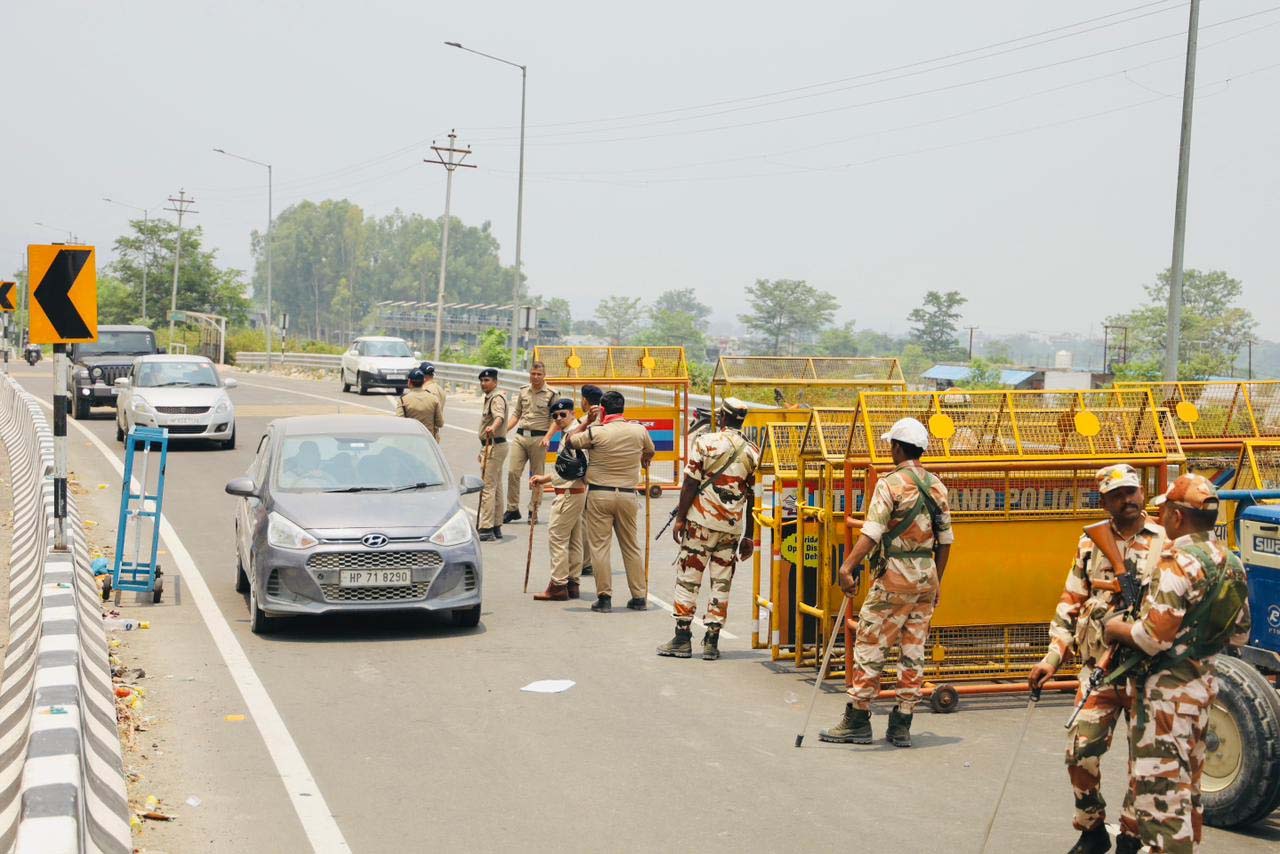
Following the violence involving Nihang Sikhs at Karnaprayag and the subsequent developments at Nagrasu Gurdwara in Chamoli district, intelligence agencies had reportedly alerted the authorities that a large group of Nihang Sikhs was likely to march towards Uttarakhand. Acting on these inputs, the Dehradun Police, civil administration and Indo-Tibetan Border Police (ITBP) had established an extensive security grid along the Himachal Pradesh border. Barricades were erected at the Kulhal check post, intensive vehicle checking was carried out and additional police forces were deployed at strategic locations. Security was also significantly strengthened in the Premnagar area, which was identified as one of the most likely entry points into Dehradun.
However, despite these elaborate arrangements and repeated assurances of strict vigil, some groups of the Nihangs managed to breach the security cordon, evade the deployment and enter Uttarakhand through alternate routes before reaching the Race Course Gurdwara in Dehradun. The development has exposed glaring gaps in border security, intelligence gathering, surveillance and operational coordination among the agencies responsible for maintaining law and order.
The sequence of events has raised serious questions over the effectiveness of the police and intelligence apparatus. Despite advance intelligence inputs, extensive deployment of police and paramilitary personnel and barricading at key entry points, a group of Nihang Sikhs succeeded in entering Dehradun through alternate routes and reaching the Race Course Gurdwara. The administration’s decision to resolve the situation through prolonged negotiations rather than coercive action has also come under intense public scrutiny, particularly as no arrests were reported despite allegations of barricade breaches, damage to vehicles and violation of security restrictions. The handling of the episode has fuelled public resentment in Dehradun and the hill districts, where many residents have questioned whether the response reflected undue leniency in a sensitive law and order situation.
Officials have conceded that the police strategy remained primarily focused on the identified border routes and anticipated entry points. Intelligence inputs reportedly suggested that the Nihang group could attempt to enter through the Premnagar corridor. Consequently, heavy police deployment was made in the area, with SSP Pramendra Singh Dobal personally monitoring the arrangements and large contingents of police personnel stationed at vulnerable locations.
However, the Nihang groups reportedly altered its route after learning about the heavy deployment and entered Dehradun through the Mehuwala-ISBT bypass, successfully avoiding the security cordon. They eventually reached the Race Course Gurdwara without being intercepted at any of the anticipated locations. The police came to know of their exact whereabouts only after they had already assembled inside the city.
Senior police and administrative officers, including District Magistrate Ashish Chauhan and Senior Superintendent of Police Pramendra Singh Dobal, subsequently reached the Race Course Gurdwara and held prolonged discussions with the Nihang Sikhs. After several rounds of negotiations, the group agreed to return to Paonta Sahib in Himachal Pradesh, bringing the immediate crisis to an end without any further confrontation.
Police officials later stated that the Nihang Sikhs have been persuaded to return peacefully and that normalcy had been restored. The authorities also maintained that the situation remained under control and that surveillance had been intensified across the district. Nevertheless, the manner in which the group managed to outmanoeuvre the elaborate security arrangements has continued to invite searching questions.
Yesterday, nearly 200 Nihang Sikhs travelling from Chandigarh towards Uttarakhand through Himachal Pradesh were stopped at the Kulhal check post, where barricades had been erected by the police and administration. Although negotiations continued for several hours and a large number of Nihangs remained at Paonta Sahib, a section of the group reportedly crossed the barricades and entered Uttarakhand, prompting a high alert across Dehradun district. Police forces from various police stations, along with ITBP personnel, were deployed at several locations as intelligence agencies tracked the movement of the group.
Although the immediate standoff ended after the Nihang Sikhs agreed to return to Paonta Sahib, the episode has left behind significant questions over border management, intelligence coordination and operational preparedness. Equally significant is the public perception that despite advance intelligence, deployment of substantial security forces, allegations of barricade breaches, damage to vehicles and the group’s unauthorised entry into Dehradun, the authorities ultimately relied on persuasion and negotiations without any reported arrests connected with the Dehradun incident.