Garhwal Post Bureau
Dehradun, 30 Jun: Captain Praveen Davar, National Chairman of the Ideology Department of the All India Congress Committee (AICC), said today that, in the current national scenario, the Congress Party’s core principles—equality, democracy, secularism, social justice, national unity, Indian nationalism, and commitment to the Constitution—are more relevant than ever before.
He said the role of the Congress Ideology Department extends beyond internal ideological discussions within the organisation. It also has an important responsibility to strengthen democratic consciousness, scientific temper, constitutional values, and fact-based public discourse in society. He emphasised the need to make the Ideology Department more active across the country by promoting research-based initiatives and maintaining continuous engagement with different sections of society.
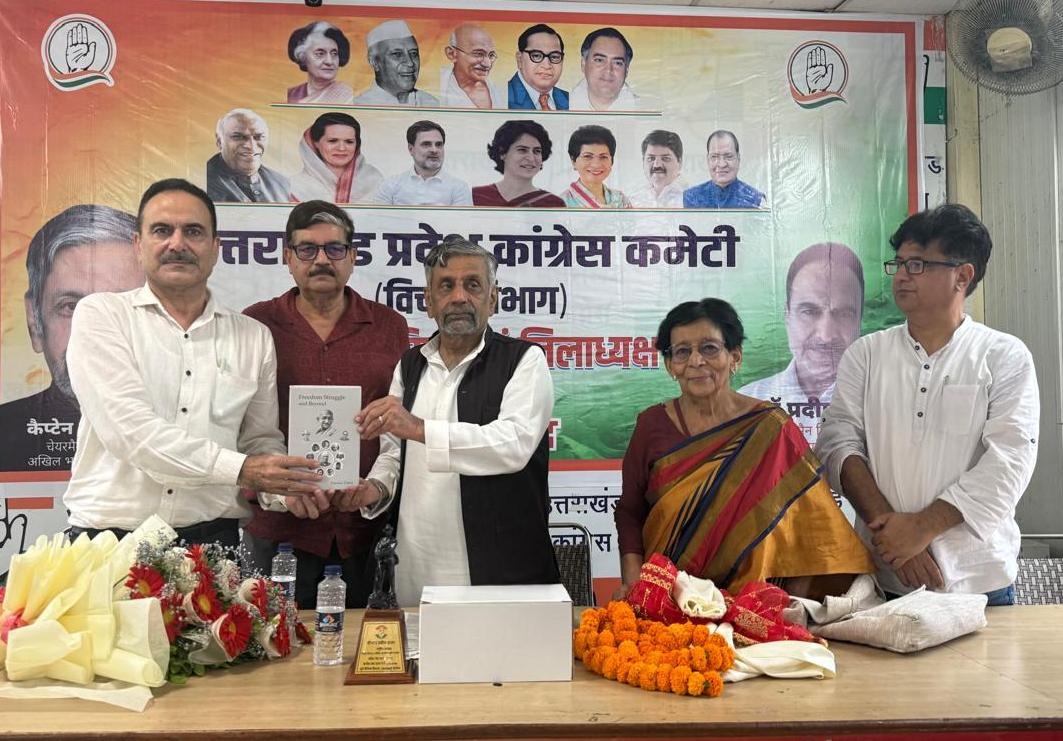
Captain Davar was addressing the ideological conference titled “Transformation Through Ideas – Nation Building Through the Constitution”, organised by the Uttarakhand Pradesh Congress Ideology Department (Intellectual Cell) at Rajiv Bhavan, Dehradun, as the Chief Guest.
The meeting featured extensive discussions on the Congress Party’s ideological role and future roadmap in the context of the prevailing political, social, and economic situation in the country and in Uttarakhand.
Presiding over the meeting, Dr Pradeep Joshi, Chairman of the Uttarakhand Pradesh Congress Ideology Department, said Uttarakhand is currently facing several serious challenges, including unemployment, migration, education, healthcare, environmental concerns, and the fragile mountain economy.
He said the objective of the Congress Ideology Department is not merely to react to political developments but to present a fact-based, sensitive, and solution-oriented ideological perspective before society. He added that studies, public dialogue, and policy-based discussions tailored to Uttarakhand’s unique circumstances would remain the department’s key priorities.
Delivering the welcome address and presenting the agenda, Dr Prem Bahukhandi said the country is facing not only political but also ideological, social, and democratic challenges. He stressed that meaningful public dialogue based on constitutional values, democracy, social justice, scientific temper, and inclusive development is the need of the hour.
He informed the gathering that the meeting deliberated on strengthening the Congress Party’s ideological outreach in Uttarakhand, establishing continuous dialogue with youth, women, teachers, intellectuals, and civil society organisations, launching positive ideological campaigns through social media, and preparing a comprehensive policy document on major state issues, including migration, employment, education, environmental conservation, water resources, agriculture, tourism, and cultural heritage.
Senior intellectuals, academicians, social activists, and Congress leaders participating in the meeting also shared their views and suggestions on the contemporary challenges facing Uttarakhand and the country. Speakers emphasised transforming the Ideology Department into an effective platform for regular research, public engagement, and policy formulation on issues of public concern.
Among those who expressed their views were Dr Ajay Saxena (former Principal, DAV College), Dr KR Jain (former Principal, DAV College), Dr DN Bhatkoti, Dr Pravritima Singh, Jaya Shukla, Anju Badola, Manju Tripathi, Devendra Singh, RP Dhyani, Sujata Paul, and Avdhesh Pant.
The programme concluded with a vote of thanks proposed by Dr Paritosh Kumar, who expressed gratitude to the chief guest, participants, and organisers.
The meeting ended with a resolution that the Uttarakhand Pradesh Congress Ideology Department would regularly organise ideological discussions, research initiatives, and public awareness programmes to promote constitutional ideals, democratic values, social justice, scientific temper, and inclusive development among the people.