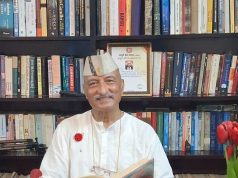
 By Arun Pratap Singh
As Garhwal Post completes two decades as a daily newspaper on 2 July 2026 and three decades as a publication, it is also an occasion for me to look back on a journey that has been both professionally rewarding and personally enriching for me. My association with the publication began in 2004, when Garhwal Post was still a weekly newspaper. What started as a freelance association soon evolved into a full-time commitment, and except for a brief interruption of a few years, my relationship with the newspaper has remained continuous ever since.
When I first began writing for Garhwal Post, it was already recognised among discerning readers as a publication that valued substance over sensation. Although relatively smaller compared to the large newspaper groups, it has enjoyed a reputation for credibility that far exceeded its size. It was a newspaper read not merely for news, but for informed opinion, thoughtful analysis and quality writing. Over the years, it has succeeded in creating a niche readership comprising bureaucrats, retired civil servants, defence personnel, academicians, educationists, professionals and intellectuals not only across Uttarakhand but also in different parts of the country.
The weekly edition offered a rich blend of journalism and literature. It regularly carried stories by Ruskin Bond, whose deep connection with the hills resonated perfectly with the ethos of the publication. Digvijay Singh Rana’s reports became an integral part of the newspaper until his untimely demise. Distinguished writers such as Raj Kanwar enriched its pages, while Sudhir Thapliyal’s much-appreciated column, A View From the Top, attracted a loyal readership. My own gardening column, The Green Thumb, published every Sunday, found an enthusiastic following among readers interested in gardening and horticulture. Articles by contemporary historian Ramachandra Guha further added diversity to the intellectual stature of the newspaper.
One of the strongest pillars of Garhwal Post has always been its editorial page. The editorials written by News Editor Ashok Prasad Misra were eagerly awaited during the weekly years and continue to be anticipated by readers every day even now. They have consistently reflected balance, clarity of thought and a deep understanding of contemporary issues. At a time when opinions are often polarised, these editorials have stood out for their maturity, restraint and commitment to facts.
The creation of Uttarakhand as a separate state in 2000 fundamentally altered the media landscape. There was a growing demand for an English daily that possessed a distinctly regional perspective while maintaining professional standards comparable to national publications. Recognising this need, Garhwal Post took the bold decision to transform itself from a weekly into a daily newspaper on 2 July 2006. It was an ambitious step that required courage, conviction and considerable perseverance. I had the privilege of being part of that historic transition as the Bureau Chief and later I have continued my association as Special Correspondent.
Before joining Garhwal Post, I had the opportunity to work with several prominent newspapers in Mumbai and in New Delhi and Dehradun, including The Indian Express, Jansatta, Dainik Jagran and Amar Ujala Karobar. While, each organisation contributed significantly to my professional development and provided valuable journalistic experience, Garhwal Post has offered something distinctive, a newsroom culture where integrity has consistently taken precedence over influence, and where journalism has remained firmly rooted in public interest rather than commercial or political considerations. That, to me, has been its defining characteristic.
Over the years, my reporting has largely focused on politics, governance and public policy. At the same time, I have consistently covered issues relating to the environment, development, public welfare and social concerns. Uttarakhand presents a unique blend of ecological sensitivity and developmental aspirations, making balanced reporting particularly important. Throughout my career with Garhwal Post, I have tried to maintain a high level of objectivity while ensuring that facts always remained at the centre of every report. This approach, actually, is in complete harmony with the editorial philosophy of the newspaper.
One of the most satisfying aspects of working with Garhwal Post has been the freedom to practice journalism without fear or favour. As a political correspondent, I have never been asked by the Garhwal Post management to soften a report to please a political leader or party, nor have I been encouraged to target anyone for partisan reasons. Such editorial independence is becoming increasingly rare in contemporary journalism. The confidence reposed in the reporters to pursue facts objectively has been one of the publication’s greatest strengths.
Equally significant has been the absence of commercial pressures on the newsroom. In several large media organisations today, journalists often find themselves burdened with the additional responsibility of generating advertisements or cultivating business for the publication. During my association with Garhwal Post, I have never been asked or expected to solicit advertisements. This separation between editorial responsibilities and commercial considerations has allowed journalists to remain focused entirely on their professional duties, thereby strengthening the credibility of the newspaper.
Much of the credit for preserving these values goes to Editor and Publisher Satish Sharma. Steering an independent regional newspaper through changing political climates, economic pressures and the rapidly evolving media ecosystem has never been easy. Yet his commitment to balanced, objective and people-centric journalism has remained unwavering. Under his leadership, Garhwal Post has consistently resisted the temptation of sensationalism. It has never sought popularity through exaggerated headlines or manufactured controversies. Instead, it has earned the trust of its readers through measured reporting, careful verification and thoughtful analysis. That trust remains its greatest asset. At the same time, News Editor Ashok Prasad Misra has been a guiding force for the entire media team of Garhwal Post throughout its journey of three decades. Well known journalist Anjali Nauriyal has made invaluable contributions to the publication, extending beyond her writing. She has been a pillar of support for the newspaper. Another distinctive feature of Garhwal Post has been the quality of contributors who have enriched its pages over the years. Eminent administrators such as RS Tolia, Sanjeev Chopra, Abhinav Kumar, SK Das, Anil Raturi and Aloke B Lal have regularly contributed insightful articles on governance, public administration and social issues. Former Chief Secretaries including SK Das, Indu Kumar Pandey, Subhash Kumar, NS Napalchyal, N Ravishankar and Om Prakash have remained among its regular readers and contributors, also often offering thoughtful comments and constructive suggestions on reports and editorials. People like Ganesh Saili, Kulbhushan Kain, Sunita Vijay with her interviews and film reviews and Nitin Gairola with global travelogues continue to enrich the newspaper. Alok Joshi has also contributed with the interviews of eminent people besides writing opinion pieces and coverage of certain events. Eminent travel writers and Padma Shri awardees Hugh and Coleen Gantzer also wrote regularly for Garhwal Post while Maneka Gandhi continued to offer a perspective on animal compassion and environment through her columns.
Journalism has witnessed extraordinary transformations during this period. The print media has faced unprecedented challenges from digital media, social media has altered news consumption habits, and public discourse has become increasingly polarised. As I reflect upon more than two decades of association with the newspaper, I can say with conviction that Garhwal Post has retained its identity by remaining faithful to its founding principles of accuracy, fairness and regional relevance.
Looking ahead, I hope to continue contributing to the newspaper for more years. I also look forward to reviving The Green Thumb, a column that once connected with countless readers who shared a passion for gardening and horticulture and environmental conservation. Dehradun and Mussoorie residents are known for their passion for gardening. The column’s return would not merely revive a cherished feature but would also reaffirm the newspaper’s long-standing commitment to issues that improve the quality of everyday life.
Besides news reports and articles, I have regularly interviewed eminent and leading people from politics including union ministers, chief ministers, cabinet ministers and top bureaucrats and leading people from diverse fields, like business and industry, environment, science, films, social work, medicine, sports, education, arts and folk arts and these interviews have been very well received by the readers. Some of the people whom I had the opportunity to interview for Garhwal Post have been those whom I have personally admired a lot and they include Tennis player Vijay Amritraj, athlete and sports administrator PT Usha and badminton player Saina Nehwal and Governor Lt Gen Gurmit Singh.
For me, Garhwal Post has never been just another newspaper. It has been an institution that has shaped my professional journey and reinforced my faith in ethical journalism. As it celebrates twenty years as a daily newspaper, its greatest achievement remains the confidence and trust it has inspired among generations of readers. In an era when credibility has become journalism’s most precious currency, Garhwal Post continues to prove that principled, people-centric and objective journalism is not only possible but indispensable.
(Arun Pratap Singh is a senior journalist and presently serves as Special Correspondent with Garhwal Post)