 By Bhumesh Bharti
Deep in the scenic Aglar Valley of Tehri Garhwal, one of Uttarakhand’s most unique traditional festivals, Maund Mela, continues to unite villages through culture, faith, and heritage. This year, the festival was hosted by eight villages, locally known as Athjula, of the Jaunpur region. These villages are Melgath, Kaandi Talla, Kaandi Malla, Sadab Talla, Sadab Malla, Bel Talla, Bel Malla, and Parogi.
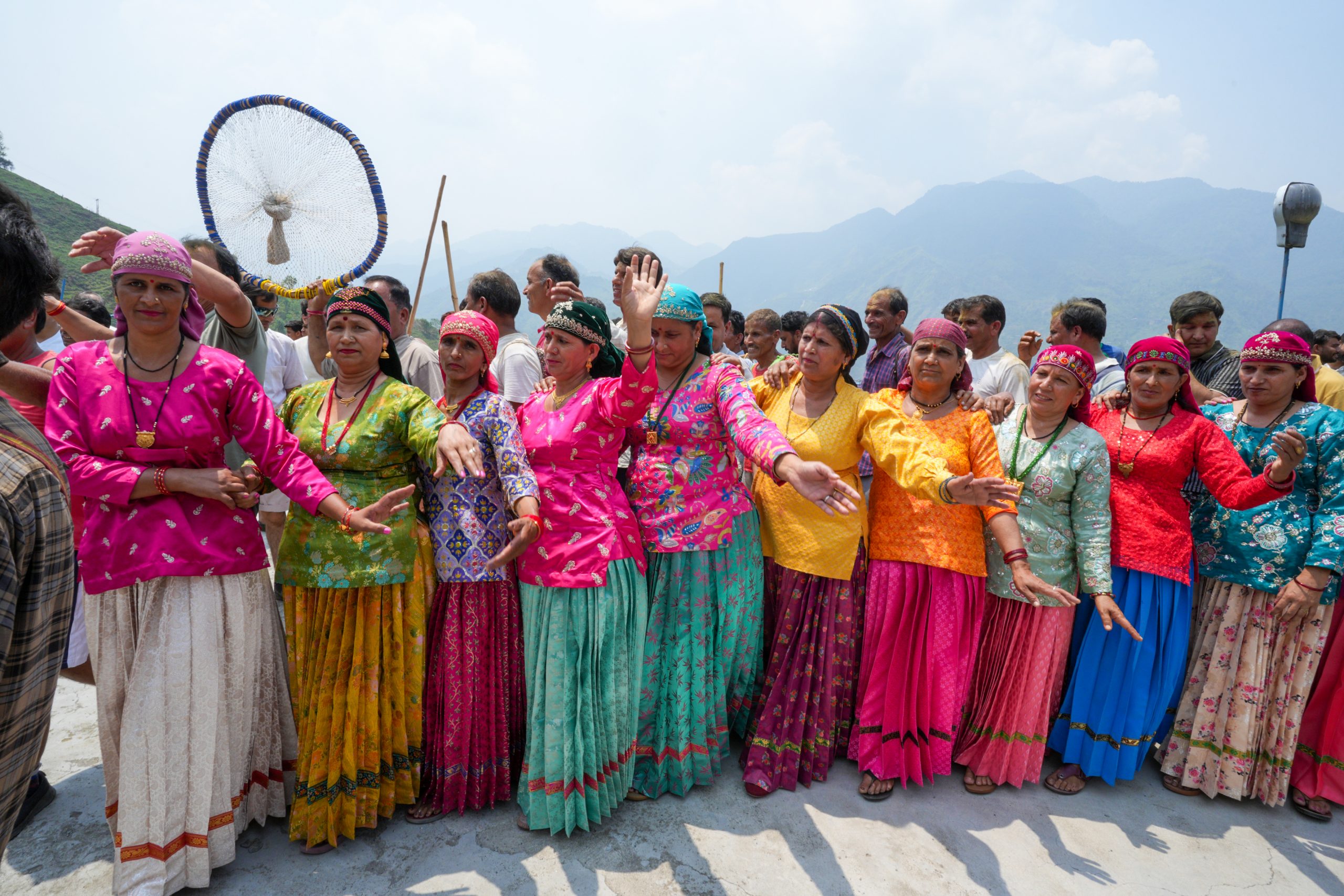
On 27 June, more than 10,000 villagers and visitors gathered in a remarkable celebration along the Aglar River to take part in this centuries-old tradition.
Maund Mela has a rich history. The festival began in 1866 during the reign of Raja Bhawani Shah of the Tehri Garhwal Kingdom. The king officially granted the tribal communities of Jaunpur, Jaunsar-Bhabar, and Rawain the right to fish in the Aglar River once a year. The main purpose of this festival was to create harmony, strengthen relations between rival clans, and celebrate a successful harvest season.
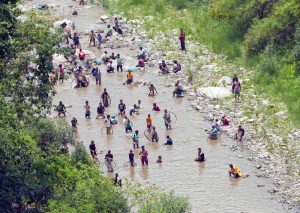
More than a fishing event, Maund Mela is a symbol of social unity and collective participation. It has been practiced for generations in the Himalayan villages of Jaunpur and Jaunsar, preserving a tradition deeply connected to nature and community life.
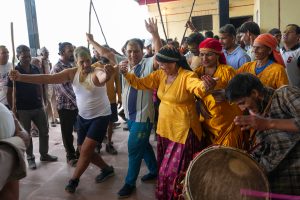
The celebrations began with colourful processions from all eight villages. Dressed in fishing and traditional attire, people walked together toward Parogi village. On their way, people gathered at all host villages. The atmosphere was filled with devotion, excitement, and local cultural expressions. From Parogi, the gathering moved toward the Aglar River, where the sacred ritual took place. Many other people from different areas had already gathered there, waiting for the host villagers to put the Timru powder into the river.
After prayers, villagers poured a powerful but organic powder made from dried and crushed bark of the Timru shrub into the river. This natural substance temporarily stuns the fish, causing them to float to the surface. According to elderly participants, the effect lasts only a few minutes, and fish that are not caught recover safely.
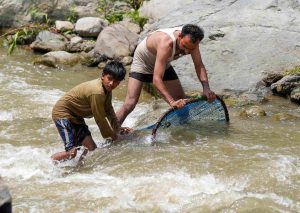
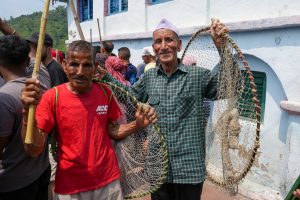
As soon as the fish surfaced, thousands entered the river carrying traditional hand nets, fishing nets and fishing creels. The river turned into a lively scene as young and old worked together to catch fish.
For villagers, the catch is more than food; it is considered prasad, a blessed offering taken home to families. One of the most touching sights was elders teaching children the traditional art of fishing. These moments reflected the true spirit of Maund Mela—a living tradition passed from one generation to the next.
In a fast-changing world, Maund Mela stands as a powerful reminder that culture survives when communities come together to protect and celebrate their heritage.